







Mega Doctor News

By American Heart Association News
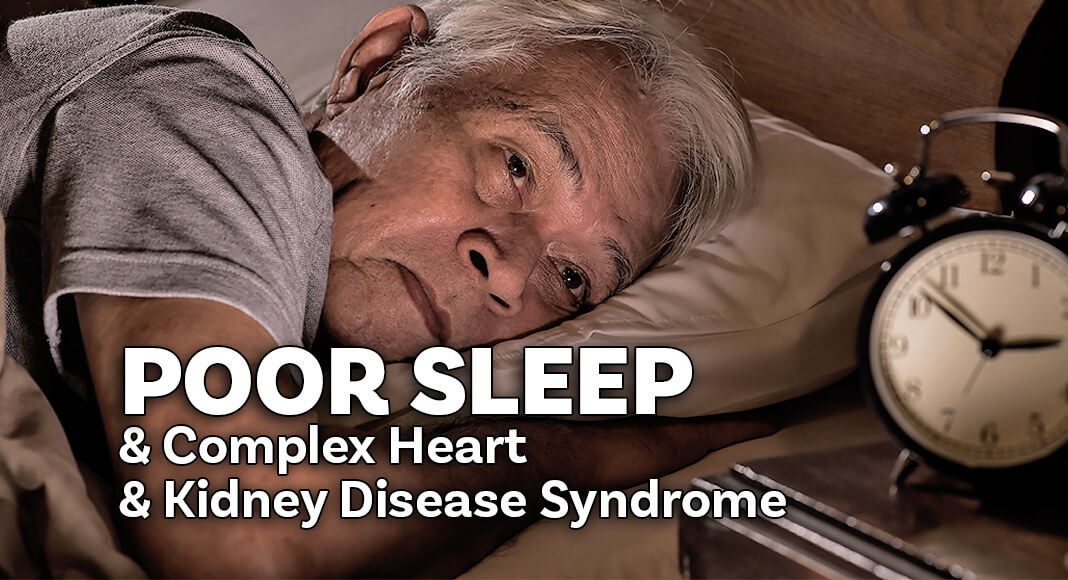
People with a complex heart, kidney and metabolic-related condition who got better quality sleep were less likely to have an advanced stage of the illness than those getting poor sleep, according to a new study.
The investigation looked at the link between sleep quality and advanced cardiovascular-kidney-metabolic, or CKM, syndrome. It was published Tuesday in the Journal of the American Heart Association.

“Overall sleep quality could be a modifiable lifestyle factor for advanced CKM syndrome prevention,” said lead study author Dr. Chaoqun Ma, a senior researcher at the Cardiovascular Research Institute and Department of Cardiology at the General Hospital of Northern Theater Command in Shenyang, China.
CKM syndrome refers to a health disorder arising from connections among obesity, Type 2 diabetes, chronic kidney disease and cardiovascular disease, including heart failure, atrial fibrillation, coronary heart disease, stroke and peripheral artery disease. It includes both people at risk for cardiovascular disease and those who already have it.
According to the American Heart Association, about 1 in 3 adults – roughly 89 million – in the U.S. have three or more risk factors leading to CKM syndrome. Risk factors include excess weight, blood pressure, cholesterol, blood glucose and triglycerides. Sleep disorders are among many factors that can increase the likelihood of progressing to advanced stages of CKM syndrome.
Analyzing data from the National Health and Nutrition Examination Survey from 2015 to 2020, researchers in the new study looked at overall sleep quality and the presence of five stages of CKM syndrome for 10,607 U.S. adults. Participants were 49 years old on average.
Overall sleep quality included five sleep behaviors: sleep duration, trouble sleeping, daytime sleepiness, snoring and nocturia, the need to get up during the night to urinate. Stages of CKM syndrome included zero (no risk factors), stage 1 (excess weight), stage 2 (metabolic risk factors and kidney disease), stage 3 (subclinical cardiovascular disease) and stage 4 (clinical cardiovascular disease). Adults in stage 3 or 4 were considered to have advanced CKM.
Participants with CKM syndrome who had moderate or high sleep quality were less likely to be in the advanced stages of the disease than those with CKM syndrome and low sleep quality.
However, that doesn’t mean better sleep leads to a less advanced stage of the disease, said Dr. Brendan Everett, an associate professor at Harvard Medical School in Boston. Because this was a cross-sectional study – which provides a snapshot of a single moment in time – “this study can say zero about any directional causality between sleep and metabolic disease,” he said. “You can’t say that one thing comes before the other.”
In contrast, the findings could just as easily suggest that having an advanced stage of disease makes it harder for people to sleep, said Everett, who was not involved in the research.
Ma agreed that longitudinal studies are needed to determine whether poor sleep quality causes advanced CKM syndrome or vice versa. Such studies, he said, “would enable researchers to track changes over time, providing clearer insights into whether poor sleep quality precedes the development of advanced CKM stages, thereby offering stronger evidence of a potential causal relationship.”
Studying the effect of sleep quality on disease is challenging because of the numerous factors that are hard to control for, Everett said. For example, someone may not sleep well because of diet, work and other life stressors. “It’s hard to isolate the effects of sleep quality from all of these other factors,” he said.
Studies have shown that a wide variety of social factors can contribute to sleep disparities. Researchers in the new study adjusted for some social drivers of health, such as educational level and family income, Ma said. But the database did not collect information about housing quality, local crime rates, social support or social isolation, so those factors could not be accounted for.


