


Mega Doctor News
Texas Medical Association (TMA)
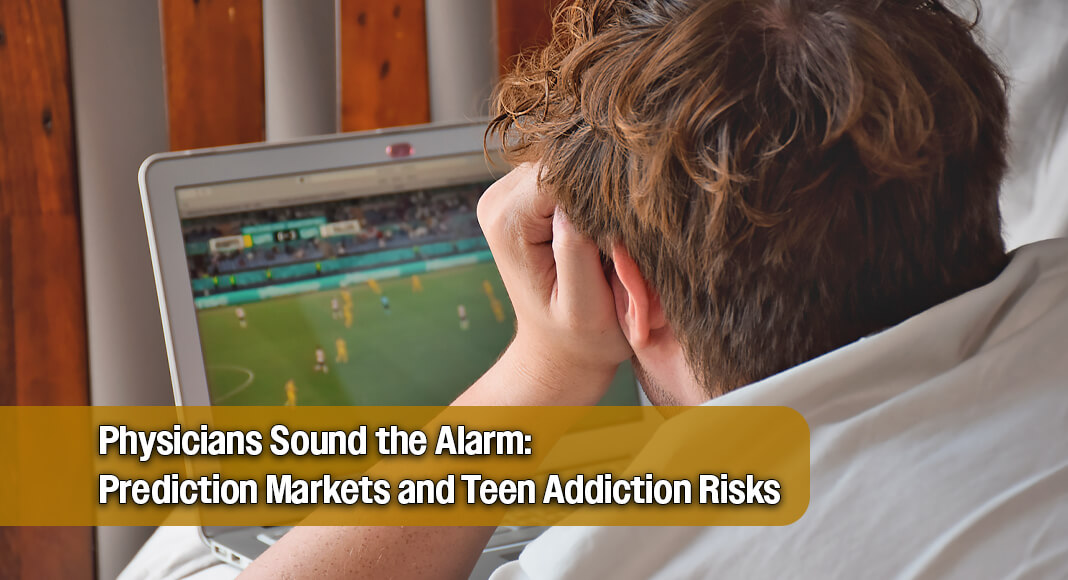
With online betting sites called prediction market platforms growing in popularity, the Texas Medical Association (TMA) is calling for increased regulations and safeguards to protect adolescents.
Young people are increasingly trying these prediction market platforms, which allow users to bet on future events like the outcome of sporting events or the results of an election via apps typically accessed on smartphones.

Texas physicians recently adopted new TMA policy recommending the minimum age of 21 years for participating in these platforms, in line with gambling and sports betting apps.
“It is not considered gambling [by legal definition], although it has all of the psychological trappings of gambling,” said Lindy McGee, MD, former chair of TMA’s Committee on Child and Adolescent Health.
Texas has laws against most types of gambling, but the state does not govern prediction market platforms. The federal Commodity Futures Trading Commission regulates these platforms, which are not classified as gambling.
Concerns over young people using these apps trouble physicians who worry that young males are more likely to develop problem-gambling behaviors, driving many into addiction and other negative behavioral health impacts.
More than 35% of boys aged 11 to 17 report having gambled in the past year, according to one study. Another found 58% of 18 to 22-year-olds surveyed engaged in at least one sports betting activity.
“The adolescent brain is primed to take risks,” making them susceptible to anything addictive like nicotine or alcohol – or gambling,” Dr. McGee said. “The younger you start, the more likely you are to become addicted to it.”
She knows teens who have accumulated thousands of dollars in debt using online platforms before they turned 21, saying “it’s like high school children are walking around with Vegas in their pockets.”
The TMA policy also calls for adoption of these safety regulations:
- Restrict advertising for prediction market platforms near schools and parks, and limit the presence of these ads on social media and gaming platforms that target adolescents;
- Prohibit advertising using celebrities, cartoons, or characters from games and shows marketed toward teens and children; and
- Ensure advertising for these platforms stipulates that participation is only for people aged 21 years or older.
TMA advocates for improvements to laws based on policy adopted by its physician members.
Physicians’ concerns come as lawmakers are also calling attention to the issue: The Texas Senate Committee on State Affairs is conducting an interim study on “the sudden inundation of prediction market gambling and the exploitation of federal law to circumvent Texas gambling prohibitions.”
TMA is the largest state medical society in the nation, representing more than 60,000 physician and medical student members. It is in Austin and has 110 component county medical societies around the state. TMA’s key objective since 1853 is to improve the health of all Texans.
Information source: Texas Medical Association (TMA)