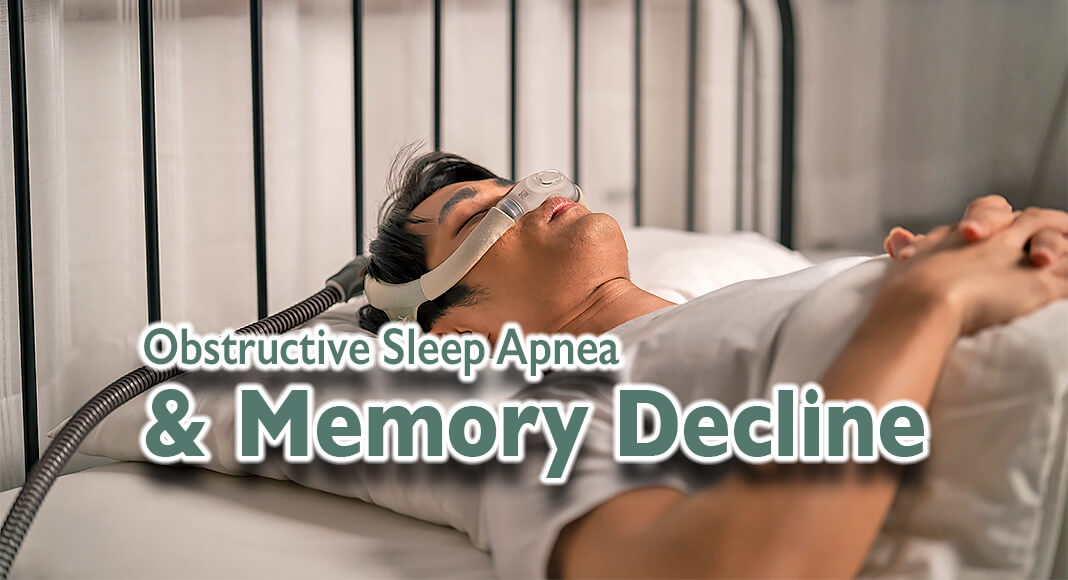
Obstructive Sleep Apnea During REM Stage Linked To Memory Decline

Translate to Spanish or other 102 languages!

Researchers have found that obstructive sleep apnea severity during the REM stage of sleep negatively impacts verbal memory. Image for illustration purposes

Medical News Today

- Advertisement -
  • worldwide and may raise the risk for several neurological conditions, including Alzheimer’s.
  • Researchers from the University of California, Irvine have found that sleep apnea severity during the REM stage of sleep negatively impacts verbal memory.
  • The negative impact is especially high in older adults at risk for Alzheimer’s, the researchers report.

Researchers estimate about 936 million adults globally live with obstructive sleep apnea (OSA)— a condition where a person has interruptions, or pauses, in breathing when sleeping, causing disrupted sleep.

Follow the link below to Medical News Today to read the full story:

https://www.medicalnewstoday.com/articles/sleep-apnea-severity-rem-sleep-memory-decline

- Advertisement -

Information Source: https://www.medicalnewstoday.com

- Advertisement -

- Advertisement -

- Advertisement -

More Articles

New $2.5 Million Funding Boosts Stroke Care Access

Governor Greg Abbott announced $2.5 million in grant funding for hospitals to increase access to lifesaving stroke care through mobile stroke units.

DHR Health Encourages Community to Recognize the Signs of Stroke

The DHR Health Neuroscience Institute is urging the community to learn vital stroke prevention and response strategies. According to the Centers for Disease Control and Prevention (CDC), stroke remains a leading cause of death and disability worldwide.

TMA’s Prescription for Texas Lawmakers

To curb rising health care costs, physicians say Texas must reduce administrative waste, preserve meaningful coverage, and scrutinize market structures that reward consolidation and higher-cost settings.

How Dreaming Under Anesthesia Helps Ease Surgery Anxiety

A new study suggests anesthesiologists may be able to safely increase the likelihood that patients dream during surgery — and that those dreams are typically positive, calming and associated with a better overall surgical experience.
- Advertisement -