







Mega Doctor News

By Hackensack Meridian Health
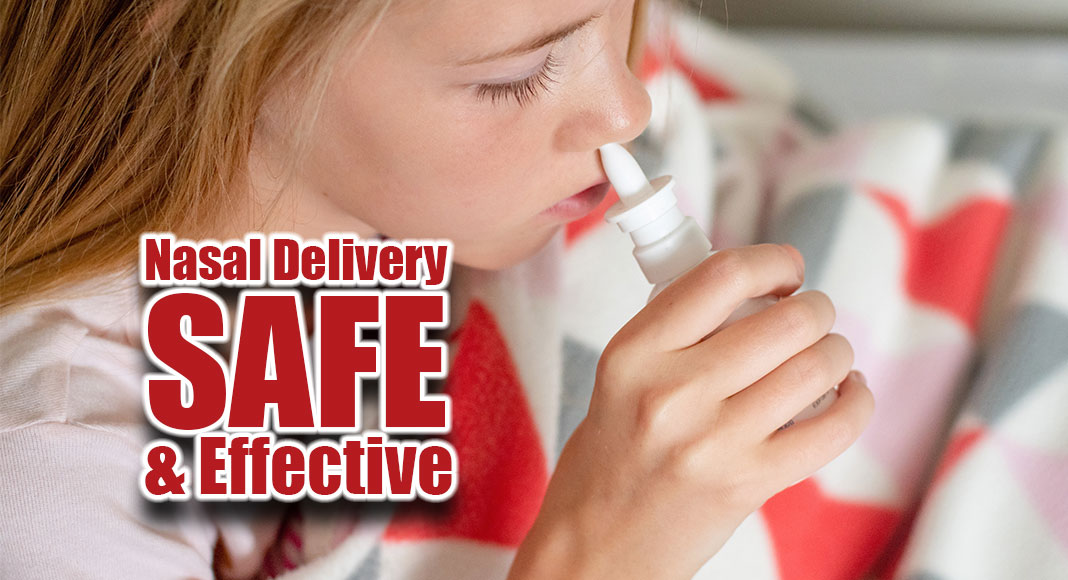
Newswise — Eric Segal, M.D., co-director of Epilepsy at Joseph M. Sanzari Children’s Hospital at Hackensack Meridian Children’s Health has published new research showing that diazepam nasal spray*, which uses a type of medication called a benzodiazepine, is safe and effective for emergency seizure cluster treatment in patients who are already taking oral benzodiazepines. The research was published in Epilepsia, the official journal of the International League Against Epilepsy.
“We are proud of the continued innovative research into the treatment of epilepsy being done by Dr. Segal and the Joseph M. Sanzari team of specialists,” said Judy Aschner, M.D., physician-in-chief, Hackensack Meridian Children’s Health. “This study marks another milestone in the work being done to provide children and their families with novel options for the treatment of frequent epileptic seizures.”

The long-term, phase 3, open-label safety study enrolled 175 patients with epilepsy who had seizures despite a stable antiseizure medication regimen. Patients were split into two groups: those who used oral benzodiazepines, and those who did not.
“Patients can take long-acting benzodiazepines orally in addition to using benzodiazepines emergently,” said Dr. Segal. “We wanted to find out if patients who take benzodiazepines have a tolerance that would prevent the diazepam nasal spray from working emergently, and would taking additional benzodiazepines via nasal spray cause any adverse effects?”
In addition to finding that there were no significant differences in tolerance or adverse effects between patient groups, Dr. Segal’s research also showed that there was a low need for a second dose of diazepam, regardless of whether patients use daily benzodiazepines.
Other FDA-approved benzodiazepine rescue medications for seizure clusters must be administered rectally, and often need to be given at higher doses to patients who are taking oral benzodiazepines. Dr. Segal’s research is significant because it shows that the nasal spray — a more socially acceptable method of rescue medication delivery — works at the same prescribed dose for those who are taking oral benzodiazepines and those who are not, with no additional risk of adverse events.
“Our children’s hospital at Hackensack University Medical Center is at the forefront of epilepsy research, helping to improve quality of life for children affected by seizure disorders,” said Mark Sparta, FACHE, president and chief hospital executive, Hackensack University Medical Center. “Establishing safety and effectiveness of this nasal spray medication gives physicians and patients another tool to manage seizures.”
“We congratulate Dr. Segal and his team for participating in research that will improve clinical practice and provide real-world benefits for patients with epilepsy,” said Ihor Sawczuk, M.D., regional president, Northern Market, Hackensack Meridian Health and assistant dean, Hackensack Meridian School of Medicine.


