







Mega Doctor News

By Ann and Robert H. Lurie Children’s Hospital of Chicago
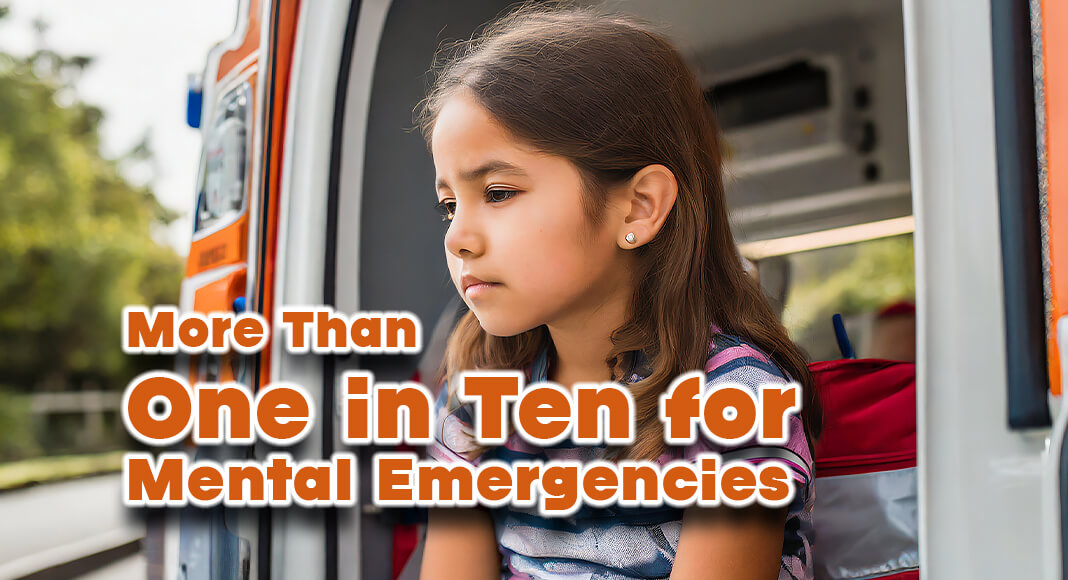
A new study offers a novel look at the scope of the youth mental health crisis across the United States – in 2019-2020, more than 1 in 10 kids who were brought to the hospital by ambulance had a behavioral health emergency. Out of these behavioral health emergencies, 85 percent were in 12-17-year-olds. Findings were published in the journal Academic Emergency Medicine.
“Our study found that pediatric behavioral health emergencies requiring an ambulance were much too frequent,” said senior author Jennifer Hoffmann, MD, MS, emergency medicine physician at Ann & Robert H. Lurie Children’s Hospital of Chicago and Assistant Professor of Pediatrics at Northwestern University Feinberg School of Medicine. “And yet, there are no national guidelines for EMS personnel to manage these patients. We found considerable variation in the use of sedative medications and restraints across different parts of the country. There is a great need for standardized EMS protocols for pediatric behavioral health emergencies. Currently only four states have these available.”

In addition to regional variation, the study found increased odds of restraint use among patients 6-11 years old. Children with developmental, communication and physical disabilities were three times more likely to be restrained than children without these disabilities.
“EMS personnel are likely less comfortable with weight-based dosing of sedative medications and EMS agencies in most states don’t have pediatric-specific sedative protocols, which might contribute to the increased use of physical restraints for younger children while in the ambulance,” said Julia Wnorowska, medical student at Northwestern University Feinberg School of Medicine and first author on the study. “Also, protocols for EMS personnel are needed to help manage children with autism spectrum disorders and other neurodevelopmental disabilities. Specific interventions could be developed to prevent and reduce agitation in this population, such as personalized emergency information forms that delineate patient-specific triggers and de-escalation techniques.”
“Future research should determine whether the use of restrictive interventions can be reduced, while simultaneously promoting staff safety, through strategies such as education and adoption of pediatric-specific protocols,” said Dr. Hoffmann, who also is the Children’s Research Fund Junior Board Research Scholar.
Research at Ann & Robert H. Lurie Children’s Hospital of Chicago is conducted through Stanley Manne Children’s Research Institute. The Manne Research Institute is focused on improving child health, transforming pediatric medicine and ensuring healthier futures through the relentless pursuit of knowledge. Lurie Children’s is a nonprofit organization committed to providing access to exceptional care for every child. It is ranked as one of the nation’s top children’s hospitals by U.S. News & World Report.Lurie Children’s is the pediatric training ground for Northwestern University Feinberg School of Medicine. Emergency medicine-focused research at Lurie Children’s is conducted through the Grainger Research Program in Pediatric Emergency Medicine.


