








loader image
Monday, February 9, 2026
65.7 F
McAllen
- Advertisement -

Mission Proclaims January as Cervical Cancer Awareness Month in Partnership with DHR Health

Translate to Spanish or other 102 languages!

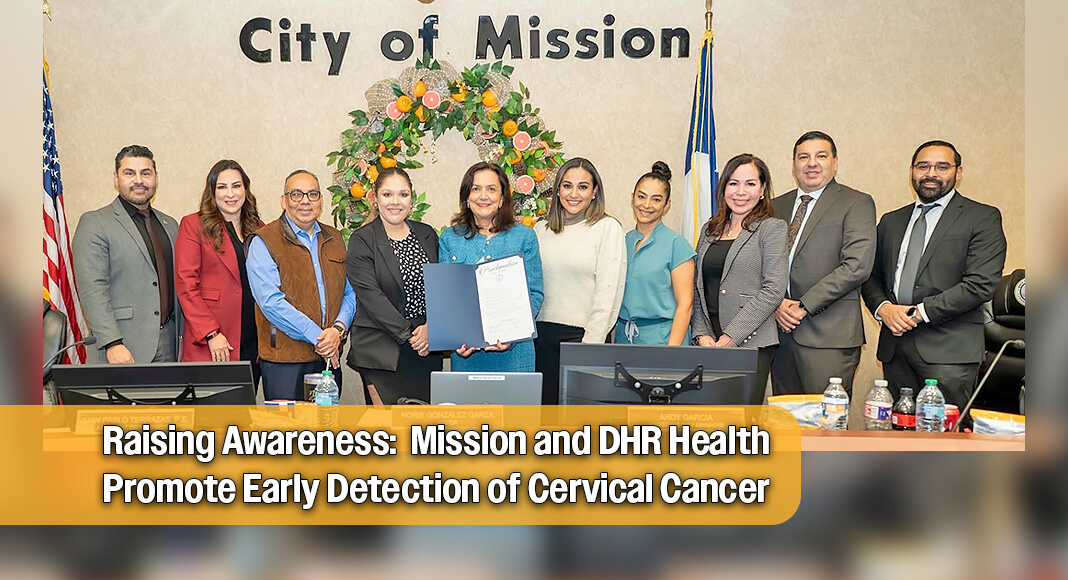
Mission Mayor Norie Gonzalez Garza along with DHR Health and City of Mission officials at the recent Mission City Hall Meeting to proclaim January as Cervical Cancer Awareness Month. Image courtesy of DHR Health.
- Advertisement -

MISSION, Texas – Representatives from the DHR Health Oncology Institute attended the Mission City Hall meeting on Tuesday, January 27, 2026, to proclaim January as Cervical Cancer Awareness Month. Cervical cancer is a serious health condition that is often preventable, yet about 13,000 people in the United States are diagnosed each year and nearly 4,000 lose their battle to the disease. Screening tests such as the Pap and HPV tests can detect early changes before cancer develops, and the HPV vaccine helps protect against the virus that causes most cervical cancers. Among the representatives, Amanda Wing, Community Outreach Coordinator for the DHR Health Oncology Institute, emphasized that early detection and vaccination save lives.


- Advertisement -
- Advertisement -

- Advertisement -

More Articles

DHR Health Strengthens Heart Health Resources for Families Across the RGV

Did you know that heart disease is one of the leading causes of death in the United States and that the Hispanic population faces a higher risk due to the high rates of blood pressure, high cholesterol, diabetes and obesity?

STHS Heart Celebrates 650th Robotic-Assisted Surgery

Mega Doctor News Since opening 30 years ago as one of the...

Inside the Physiology and Neuroscience of Winter Olympians

What makes Olympians the very best at what they do — even in cold, slippery or icy conditions? 

Study Finds 60% of American Women Choose Clinic Visits Over At‑Home Cervical Screening

American women now have the option of screening for cervical cancer at home, using newly approved self-collection tools. While experts hope this will increase uptake in the under-screened population, a first-of-its kind study by researchers from The University of Texas MD Anderson Cancer Center found the majority (60.8%) still prefer to see a medical professional in-clinic.
- Advertisement -
×

