







Mega Doctor News

Newswise — Baltimore, MD – Charles C. Park, M.D., Ph.D., Director of The Minimally Invasive Brain and Spine Center at Mercy Medical Center in Baltimore, is now utilizing a less invasive, spinal interbody fusion method called OptiLIF®.
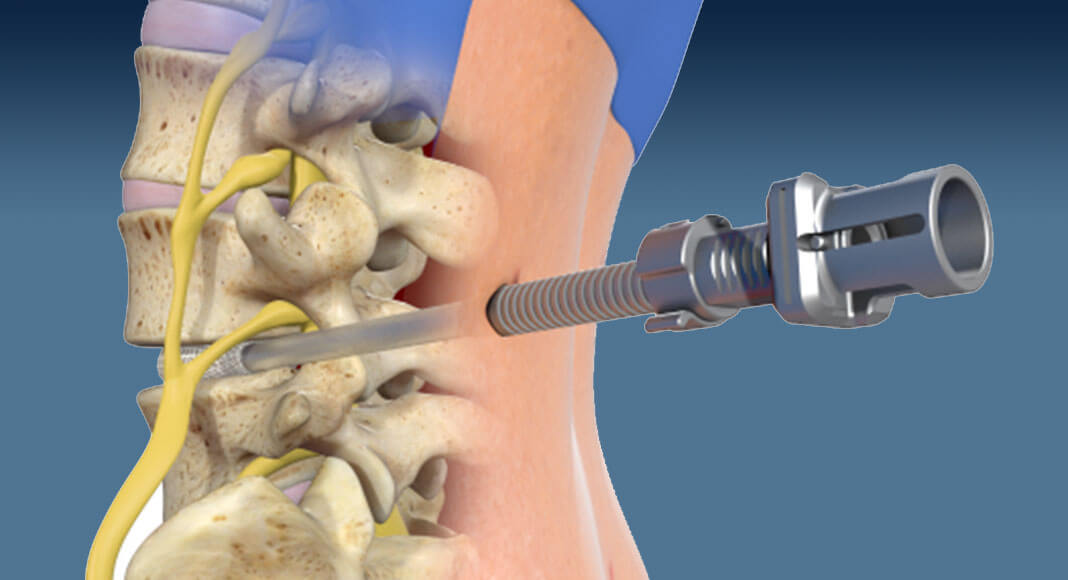
OptiLIF requires only a 1-cm incision to access the spine. As with other minimally invasive surgeries, additional small incisions will be used to place screws that add further support.
“The incision to access the patient’s spine is about the width of a common soda straw,” Dr. Park explained. According to Dr. Park, this narrow opening allows the surgeon to avoid nerves and arteries that surround the spine, reducing risk of injury to the nerves and vasculature.

Herniated disc material that is pressing on a nerve root or the spinal cord and causing pain is removed and an implant is inserted, known as OptiMesh®, into the disc space. Bone graft is used to fill the implant, expanding it to provide support and stability. After the implant is placed, short screws and rods are inserted to further support the spine during the patient’s recovery.
Up to 80% of Americans will experience back pain in their lives1 with 1-2% of adults becoming disabled as a result.2 For people who are suffering from low back and leg pain, and who have failed conservative treatment, lumbar interbody fusion, or more commonly called, spinal fusion may be a surgical option.
Results from the procedure are demonstrated by patients who were part of an FDA regulated clinical trial.3 On average these patients experienced a 63% reduction in their low back pain and a 54% reduction in their disability six months following surgery. Additionally, 92% of patients reported ‘excellent’ or ‘good’ satisfaction two years after surgery.3
“As a minimally invasive approach, the OptiLIF procedure is less impactful on the patient and reduces operating times relative to other types of spine surgery. As a result, patients can often leave the hospital the same or the following day of their surgery,” Dr. Park said.
Dr. Park and his patients work together with other care providers to return patients to their activities quickly. He says many of his patients return to work in about a month.


