








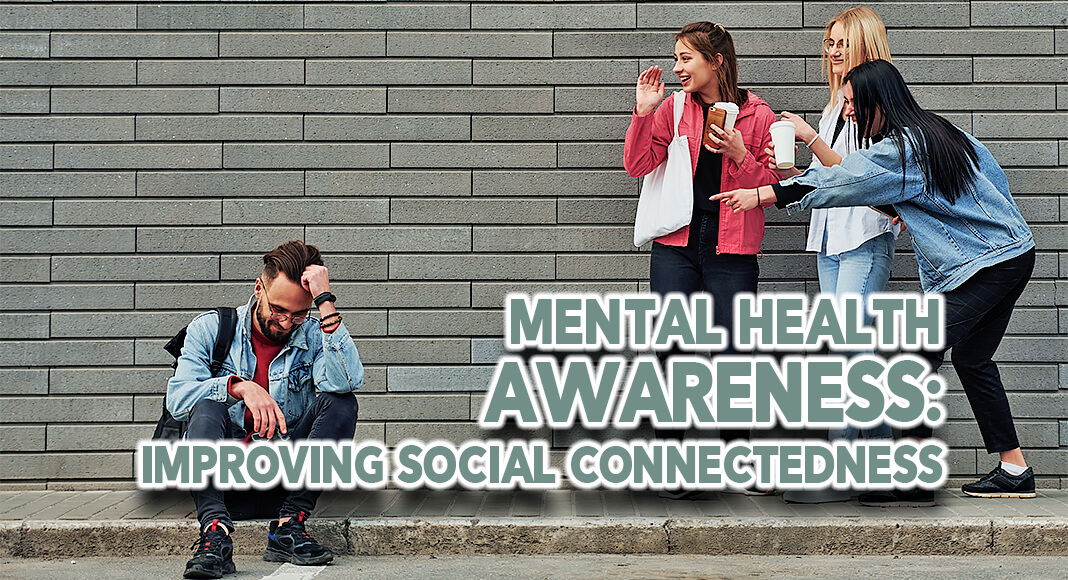
MENTAL HEALTH AWARENESS: Improving Social Connectedness

Translate to Spanish or other 102 languages!

Making social connections can be hard, especially if you are in poor health, having problems with money, or living alone. But a few small acts of connection can build supportive, meaningful relationships. Image for illustration purposes
- Advertisement -
HIGHLIGHTS:
Small acts to build social connections can make a difference.
Improving social connections can be simple, but meaningful.
Each of us can work to build valuable connections.
There are ways to create new and stronger relationships to improve health and well-being.

Background

Building social connections matters

People with meaningful social connections experience benefits, such as:
Less stress.
Better sleep.
Longer, healthier life.

Laying the groundwork

- Advertisement -

Making social connections can be hard, especially if you are in poor health, having problems with money, or living alone. But a few small acts of connection can build supportive, meaningful relationships.

We can do simple things like reaching out and checking on one another. There is power in a simple check-in with a friend to let them know you’re thinking about them.

Even though no official guidelines exist, below are some suggestions for what you can do to improve social connections. 

Making social connections
Establish and nurture different types of connections with people
Make time in your routine to contact others who care about you.
Reach out to different people to create a broad network of support.
Join a group with shared interests to create a sense of belonging.
Give and take
Reach out for help, even when it’s hard to ask for it.
Provide support to others in need of help.
Find ways to be responsive and grateful to others. Gratitude Works!
Strengthen the quality of social connections
Focus on building high-quality, strong, meaningful social connections.
Find ways to be responsive, supportive, and grateful to others.
Take steps to address conflict or negative feelings when they arise.
Address barriers
Take care of your health so you can readily connect socially and have fun.
Don’t let screen time distract you from connecting with people in person.
Find ways to share the things you’re already doing, such as exercising or cooking with others.
Seek help if feeling disconnected, lonely, or stressed
Health issues, divorce, or the death of a loved one can be very challenging.
Talk with a professional who can identify ways to help you.
Ideas for making social connections 
Spend more quality time with family and friends.
Spend time with others in nature.
Express gratitude to others.
Volunteer with a group or organization.
Get involved in your community.
Get to know your neighbors.

Join a community garden.

- Advertisement -

Take the “5-for-5 Connection Challenge” as a way to build and strengthen your own relationships. You can inspire others to incorporate connection in their daily lives! 

Things parents can doPromote social connections for children or teens
Model and encourage healthy social connections and relationships.
Encourage healthy, diverse relationships with peers.
Create ways to help them meet people who are different from them.
Help them develop safe and stable relationships with adults, such as:
Family members, friends, neighbors, and teachers.
Talk with them about negative influences or stresses, such as:
Peer pressure.
Rejection or not belonging.
Pay attention to warning signs, such as:
Changes in sleep patterns.
Changes in energy levels.
Withdrawing from friends and family.
Talk to them about cyberbullying.

Reach out to your health care provider about any concerns or changes in your child’s social behaviors or connections.

Source Information: CDC

- Advertisement -
- Advertisement -

- Advertisement -

More Articles

USDA “Real Food First” Rule Doubles Stocking Requirements for SNAP Retailers

The U.S. Department of Agriculture (USDA) published the final rule regarding stocking standards for retailers participating in the Supplemental Nutrition Assistance Program (SNAP), ensuring a broader variety of nutritious food is available to SNAP participants at authorized retailers across the country.

Why Older Adults are Choosing Edibles Over Pills

For adults over 60, cannabis use is increasing faster than in any other demographic.

Ultrasonic Needles Triple the Yield of Cancer Biopsies

Mega Doctor News by Aalto University Newswise — Developed at Aalto University over several years,...

Scientists Reveal the “Hidden Entryway” Gut Bacteria Use to Spark Tumors

Since a landmark 2009 study, researchers have known that a common gut bacterium, Bacteroides fragilis, drives colon tumor formation, potentially leading to colorectal cancer, by secreting a toxin that damages the lining of the colon. But until now, the exact mechanism the toxin uses to latch onto those cells remained a mystery.
- Advertisement -


