







Mega Doctor News

By American Cancer Society (ACS)
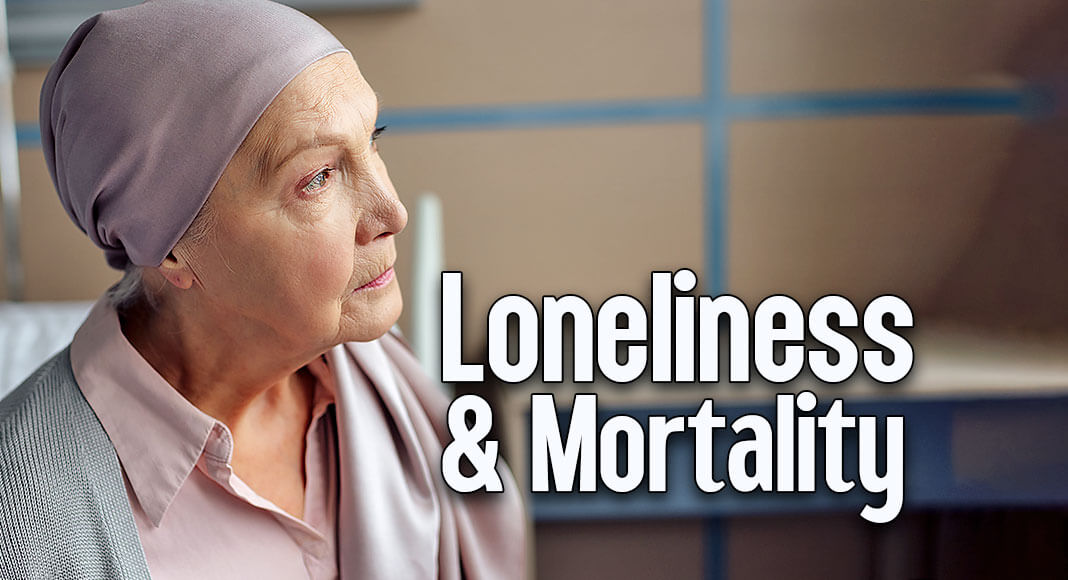
Newswise — A new study led by researchers at the American Cancer Society (ACS) showed people living with cancer with higher reported loneliness have an increased mortality risk. The findings were presented at this year’s annual meeting of the American Society of Clinical Oncology (ASCO) in Chicago, June 2-6.
Researchers, led by Jingxuan Zhao, senior associate scientist, health services research at the American Cancer Society and lead author of the study, examined survey data from the 2008-2018 Health and Retirement Study, conducted among individuals 50 years old and over. Loneliness was measured at multiple time points and was categorized into four levels: low/no loneliness, mild loneliness, moderate loneliness, and high loneliness.

According to study results, survivors reporting elevated loneliness scores had higher hazard ratios, indicating higher mortality risks, when compared to the low/no loneliness group. Researchers observed the highest risk among the high loneliness group, even after adjusting for sociodemographic characteristics. Study authors recommend implementing programs to screen for loneliness among cancer survivors and to provide social support to those in need.
About the American Cancer Society The American Cancer Society is a leading cancer-fighting organization with a vision to end cancer as we know it, for everyone. For more than 100 years, we have been improving the lives of people with cancer and their families as the only organization combating cancer through advocacy, research, and patient support. We are committed to ensuring everyone has an opportunity to prevent, detect, treat, and survive cancer. To learn more, visit cancer.org or call our 24/7 helpline at 1-800-227-2345. Connect with us on Facebook, Twitter, and Instagram.


