








loader image
Saturday, December 6, 2025
59.5 F
McAllen
- Advertisement -

LEARN MORE ABOUT DR. BILAL BIN HAFEEZ

Translate to Spanish or other 102 languages!

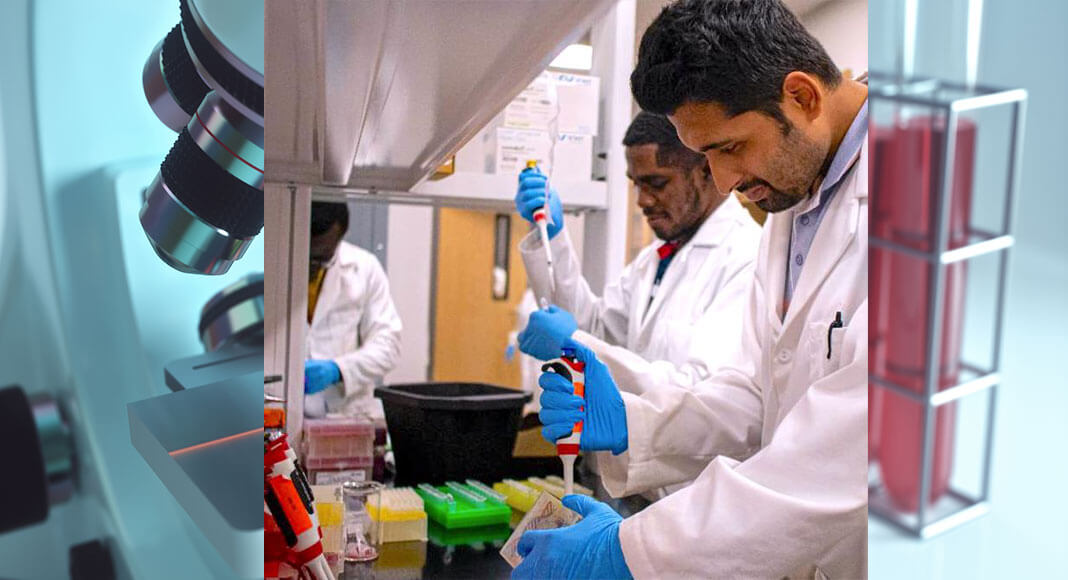
Graduate research assistants Emmanuel Anning, Godwin Peasah-Darkwah and Asif Shahriar work in the lab to assist in the development of a treatment for advanced pancreatic cancer. (UTRGV Image Office of Research & New Program Development)

Mega Doctor News

- Advertisement -

Hafeez is the founding member of the first nationally recognized South Texas Center of Excellence in Cancer Immunology at the UTRGV School of Medicine and is an accomplished researcher with a background in immunopharmacology, cancer therapeutics and cancer biology. Hafeez, a Nehtaur, Bijnor, Uttar Pradesh, India native, has earned prestigious grant awards and is an active member of the American Association for Cancer Research and the Indian Association for Cancer Research. His significant contributions to cancer biology and molecular therapeutics have led to his numerous published manuscripts in scientific journals. 

- Advertisement -


- Advertisement -

- Advertisement -

More Articles

ACIP: Parents to Decide on Hepatitis B Vaccine for Infants

The Centers for Disease Control and Prevention's (CDC) Advisory Committee on Immunization Practices (ACIP) today voted 8 to 3 to recommend individual-based decision-making for parents deciding whether to give the hepatitis B vaccine, including the birth dose, to infants born to women who test negative for the virus.

CDC Warns of Salmonella Outbreak Tied to Moringa Leaf in Supplements

11 people from 7 states have gotten sick from the same strain of Salmonella. Three people have been hospitalized, and no deaths have been reported.

Celebrating Resilience: DHR Health Trauma Center’s Annual Luncheon

Mega Doctor News Edinburg, Texas: DHR Health’s Level I Trauma Center hosted a...

Poor Kidney Health Linked to Higher Levels of Alzheimer’s Biomarkers in Blood

People with impaired kidney function have higher levels of Alzheimer’s biomarkers in their blood, but not an increased risk of dementia, according to a study published December 3, 2025, in Neurology®, the medical journal of the American Academy of Neurology.
- Advertisement -
×

