








ION’s Salloum Announced as the Sujata G. Krishnan Endowed Chair in Neuroscience  

Translate to Spanish or other 102 languages!

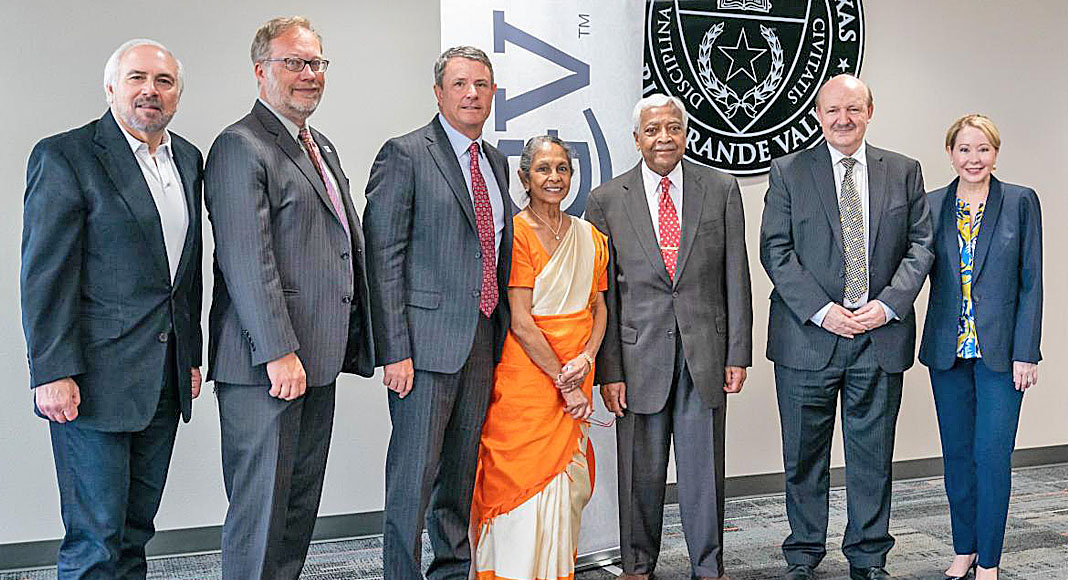
UTRGV on March 21 officially announced the appointment of Dr. Ihsan Salloum as the endowed chair in the Institute of Neuroscience, benefiting the UTRGV School of Medicine. Mid-Valley physicians Dr. Subram Krishnan and Dr. Elizabeth Krishnan established the Sujata G. Krishnan Endowed Chair in Neuroscience benefitting the UTRGV School of Medicine, in honor of their daughter. From left are UTRGV President Guy Bailey; Dr. Michael Dobbs, chair of the UTRGV School of Medicine’s Department of Neurology; Dr. Michael Hocker, dean of the UTRGV School of Medicine and senior vice president for UT Health RGV; Mid-Valley physicians Dr. Elizabeth Krishnan and Dr. Subram Krishnan; Dr. Ihsan M. Salloum, director of the UTRGV School of Medicine’s Institute of Neuroscience and chair of the UTRGV Department of Neuroscience; and Dr. Kelly Nassour, executive vice president for Institutional Advancement. (UTRGV Photo by David Pike)
UTRGV on March 21 officially announced the appointment of Dr. Ihsan Salloum as the endowed chair in the Institute of Neuroscience, benefiting the UTRGV School of Medicine. Mid-Valley physicians Dr. Subram Krishnan and Dr. Elizabeth Krishnan established the Sujata G. Krishnan Endowed Chair in Neuroscience benefitting the UTRGV School of Medicine, in honor of their daughter. From left are UTRGV President Guy Bailey; Dr. Michael Dobbs, chair of the UTRGV School of Medicine’s Department of Neurology; Dr. Michael Hocker, dean of the UTRGV School of Medicine and senior vice president for UT Health RGV; Mid-Valley physicians Dr. Elizabeth Krishnan and Dr. Subram Krishnan; Dr. Ihsan M. Salloum, director of the UTRGV School of Medicine’s Institute of Neuroscience and chair of the UTRGV Department of Neuroscience; and Dr. Kelly Nassour, executive vice president for Institutional Advancement. (UTRGV Photo by David Pike) 

Mega Doctor News

- Advertisement -

By Saira Cabrera 

RIO GRANDE VALLEY, TEXAS – The University of Texas Rio Grande Valley has announced the appointment of Dr. Ihsan Salloum as the endowed chair in the Institute of Neuroscience benefiting the UTRGV School of Medicine. 

The university made the official announcement March 21, 2022, at the Rio Bank Building in McAllen. 

- Advertisement -

The gift was named in honor of Sujata G. Krishnan, daughter of mid-Valley physicians Drs. Subram and Elizabeth Krishnan, as an award to a prestigious scholar in the field of neuroscience. 

Salloum, director of the UTRGV School of Medicine’s Institute of Neuroscience and chair of the UTRGV Department of Neuroscience, expressed his gratitude to the Drs. Krishnan for their support. 

“The Sujata G. Krishnan Endowed Chair in Neuroscience will help advance neuroscience research and education at UTRGV, and help advance our vision to transform brain health,” Salloum said. “The endowment will support the innovative state-of-the-art research in neuroscience and focus on developing cutting-edge investigation.” 

The Drs. Krishnan said they established the neuroscience chair to continue to help and support the many people who suffer from neurological disorders. They also hope to increase awareness in neuroscience; encourage research, knowledge and treatment; and retain future physicians interested in conducting neuroscience investigation. 

- Advertisement -

“Some physicians we know who came to the Valley left because they could never conduct the research they were looking for,” Subram Krishnan said at the announcement. “So, today, it’s a distinct pleasure that we now have a neuroscience institute focusing on research in the Rio Grande Valley. We hope to increase interest and resources in the field through these efforts.” 

Dr. Michael B. Hocker, dean of the UTRGV School of Medicine and senior vice president for UT Health RGV, said the endowed chair in neuroscience was instrumental in developing the UTRGV Institute of Neuroscience and in creating more opportunities for the Valley. 

“To be able to recruit and retain Dr. Salloum was possible only because of the generous gift of Drs. Krishnan, so I want to thank you,” Hocker said. “Today is a fantastic opportunity to thank two incredibly generous people, and to note the tremendous work that will come from the endowment.” 

The gift to UTRGV is designed to help advance critical research and neuroscience programming in South Texas and empower the next generation of physicians. 

Dr. Kelly Nassour, executive vice president for UTRGV Institutional Advancement, said the announcement was an important opportunity to celebrate not just the generosity of the Drs. Krishnan, but also Salloum’s accomplishments. 

“It’s a wonderful testament to the philanthropic efforts of the Drs. Krishnan to elevate the research we are doing now and will do in neuroscience,” Nassour said. 

- Advertisement -
- Advertisement -

- Advertisement -

More Articles

Easy Ways to Prepare Your Child for Kindergarten

 If your little one is getting ready to start kindergarten next month, now is a good time to start preparing them, and not just with learning things like letters, numbers and colors.

UT Health San Antonio Paves Way for Safer Immunotherapy

Scientists at UT Health San Antonio, the academic health center of The University of Texas at San Antonio (UT San Antonio), have found a potential path to maintaining the cancer-fighting benefits of one type of immunotherapy while limiting harmful organ damage, providing new hope for this promising treatment.

Texas Invests $5.8M to Expand Emergency and Trauma Care Training

Governor Greg Abbott announced twenty-four grants totaling more than $5.8 million to graduate medical and nursing schools to help train doctors and nurses in emergency and trauma care and expand the state’s healthcare workforce.

Why Your Diet Might Not Be the Only Reason Your Cholesterol Is High

Can a low-carb diet cause your cholesterol to skyrocket? This question has vexed researchers and influencers alike as the popularity of low-carbohydrate diets has surged, yet the evidence has remained mixed. New research suggests that the answer depends on your genes. 
- Advertisement -

