Mega Doctor News
By UT Southwestern Medical Center
Newswise — DALLAS – Mold growth in homes is a significant trigger for hypersensitivity pneumonitis (HP), an inflammatory lung disease, according to a new study led by UT Southwestern Medical Center. Published in PLOS One, the research represents the largest study to date linking home mold exposure to HP and the first from North Texas.

“This case series is important because it links home mold exposure with the development of hypersensitivity pneumonitis, which informs our efforts to diagnose and treat interstitial lung diseases,” said lead author Traci Adams, M.D., Assistant Professor of Internal Medicine in the Division of Pulmonary and Critical Care Medicine at UT Southwestern.

HP, a type of interstitial lung disease (ILD), can develop when repeated exposure to inhaled antigens such as mold spores triggers an immune response that damages lung tissue. Symptoms, including chronic cough and shortness of breath, can mimic other lung conditions, complicating diagnosis. Identifying household mold as the source allows for its removal, which has been shown to slow the progression of the disease and, in some cases, result in improved lung function. UT Southwestern’s Interstitial Lung Disease Program directed by Dr. Adams is committed to advancing patient care through research and education focused on ILD.
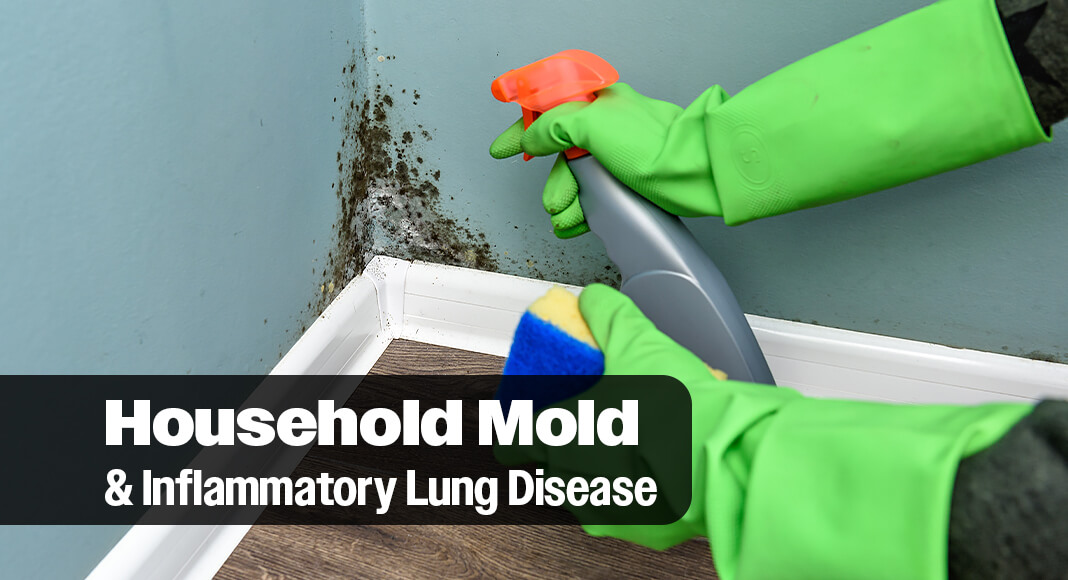
In the retrospective study, the researchers examined records of 231 patients with HP between 2011 and 2019 who were evaluated at UT Southwestern and found that 54 developed the disease due to mold exposure in their homes. Chronic or recurring water damage was the primary source of mold growth, most often found in bathrooms, bedrooms, and air conditioning units.
Among the 41 patients who removed the source of mold (either through professional remediation or moving), about 12% showed significant improvement in lung function within three to four months. These patients maintained those gains for at least a year, though four of the five cases involved fibrotic HP, where improvement is generally less common due to irreversible scar tissue.
The study also found that the median survival for patients with home mold-associated HP who did not undergo a lung transplant was about 97 months. This was comparable to the survival outcomes in patients with HP caused by mold exposure outside the home or by avian antigens.
The results underscore the importance of clinicians taking detailed environmental histories when evaluating patients with ILD. Many patients in the study were unaware of the extent of mold exposure in their homes, and only 37% had a formal inspection by an industrial hygienist. In most cases, patients, family members, or contractors identified the presence of mold.
“This study advances the field by informing clinicians of the type of exposures that can lead to the development of hypersensitivity pneumonitis,” Dr. Adams said.
In addition, identifying mold exposure and using minimally invasive tests, such as bronchoscopy, may allow for the diagnosis of HP without the risks associated with traditional surgical lung biopsies.
These findings are especially timely, as the growing number of extreme weather events increases the risk of household mold growth, particularly in regions like North Texas where flooding and water intrusion are common.
“We are constantly looking for ways to improve the diagnosis and management of interstitial lung disease,” Dr. Adams said. “I am honored to be able to care for patients with ILD and apply what we learn from our research to improving the lives of patients with ILD.”
Craig Glazer, M.D., M.S.P.H., Associate Vice President and Chief Medical Officer for William P. Clements Jr. University Hospital and Professor of Internal Medicine at UTSW, contributed to this study.