Mega Doctor News

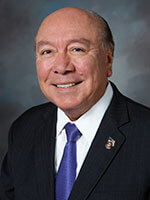
by State Senator Juan “Chuy” Hinojosa, October 2021
“The greatest wealth is health” is an aphorism that captures the impact of health on our lives and underscores the importance of access to health care for all, regardless of income. It ties-in to the frequently debated question, namely, “Is health care a right or a privilege?”
In the Rio Grande Valley or “Valley”, almost half a million low-income Texans rely on Medicaid for healthcare. This program covers 1 in 12 adults, 2 in 5 children, and 5 in 8 nursing home residents statewide. An even greater share of these populations receive Medicaid services in the Valley because the number of individuals living in poverty in our border communities is almost double the number of Medicaid eligible individuals across the state. With our community disproportionately affected by higher rates of obesity, diabetes mellitus, influenza and pneumonia, and kidney and liver disease, Medicaid coverage is essential to our community’s health.

Because Medicaid provides an essential safety net to our community’s working poor, children, and seniors, it is essential that the current dispute between the Texas Health and Human Services Commission (HHSC) and the federal government be resolved.
I am hopeful that our current Medicaid waiver and several related supplemental directed payment programs (DPPs) will be approved by the federal Centers for Medicare and Medicaid Services (CMS). These DPPs are essential to support health care services for thousands in the Rio Grande Valley, including providing nearly $180 million a year to hospitals to help cover these costs.
Years ago, multiple counties in the Valley, including Hidalgo County, implemented a new financing structure that has been successful, under legislation I authored, authorizing a Local Provider Participation Fund (LPPF). These LPPFs allow for hospital districts, counties and cities throughout Texas to fund the required non-federal share of Medicaid to be financed through mandatory payments from local hospitals, without raising property taxes. Such a financing structure is an integral part of our Medicaid ecosystem, especially in the Rio Grande Valley, where we simply do not have the dense, high-income tax base of the state’s urban centers.
However, these LPPFs have become a key sticking point in the negotiations between the federal government and the State of Texas. The ongoing dispute has disrupted Medicaid funding with no clear end in sight.
Every dollar of this essential funding expired on Aug. 30 and would have been replaced seamlessly on Sept. 1. Instead, the DPPs are stuck in limbo as Texas and the federal government navigate their dispute. Consequently, our local Medicaid providers have gone a full month without this essential funding—funding that is critical to supporting our safety net.
Much of our region is “medically underserved,” as defined by the federal government. That means most of our residents are within a two-hour drive of only one hospital, and many of those hospitals operate month-to-month, without the reserves to withstand a sudden and prolonged drop in Medicaid funding.
Our communities cannot afford to lose essential providers—especially during an ongoing pandemic! The loss of essential hospital Medicaid services would undermine our region’s recovery efforts and would further entrench longstanding disparities in health outcomes and inequitable access to care for our region’s strong Hispanic population.
I urge both sides to resolve this dispute as quickly as possible. Lives depend on it.