









Mega Doctor News
Diabetes is one of the most prevalent chronic diseases in the United States, affecting more than 10% of the population. According to the American Diabetes Association, an additional 1.5 million Americans are diagnosed every year; and at 11.7%, Hispanics are the second highest race/ethnicity affected. In the Rio Grande Valley, a predominantly Latino community, health experts believe the number of those affected with diabetes is closer to 25% with many unaware they have the disease.
If neglected, diabetes can lead to complications for nearly every organ, from the heart and blood vessels to gums and teeth. Maintaining a normal blood sugar level takes work — being careful with one’s diet, staying physically active and in certain cases taking medication. But committing to a healthy lifestyle can help avert major health consequences, allowing those diagnosed to live long, high-quality lives.
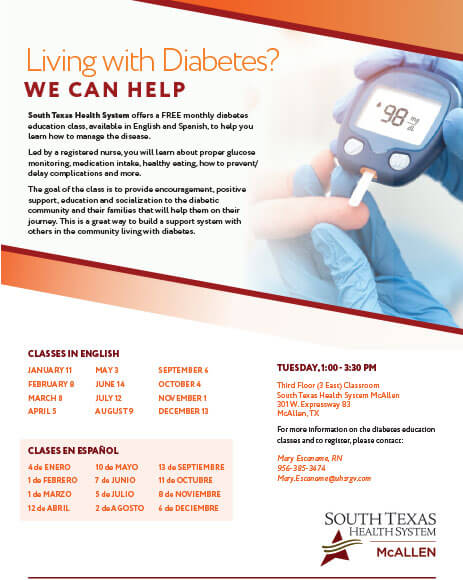
To help educate local diabetics on proper disease management, South Texas Health System offers a free monthly diabetes education class with sessions in both English and Spanish at South Texas Health System McAllen. STHS registered nurse and the system’s diabetic education coordinator Mary Escaname leads the in-person classes, which cover glucose monitoring, medication intake, healthy eating, how to prevent/delay complications and more.

“Among our population, it’s not uncommon for at least one member of a household to have diabetes,” Escaname said. “In many cases we’ve also seen people who have not been diagnosed suffer irreversible damage. It’s extremely important to be health-conscious by nourishing your body with the right nutrition and regularly visiting your primary care physician — especially if there’s a family history of diabetes.
“Through these classes we provide an encouraging, supportive environment and aim to show that anyone can adopt a healthy lifestyle beginning one step at a time. The resulting health and energy are well worth leaving behind bad habits behind.”
The monthly classes are hosted in the Third Floor East classroom of South Texas Health System McAllen and are also open to friends and family members of diabetics. The Spanish classes are held every first Tuesday of the month, the English classes are held ever second Tuesday of the month. February’s sessions are scheduled for Tuesday, February 1 (Spanish) and Tuesday, February 8 (English). For more information and to register for the classes, contact Mary Escaname at 956-385-3474 or mary.escaname@uhsrgv.com.


