







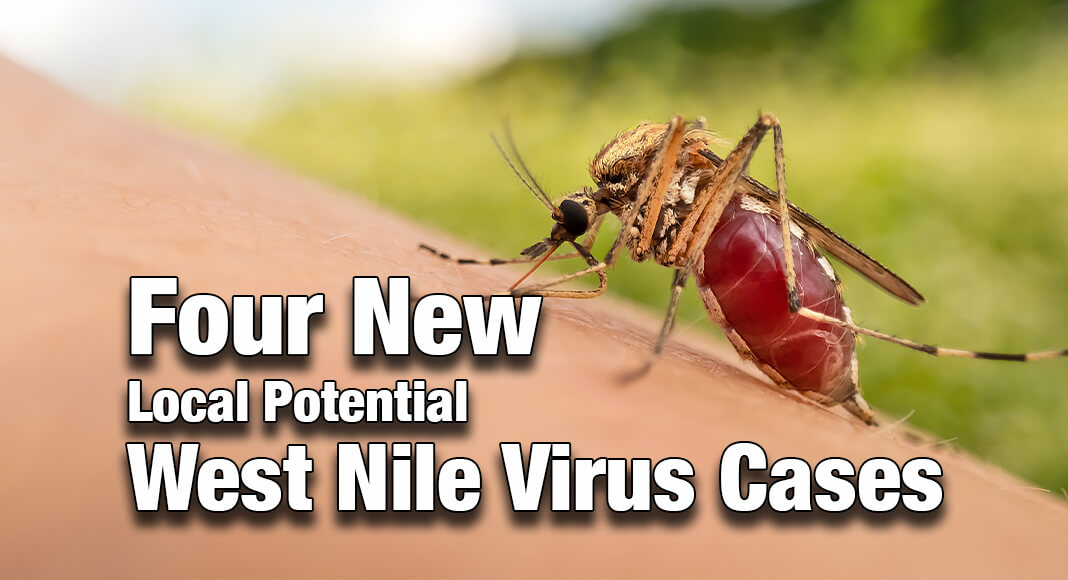

Four New Local Potential West Nile Virus Cases

Multiple Cases Elsewhere in Texas

Translate to Spanish or other 102 languages!

Hidalgo County Health and Human Services is actively investigating four new potential cases of West Nile Virus locally and it urges residents to take preventive measures against mosquitoes as new cases arise in Central and North Texas. Image for illustration purposes
- Advertisement -

EDINBURG, Texas – Hidalgo County Health and Human Services is actively investigating four new potential cases of West Nile Virus locally and it urges residents to take preventive measures against mosquitoes as new cases arise in Central and North Texas.

These local investigations are being conducted to determine the source of the infection in conjunction with the Texas Department of State Health Services (DSHS). The geographical areas being investigated are located in the central and western part of the county.

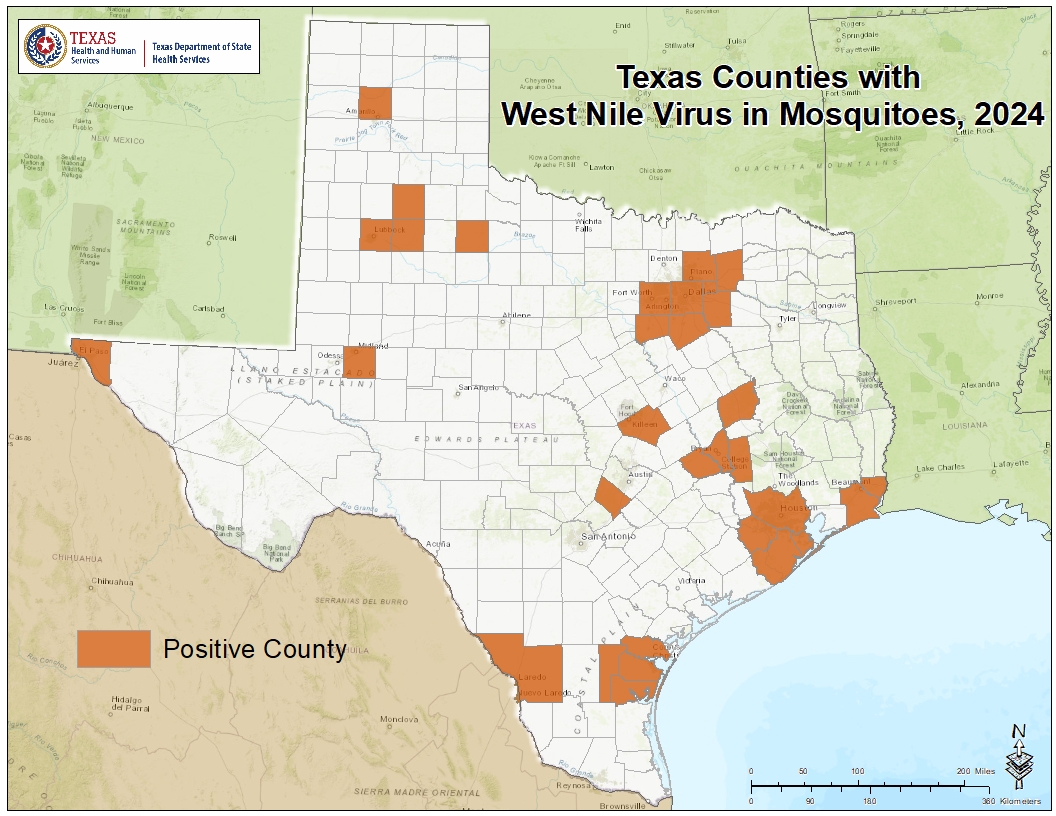
As part of its ongoing efforts, the health department continues to monitor and conduct mosquito surveillance in partnership with local municipalities. Mosquito samples being sent to the Texas DSHS laboratory in Austin and while all local mosquito pools tested have returned negative results, more than 1,000 positive mosquito pools have been detected in northern Texas this year, and West Nile Virus cases have been reported in Travis, Bexar, Harris, Dallas, Denton, and Montgomery counties.

- Advertisement -
Image courtesy of Hidalgo County

The health department urges residents to remain cautious and take preventive measures when outdoors, such as wearing long-sleeved clothing and using EPA-approved mosquito repellent. This guidance applies whether traveling locally, statewide, or abroad.

After recent rains, the public is urged to eliminate mosquito breeding grounds by removing standing water from items such as buckets, unused pools, and tires. For water sources that cannot be drained, such as bird baths, mosquito dunks are recommended to prevent mosquito larvae from maturing into adult mosquitoes.

Healthcare providers are encouraged to consider ordering an arboviral panel for patients exhibiting symptoms consistent with arboviral illnesses, especially those reporting mosquito bites. An arboviral panel should include screening for West Nile Virus, Saint Louis encephalitis and Dengue Virus.


- Advertisement -
- Advertisement -

- Advertisement -

More Articles

Study Reveals Link Between Parent and Child Weight Is Mostly Genetic

The link between parents’ body mass index (BMI) and their children’s BMI in childhood is driven largely by genetic inheritance, rather than by any direct biological effects of parental weight during pregnancy, a new study suggests.

DHR Health Continues to Lead the Way in Treatment of Alzheimer’s Disease for the RGV

Two years after DHR Health announced it was the first hospital south of San Antonio to successfully administer Leqembi, an FDA-approved intravenous treatment for early Alzheimer’s disease, DHR Health continues to expand access to advanced Alzheimer’s care for patients in the Rio Grande Valley being now the only facility doing amyloid PET Scans, a diagnostic test to accurately diagnose Alzheimer’s disease. DHR Health also offers Kisunla, another FDA-approved intravenous treatment for early symptomatic Alzheimer’s disease.

The Genetic Armor Defeating Colorectal Cancer

A team of scientists from the Barbara Ann Karmanos Cancer Institute, Wayne State University, and institutions across the U.S., have published a landmark paper on the role of TGFBR1*6A, a naturally occurring genetic mutation in the TGFBR1 gene found in approximately 14 percent of the general population. Image for illustration purposes

Why CKM Syndrome Requires a Coordinated Care Point Person

When the term “cardiovascular-kidney-metabolic syndrome” was created in 2023 to define how heart disease, kidney disease, obesity and diabetes are connected, one goal was to help health professionals understand the benefits of working together.
- Advertisement -
