








Mega Doctor News
By Michigan Medicine – University of Michigan
Newswise – Even though microbial keratitis is a preventable cause of blindness, it’s a complex infection to treat, and many patients have lasting vision impairment.
Previous studies have identified several risk factors for reduced vision after treatment, including delays in symptom onset, longer duration of symptoms and existing eye disease.

However, these studies were restricted to one geographic area or a single type of organism that causes the infection.
In a study published in Ophthalmology, physicians followed 562 patients in the United States and India over a three-month period to identify risk factors that could be easily managed with early intervention.
Maria A. Woodward, M.D., an associate professor of ophthalmology and visual sciences and a member of the Institute for Healthcare Policy and Innovation, answers questions about what causes microbial keratitis, symptoms and preventative measures.
What are the common causes for microbial keratitis?
Woodward: We are surrounded by microorganisms, including Staphylococcus aureus, Streptococcus and fungi, which can get into our eyes through small injuries.
This is a common outcome in patients who do not have good contact lens hygiene or have an underlying eye condition that makes them prone to infections.
Although we don’t know the prevalence rates in the U.S., worldwide it affects over 2 million people per year.
What are symptoms of microbial keratitis?
Woodward: It depends on the infection. Some types of bacterial infections can progress incredibly quickly while fungal infections are slower.
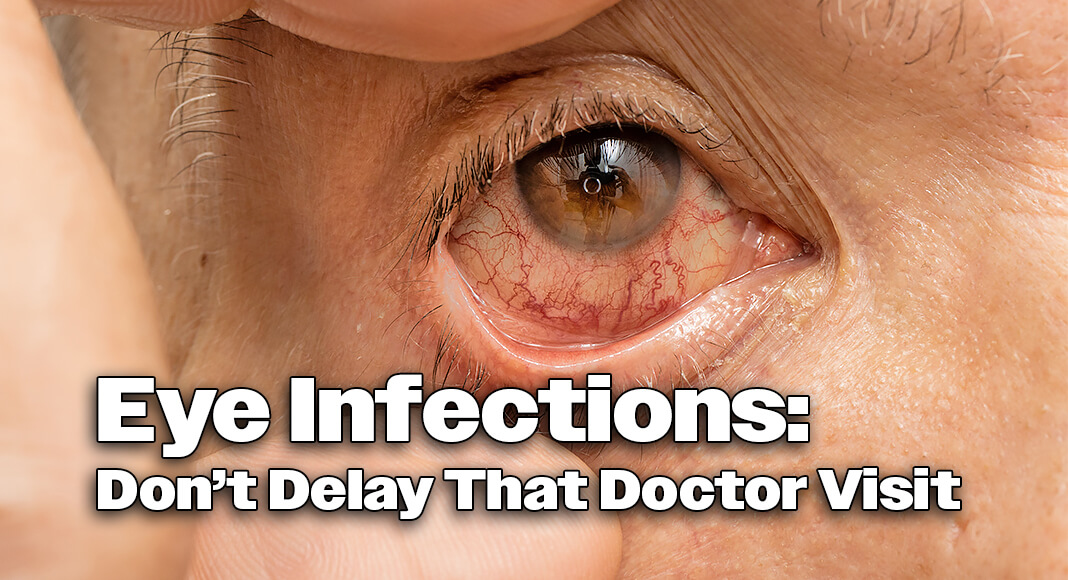
Early symptoms include eye pain, severe eye redness and blurry vision. Some patients also experience light sensitivity.
Unfortunately, many ignore these warning signs and continue to use contact lenses, which can make the problem worse.
If left untreated, the condition causes eye pain and can ultimately penetrate deeper into the eye resulting in scarring and vision loss.
What factors affect treatment for microbial keratitis?
Woodward: The majority of infections in the U.S. are usually treated with antibiotic eye drops.
In our study, we found that if a patient had reduced vision or waited for symptoms to worsen, treatments did not work as well.
Interestingly, we saw that patients in the U.S. who wore contact lenses had slightly better outcomes.
We suspect that their physicians could easily identify what kind of infections are associated with wearing lenses and were able to treat them earlier.
In India, we observed a similar effect in patients with a history of eye trauma.
In rural areas, it’s common for people to get something in their eye that can lead to an infection.
It’s possible that the physicians there knew what kind of infection they might have, given their environment and history, and were able to administer treatments sooner.
What future directions are you excited to pursue?
Woodward: Although this work doesn’t represent everyone globally, we found some commonalities regardless of where the participants were from.
It is important to expand these studies to include factors such as access to medications and adherence to eyedrop regimens.
As part of this work, we took serial photographs of patients over time to monitor how their eye characteristics change over time.
We can use this to help physicians distinguish between mild and severe cases and treat patients effectively.
Additional authors: Emily L. Vogt, Leslie M. Niziol, Shahzad I. Mian, Alan Sugar, Angela Verkade, Nambi Nallasamy, Mercy Pawar, Linda Kang, Keith D. Miller, Suzanne Winter, Sina Farsiu, and N Venkatesh Prajna.
Funding: This research was supported in part by grants from the National Eye Institute (R01EY031033 and P30EY007003), Michigan Institute for Clinical and Translational Research (UL1TR002240) and Research to Prevent Blindness Career Development Award.
Paper cited: “Factors Associated with Vision Outcomes in Microbial Keratitis – a Multisite Prospective Cohort Study,” Ophthalmology. DOI: 10.1016/j.ophtha.2025.02.004


