








Mega Doctor News
People with diabetes (type 1, type 2, or gestational), even when well-managed, are at higher risk of developing serious flu complications that can result in hospitalization and sometimes even death. Pneumonia, bronchitis, sinus infections, and ear infections are examples of flu-related complications. In recent seasons, about 30% of adults hospitalized with flu reported to CDC had diabetes. Furthermore, acute illnesses like flu can make it harder to control your blood sugar levels. Flu may raise your blood sugar levels, but sometimes people don’t feel like eating when they are sick, and a reduced appetite can cause blood sugar levels to fall. It is important for people with diabetes to follow the sick day guidelines if they become ill.
A Flu Vaccine is the Best Protection Against Flu
Flu vaccination is especially important for people with diabetes because they are at higher risk of developing serious flu complications. Flu vaccines are reviewed each year and updated as needed to protect against the latest flu viruses. Also, protection from vaccination decreases over time, so annual flu vaccination is needed to ensure the best possible protection against flu. Flu vaccines protect against the four flu viruses that research indicates will be most common during the upcoming season. More information on why flu vaccines are reviewed annually is available at Vaccine Virus Selection.
Protection from flu vaccination sets in after about two weeks after getting vaccinated. In addition to reducing risk of flu, flu vaccination has been shown in several studies to reduce severity of illness in people who get vaccinated but still get sick:

- Flu vaccination has been shown to reduce the risk of getting sick with flu as well as reduce the risk of having a serious flu outcome like a stay in the hospital or even being admitted to the intensive care unit (ICU).
- Flu vaccination also has been associated with reduced hospitalizations among people with diabetes (79%). More information is available on the vaccination benefits page.
CDC recommends that everyone 6 months and older get a seasonal flu vaccine each year, ideally by the end of October.
Flu Vaccines for People with Diabetes
- Injectable influenza vaccines (flu shots) are recommended for use in people with diabetes and certain other health conditions. Flu shots have a long, established safety record in people with diabetes.
- People with diabetes should generally not receive the nasal spray flu vaccine (i.e., the live attenuated influenza vaccine or LAIV). Your doctor or other health care professional can answer any questions you might have about flu vaccine.
Get pneumococcal vaccines.
- Having flu increases your risk of getting pneumococcal disease. Pneumonia is an example of a serious complication that can cause death.
- People who have diabetes also should be up to date with pneumococcal vaccination to help protect against pneumococcal disease. Pneumococcal vaccination should be part of a diabetes management plan. Talk to your health care provider to find out which pneumococcal vaccines are recommended for you.
Other Preventive Actions for People with Diabetes
In addition to getting a flu vaccine, people with diabetes should take the same everyday preventive actions CDC recommends for everyone, including avoiding people who are sick, covering coughs, and washing hands often.
Specific Health Actions for People with Diabetes
- Plan ahead to maintain sufficient supplies of your regular medications for chronic medical conditions (e.g., at least a two-week supply)
Symptoms and Treatment
If you get flu symptoms call your health care provider right away. There are antiviral drugs that can treat flu illness and that may prevent serious flu complications. CDC recommends prompt flu treatment for people who have flu infection or suspected flu infection and who are at higher risk of serious flu complications, such as people with diabetes.
Flu symptoms can include fever, cough, sore throat, runny or stuffy nose, body aches, headache, chills, and fatigue. Some people also may have vomiting and diarrhea, though this is more common in children than in adults. People may be infected with flu and have respiratory symptoms without a fever.
- Influenza antiviral drugs are medicines that fight against flu by keeping flu viruses from making more viruses in your body.
- Antiviral drugs can make your flu illness milder and make you feel better faster. They may also prevent serious health problems that can result from flu illness.
- Treatment with an influenza antiviral drug should begin as soon as possible because these medications work best when started early (within 48 hours after symptoms start).
- You need a prescription from a health care provider for an influenza antiviral medication.
- There are four FDA-approved flu antiviral drugs recommended by CDC this season that can be used to treat flu.
When to Seek Emergency Medical Care
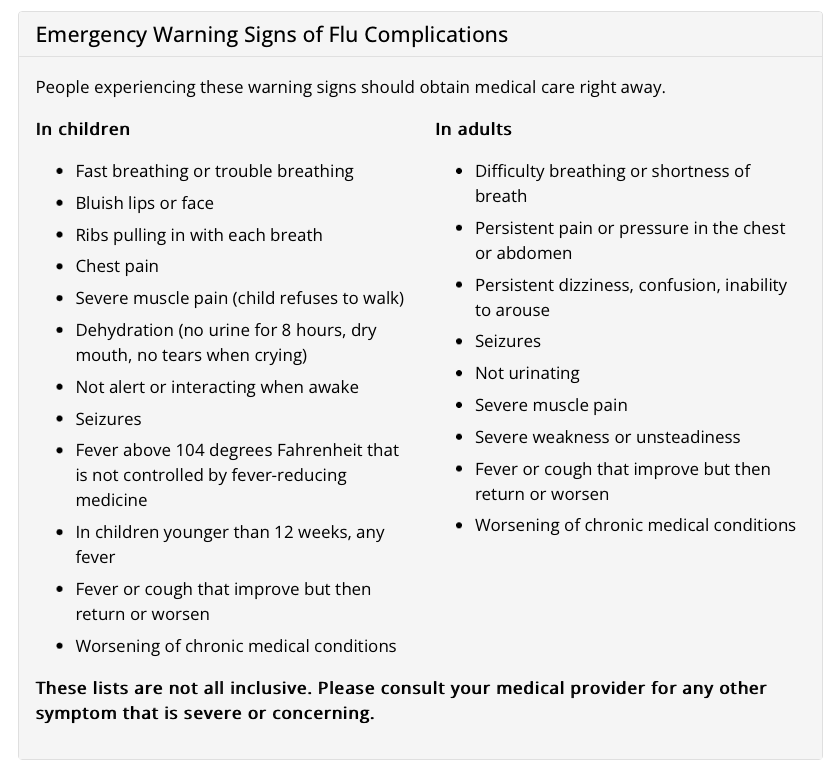
Anyone experiencing any of the following emergency warning signs of flu sickness, including people with diabetes, should seek medical attention right away.
Information Source: CDC


