








FDA Warns Public and Health Care Professionals Not to Use Needle-free Devices for Injection of Dermal Fillers

Translate to Spanish or other 102 languages!

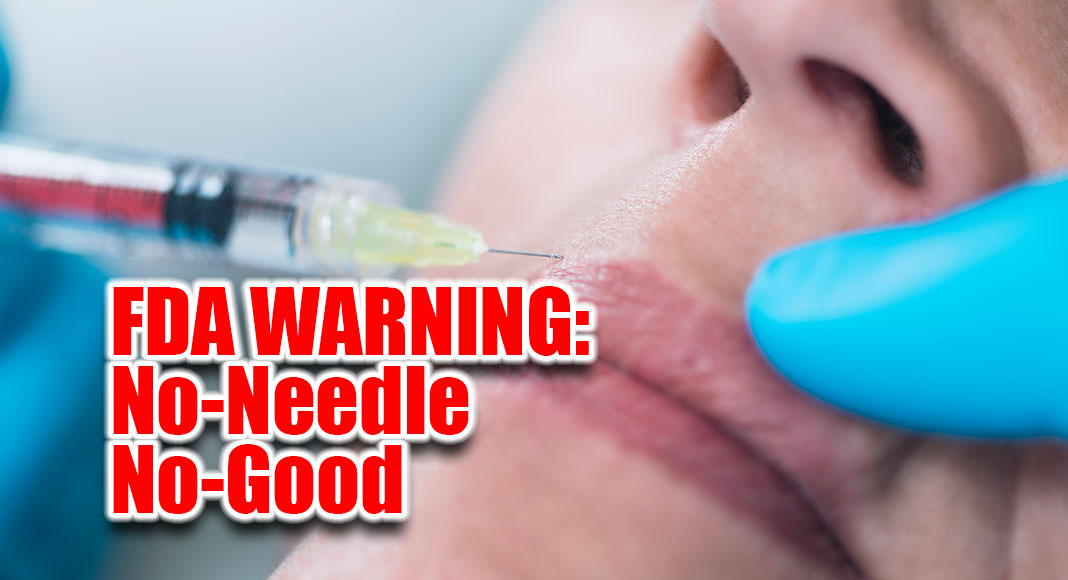
The FDA is warning the public and health care professionals not to use needle-free devices such as hyaluron pens for injection of hyaluronic acid or other lip and facial fillers, collectively and commonly referred to as dermal fillers or fillers. Image for illustration purposes.

Mega Doctor News

- Advertisement -

The following quote is attributed to Binita Ashar, M.D., director of the Office of Surgical and Infection Control Devices in FDA’s Center for Devices and Radiological Health: 

“The FDA is warning the public and health care professionals not to use needle-free devices such as hyaluron pens for injection of hyaluronic acid or other lip and facial fillers, collectively and commonly referred to as dermal fillers or fillers. The FDA’s priority is protecting patients, who may not be aware of the serious adverse events that have been reported in connection with their use, such as permanent damage to the skin, lips, and eyes.

Patients and healthcare providers should know that FDA has not approved any dermal fillers for over-the-counter sale for at-home use or for use with needle-free injection devices. These unapproved needle-free devices and fillers are often sold directly to customers online, bypassing consultation with a licensed health care provider, a critical safety measure for patients to make informed decisions about their personal health.

- Advertisement -

The FDA is monitoring online platforms for these unapproved needle-free devices as well as dermal fillers intended for use with needle-free injection devices. We also want patients and providers to be vigilant by understanding which products have been approved by the FDA and the dangers of using unapproved products, some of which may be irreversible. The FDA will continue to alert the public and take additional actions as necessary in order to protect public health.”


- Advertisement -
- Advertisement -

- Advertisement -

More Articles

DHR Health Transplant Institute Earns Top State and National Rankings

The DHR Health Transplant Institute announced today that it has been recognized among the state’s and nation’s top performing kidney transplant centers, earning the no. 2 ranking in the State and no. 16 ranking in the Nation, according to the Scientific Registry of Transplant Recipients (SRTR).  

New Noninvasive Tech Tracks Infant Vital Signs Without Wires

In the neonatal intensive care unit, the most fragile patients in medicine are often the most heavily wired. Premature babies, some weighing less than a pound, can be tethered to a tangle of cables, monitors, and sensors. Each blood draw to check sugar levels or electrolytes means another needle, another bandage, another moment of stress for an infant whose skin is still forming.

STHS McAllen Receives National Award for Advancing Cardiac Arrest Care & Improving Patient Survival

In the moments following cardiac arrest, every second counts. Rapid intervention, seamless teamwork and evidence-based care can make the difference between life and death.

STHS GME Consortium Welcomes Incoming Class of 65 Medical Residents

The future of healthcare in the Rio Grande Valley is brighter than ever as 65 new medical residents begin their training through the South Texas Health System (STHS) GME Consortium.
- Advertisement -
