








Mega Doctor News
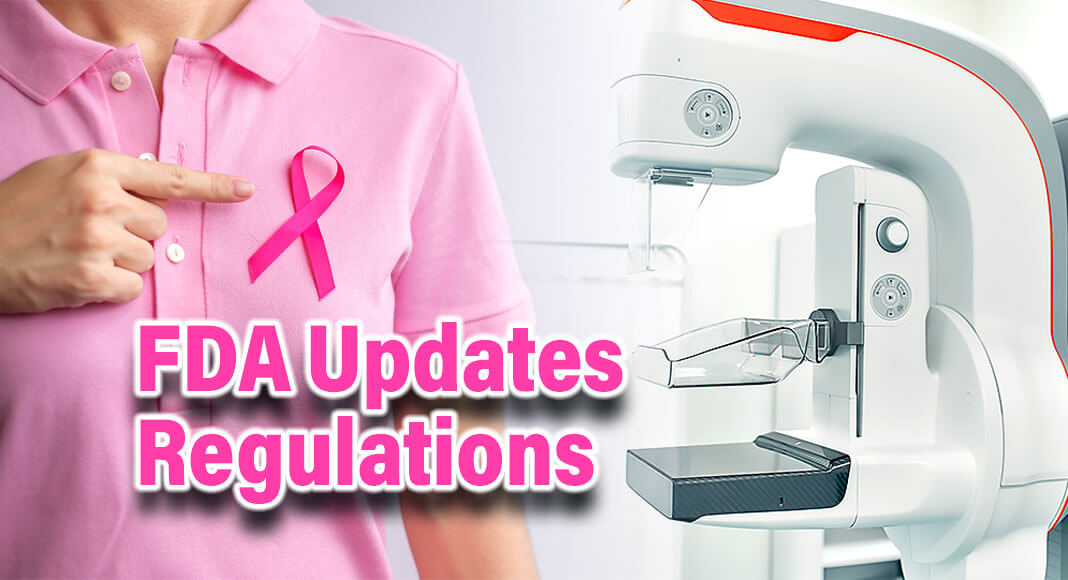
FDA – The U.S. Food and Drug Administration published updates to the mammography regulations to, among other things, require mammography facilities to notify patients about the density of their breasts, strengthen the FDA’s oversight and enforcement of facilities and help interpreting physicians better categorize and assess mammograms.
“Today’s action represents the agency’s broader commitment to support innovation to prevent, detect and treat cancer,” said Hilary Marston, M.D., M.P.H., FDA’s Chief Medical Officer. “Since 1992, the FDA has worked to ensure patients have access to quality mammography. The impact of the Mammography Quality Standards Act on public health has been significant, including a steep decrease in the number of facilities that do not meet quality standards. This means that more women have access to consistent, quality mammography. We remain committed to advancing efforts to improve the health of women and strengthen the fight against breast cancer.”
The final rule amends regulations issued under the Mammography Quality Standards Act (MQSA) of 1992, a law passed to ensure quality mammography, which is very important for early breast cancer detection. The MQSA authorizes FDA oversight over mammography facilities, including their accreditation, certification, annual inspections and enforcement of standards to help ensure mammography facilities provide quality care.

One of the key updates to regulations under the MQSA requires facilities to provide information to patients regarding the density of their breasts. Approximately half of women over the age of 40 in the U.S. have dense breast tissue, a description of its appearance on a mammogram. Dense breast tissue can make cancers more difficult to detect on a mammogram. Additionally, dense breasts have been identified as a risk factor for developing breast cancer. The amendments finalized today provide specific language explaining how breast density can influence the accuracy of mammography. They recommend patients with dense breasts talk to their health care provider about breast density, risks for breast cancer and their individual situation.
According to the Centers for Disease Control and Prevention, about one in eight women will get breast cancer in her life, impacting hundreds of thousands of Americans each year. Mammograms continue to be the best tool for breast cancer screening and detection.
Helping to promote patient access to information about the impact that breast density and other factors can have on the risk for developing breast cancer is an important part of a comprehensive breast health strategy.
Today’s amendments, which are required to be implemented within 18 months, enhance the FDA’s oversight of mammography facilities, including in the key areas of enforcement and patient communication. While nearly all certified mammography facilities continue to meet quality standards, today’s updates, among other things, enhance the FDA’s ability to communicate directly, if needed, with patients and their health care providers in cases where a facility did not meet quality standards and is not adequately communicating with patients about its deficiencies. This is intended to help ensure important information that could affect decisions about patient care, such as the potential need for further evaluation or a repeat mammogram, is communicated as completely as possible.
The amendments also help bring the MQSA into the 21st century, including modernizing the regulations by incorporating current science and mammography best practices to improve breast cancer detection and helping empower patients with more information when they are considering important decisions regarding their breast health care.
Related Information
- Mammography Quality Standards Act Final Rule
- Mammography Quality Standards Act and Program
- Women’s Health Topics: Mammography


