



Mega Doctor News
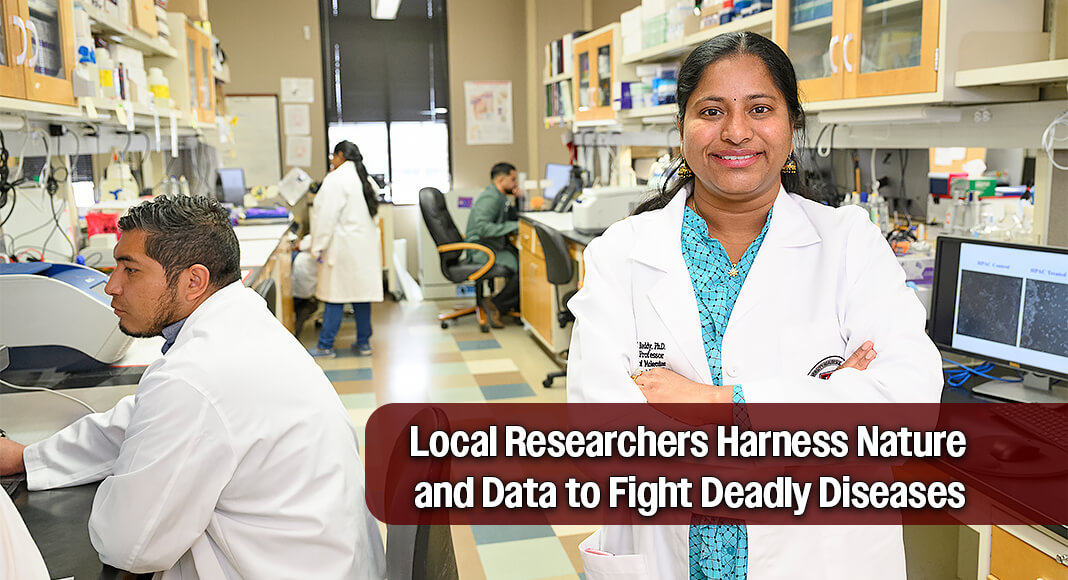
EL PASO, Texas — Ramadevi Subramani Reddy, Ph.D., remembers the neem tree from her childhood in India — a plant her grandmother used to treat everything from fevers to infections. Now, in her Texas Tech Health El Paso lab, she’s investigating whether that same tree might hold the key to fighting pancreatic cancer in El Paso’s community, where the disease strikes at higher rates than anywhere else in Texas.
With a $45,000 grant from the Lizanell and Colbert Coldwell Foundation, Dr. Subramani Reddy explored whether gedunin, a compound from the neem tree, can attack pancreatic cancer with fewer toxic side effects than current chemotherapy.
The research comes at a critical time for El Paso County. According to the National Cancer Institute, pancreatic cancer strikes residents at a rate of 8.8 per 100,000 people.
Traveling the Sonic Hedgehog pathway
Dr. Subramani Reddy is on the Foster School of Medicine faculty and has been a researcher at the Francis Graduate School of Biomedical Sciences since 2012. Born and raised in India, she earned her Ph.D. in biotechnology from Anna University in Chennai, along the coast of the Bay of Bengal. After 14 years at Texas Tech Health El Paso, she has become instrumental in the institution’s cancer research program, specifically focused on diseases that affect the Borderplex community she now calls home.
Dr. Subramani Reddy’s research seeks to develop novel therapies by disrupting the affably named Sonic Hedgehog (Shh) signaling pathway. This key conduit regulates cancer growth and the spread of cancer cells from one part of the body to another, also known as metastasis. The name comes from a type of protein molecule with spikes like a hedgehog. (Scientists named it after the video game.) However, disrupting the Shh signaling pathway is serious business, as it potentially interferes with cancer cell reproduction.
Her research also imagines harvesting a cancer cure that grows on trees in the near future. She believes the Indian neem tree could be a potent weapon to combat pancreatic cancer.
“Its scientific name is Azadirachta indica,” she said. “But many call it the farmer’s pharmacy because it’s used for many illnesses, from head to toe, including diabetes.”
It’s this link to diabetes that inspired her research project. Gedunin is a natural compound that may target pancreatic cancer cells, preventing them from spreading.
Gedunin’s potential could extend lives and offer hope to pancreatic cancer patients, particularly in underserved communities where the disease is more prevalent. If successful, this research could buy precious time for those warriors battling the disease.
“I’ve known this plant for over 40 years,” said Dr. Subramani Reddy. “It’s used in everyday cooking. People break the stem off this tree and use it as toothpaste. Any research on this kind of natural product is significant.”
She added, “Most chemotherapeutic drugs are a little toxic. Finding an effective drug with fewer adverse effects is very important. If you take any edible plant and discover some drugs from there, it might be less adverse compared to other synthetic drugs.”
Given the overall 90% mortality rate of pancreatic cancer and the median survival time of six months, new treatments are urgently needed.
Using history to discover the future cures
While Dr. Subramani Reddy’s work took place in a lab, Kazue Okajima, M.D., scrutinized reams of patient data to identify innovative ways to treat heart disease.
In 2025, Dr. Okajima’s $36,000 Coldwell grant examined whether stronger blood thinners improved survival rates for Borderplex heart patients. Her preliminary findings have already changed how she treats patients with advanced heart disease.
As a cardiologist in the Foster School of Medicine’s Department of Internal Medicine, she meticulously reviewed prior angioplasty cases, a procedure to unblock heart vessels, to compare two blood-thinning medications. She assessed whether a traditional blood thinner or a more potent one is safer and more effective for Borderplex patients undergoing this procedure.
Cardiovascular disease, notably coronary heart disease, is a major health concern along the U.S.-Mexico border. Recent studies of populations in this area indicate a higher incidence of the disease, along with related risk factors such as hypertension, diabetes, and obesity.
Committed to advancing health care
The Lizanell and Colbert Coldwell Foundation’s contributions have significantly advanced health care research at Texas Tech Health El Paso. With support from these grants, the schools of Texas Tech Health El Paso are conducting research to transform health care and build healthier communities along the U.S.-Mexico border. Since 1991, the Coldwell Foundation has awarded the university more than $1.6 million for medical research.
“These grants allow our researchers to focus on the diseases killing El Pasoans at higher rates than the rest of the country—and find treatments that work specifically for our community,” said Rajkumar Lakshmanaswamy, Ph.D., dean of the Francis Graduate School of Biomedical Sciences and senior director of the Center of Emphasis in Cancer research program. “By funding critical studies, the Coldwell Foundation ensures we can pursue breakthroughs to improve health care in our region and strengthen our community.”
About the Lizanell and Colbert Coldwell Foundation
The Lizanell and Colbert Coldwell Foundation contributes to Texas medical research organizations to further the advancement of medical sciences, especially in research focusing on the cure and prevention of heart disease and cancer.
About Texas Tech Health El Paso
Texas Tech Health El Paso serves 108 counties in West Texas and is dedicated to preparing the next generation of health care heroes. Established as an independent university in 2013, Texas Tech Health El Paso is a uniquely innovative destination for medical, nursing, biomedical sciences and dental education.
Focusing on excellence in health care education, research, and clinical service, Texas Tech Health El Paso has graduated over 2,600 professionals over the past decade. For more information, visit ttuhscepimpact.org.
Information source: Texas Tech Health El Paso