







Mega Doctor News

Situation summary
CDC, FDA, USDA FSIS, and public health officials in multiple states are investigating an outbreak of E. coli O157:H7 infections. Most people in this outbreak are reporting eating the Quarter Pounder hamburger at McDonald’s before becoming sick. It is not yet known which specific food ingredient is contaminated.
McDonald’s is collaborating with investigation partners to determine what food ingredient in Quarter Pounders is making people sick. McDonald’s stopped using fresh slivered onions and quarter pound beef patties in several states while the investigation is ongoing to identify the ingredient causing illness.

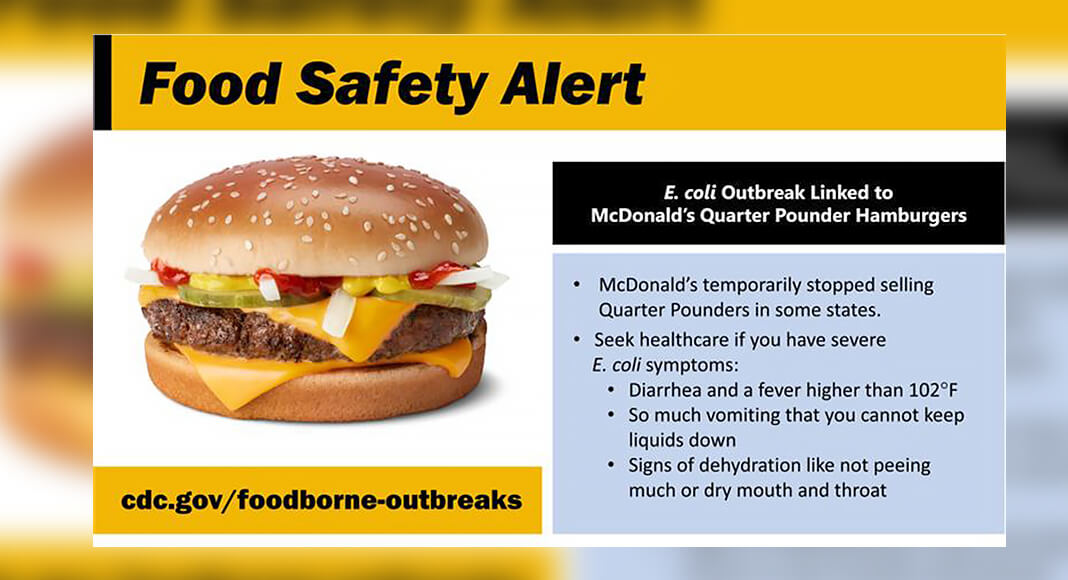
McDonald’s Quarter Pounder hamburgers are making people sick, with most illnesses in Colorado and Nebraska.
- Quarter Pounder hamburgers will not be available temporarily in some states.
- Investigators are working to confirm which ingredient in these hamburgers is making people sick and if it went to other restaurants or stores.
- McDonald’s reported to CDC that it has stopped using fresh slivered onions and quarter pound beef patties in several states. McDonald’s is proactively making these changes while investigators work to confirm the contaminated ingredient. Quarter pound beef patties are only used on Quarter Pounders. Fresh slivered onions are primarily used on Quarter Pounder hamburgers and not other menu items.
McDonald’s has stopped using fresh slivered onions and quarter pound beef patties in several states to protect their customers while a source of illness is confirmed.
Call your healthcare provider if you ate a McDonald’s Quarter Pounder hamburger and have severe E. coli symptoms:
- Diarrhea and a fever higher than 102°F
- Diarrhea for more than 3 days that is not improving
- Bloody diarrhea
- So much vomiting that you cannot keep liquids down
- Signs of dehydration, such as:
- Not peeing much
- Dry mouth and throat
- Feeling dizzy when standing up
- Most people infected with Shiga toxin-producing E. coli experience severe stomach cramps, diarrhea (often bloody), and vomiting.
- Symptoms usually start 3 to 4 days after swallowing the bacteria.
- Most people recover without treatment after 5 to 7 days.
- Some people may develop serious kidney problems (hemolytic uremic syndrome, also called HUS) and would need to be hospitalized.
- For more information about E. coli, see the E. coli Questions and Answers page.
On This Page
Content Source:
National Center for Emerging and Zoonotic Infectious Diseases (NCEZID)


