







Mega Doctor News

Drought is a prolonged period of dry weather caused by lack of rainfall, resulting in water shortage. Periods of drought can result in inadequate water supply and can lead to public health problems. Take action and learn how drought can impact your health and the health of your family.
Overview
Cycles of drought have affected North America for the last 10,000 years. Droughts can last from a single season to many decades and can affect from a few hundred to millions of square miles. With our climate continuing to change, historically dry areas of the U.S. are likely to experience an increased risk of drought.

Drought can affect areas or communities differently depending on several additional variables. These variables include:
- the structure and capacity of existing water systems,
- local governance of water use,
- urban vs. rural land use,
- economic development,
- the at-risk populations living in the affected area, and
- other societal factors, such as the presence of local social networks.
Public Health Implications
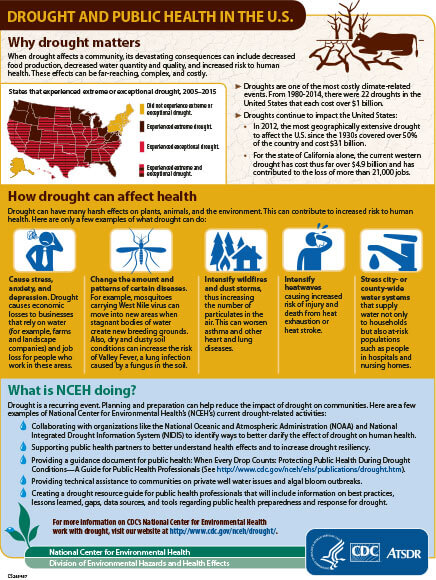
Severe drought conditions can negatively affect air quality. During drought, there is an increased risk for wildfires and dust storms. Particulate matter suspended in the air from these events can irritate the bronchial passages and lungs. This can make chronic respiratory illnesses worse and increase the risk for respiratory infections like bronchitis and pneumonia.
The health implications of drought are numerous and far reaching. Some drought-related health effects are experienced in the short-term and can be directly observed and measured. However, the slow rise or chronic nature of drought can result in longer term, indirect health implications that are not always easy to anticipate or monitor.
The possible public health implications of drought include:
- compromised quantity and quality of drinking water;
- increased recreational risks;
- effects on air quality;
- diminished living conditions related to energy, air quality, and sanitation and hygiene;
- mental health effects related to economic and job losses;
- compromised food and nutrition; and
- increased incidence of illness and disease.


