








Mega Doctor News
By Karen Villarreal
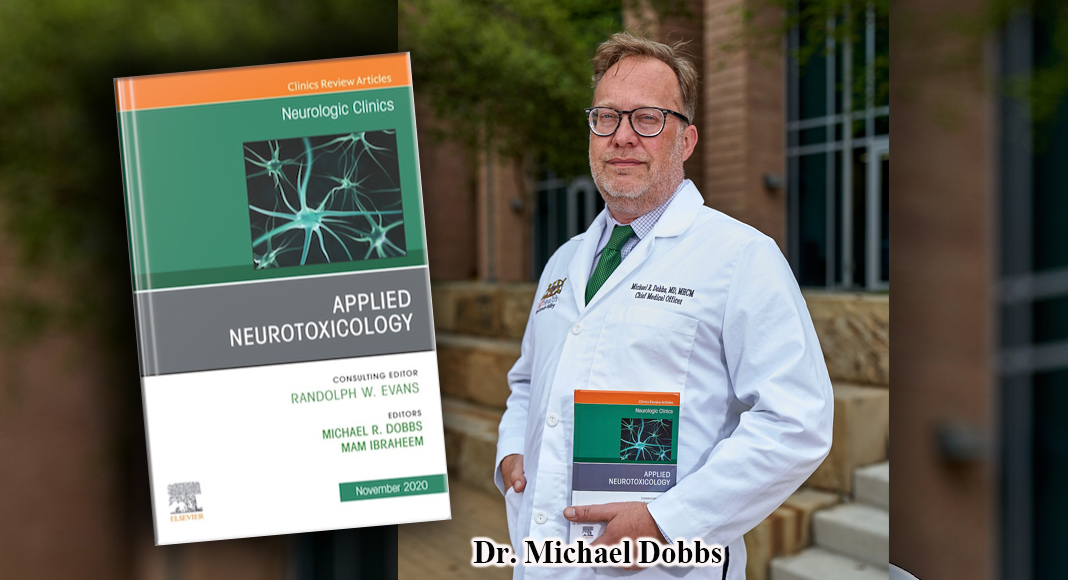
RGV, Texas – Dr. Michael Dobbs, chair of the Department of Neurology at the UTRGV School of Medicine and a pioneering neurologist recently published his fifth book, this one on an understudied field in healthcare – neurotoxicology.
Neurotoxicology studies substances that are toxic and possibly even deadly. Dobbs’ book provides practical knowledge on the topic to help neurologists better recognize and treat neurotoxic exposure in their clinical practices.

“Applied Neurotoxicology” was published by Elsevier as part of its Neurologic Clinics series and consists of 16 chapters of review articles from authors around the world. Elsevier, on its website, describes itself as a global leader, ininformation and analytics, that “helps researchers and healthcare professionals advance science and improve health outcomes for the benefit of society.”
“This work focuses on practical applications in clinical neurotoxicology,” Dobbs said. “It’s intended for practicing clinicians to use in their daily work, as well as to inspire clinical learners to develop their patient-care skills and knowledge.”
Dobbs said there are more than 1,000 known toxins that could have lasting ill effects, such as impaired development, and millions of people suffer from neurotoxic exposures annually. “Meanwhile, there are very few neurologists equipped to deal with neurotoxic problems,” he said.
Neurotoxins, like lead, are a major cause of brain injury. Lead toxicity alone is responsible for more than 1 million deaths yearly and is devastating to cognitive development.
His latest book, along with efforts to include neurotoxicology into the UTRGV School of Medicine curriculum, are part of his mission to contribute to a better system of healthcare.
“The burden is disproportionately placed on communities of lower socioeconomic status,” Dobbs said. The lead crisis in Flint, Michigan, has raised awareness of neurotoxic dangers, Dobbs said, but clinical neurotoxicology still remains a hugely underappreciated public health problem around the world.
Past and Future
Dobbs has been writing books on neurotoxicology since 2004, when he noticed a lack of published clinical studies on the topic.
“Clinical neurotoxicology was basically a neglected field in neurology,” he said. “I had learned from mentors that when there is an important but neglected niche area in neurology, people will pay attention and be interested if you can write about it well.”
Dobbs’ previous major comprehensive text, “Clinical Neurotoxicology – Syndromes, Substance, Environments,” was published in 2009.
In his role as chair of the Department of Neurology at the UTRGV School of Medicine, Dobbs plans to offer advanced fellowship training and already has incorporated clinical neurotoxicology into the module “Mind, Brain, and Behavior” for second-year medical students.
“With our future neurology residency, I will also include a neurotoxicology curriculum,” he said. Dobbs is also working at the national level to raise awareness of clinical neurotoxicology, and to support advanced fellowship training so that it eventually will become an accredited subspecialty of neurology.


