







Mega Doctor News

By Jennifer L. Berghom
Rio Grande Valley, Texas – The South Texas Diabetes and Obesity Institute (STDOI) at The University of Texas Rio Grande Valley School of Medicine has received a five-year, $3.6 million grant from the National Institutes of Health’s National Institute for Minority Health and Health Disparities, to study the environmental determinants of fatty liver disease in Mexican Americans.
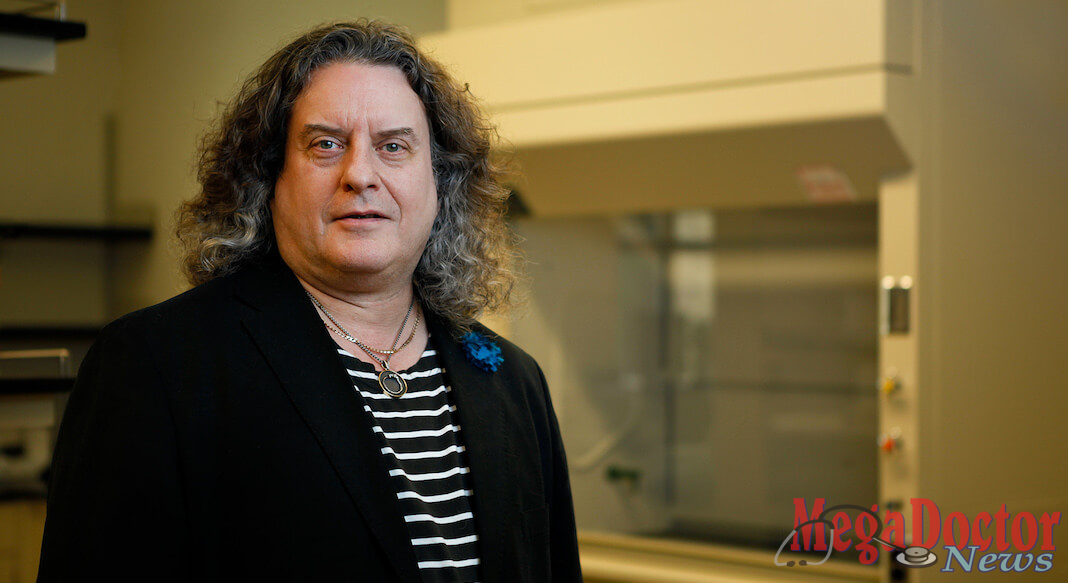
The project, led by Dr. John Blangero, professor and director of the Genomics Computing Center at the STDOI and interim chair of the Department of Immunology and Microbiology at the UTRGV School of Medicine, will use magnetic resonance imaging to study liver fat and liver stiffness, which indicate fatty liver disease.

The STDOI is partnering with UT Health San Antonio’s Research Imaging Institute, under a subcontract led by Dr. Geoff Clarke, to take the MRIs, said Blangero, who is the project’s principal investigator. Clarke is the project’s co-principal investigator.
“Fatty liver disease is a significant public health problem in South Texas and represents a major risk factor for liver cancer,” Blangero said. “Our project is focused on identifying environmental factors involved in fatty liver disease risk using a novel approach in which we increase these environmental signals by controlling for genetic factors.”
This is the first time this method has ever been used and is a previously unrealized benefit of the human genome project, Blangero said.
Scientists will perform thousands of different measurements reflecting human biological variation and look for those variations that help predict fatty liver disease, then track down their source in the environment.
Blangero said he hopes the team’s findings can lead to the creation of treatments and medications, as well as measures of prevention.
The project will focus a sample of 1,000 Mexican Americans in large families from across South Texas –including the Rio Grande Valley—whom the institute has been studying since 1991.
Dr. John H. Krouse, dean of the UTRGV School of Medicine and executive vice president for Health Affairs at UTRGV, said the grant will advance the School of Medicine’s mission to engage in research that will benefit the Rio Grande Valley and the world.
“The School of Medicine is committed to participating in research in relevant areas of concern for health and disease in the Hispanic population, including cancer, diabetes, obesity and related diseases,” Krouse said. “This project addresses illnesses that greatly affect the Hispanic population, and can lead to innovations that will improve health outcomes for this population.”
The grant runs through Nov. 30, 2022.


