
Mega Doctor News
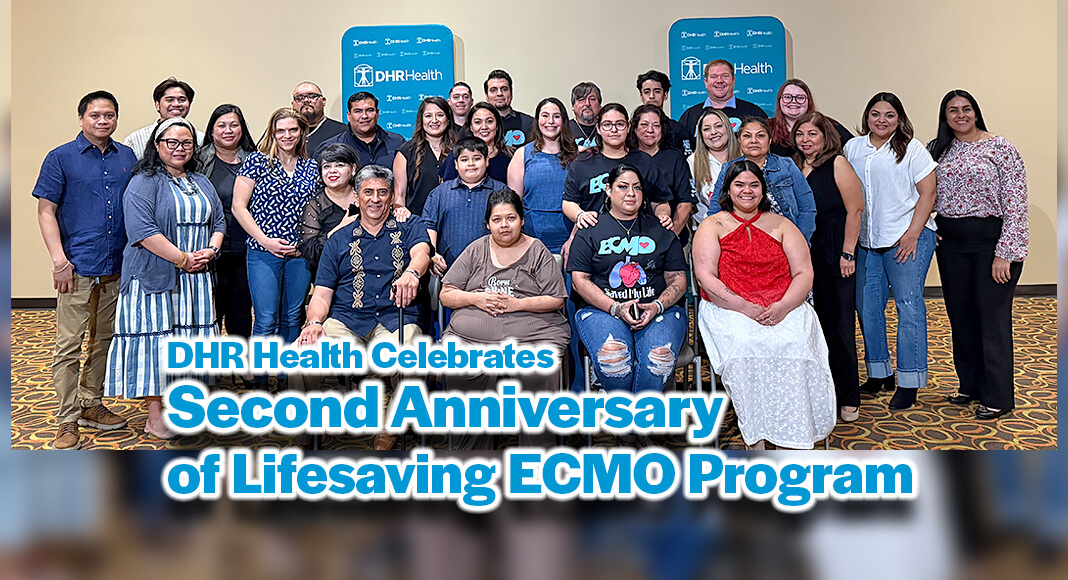
EDINBURG, Texas – DHR Health celebrated the second anniversary of its Extracorporeal Membrane Oxygenation (ECMO) program with a special gathering that was held on March 29 at the Edinburg Conference Center at Renaissance. The event brought together ECMO patients, their families, and the medical team to celebrate the program’s impact on critical care in the region.
The ECMO program, launched in February 2023, provides advanced life support for patients experiencing severe heart or lung failure. The technology temporarily takes over the function of the heart and lungs, allowing patients time to recover or transition to receive further treatment. DHR Health remains the only hospital in the region offering ECMO, reducing the need for patients to seek care outside the Rio Grande Valley.
The event featured special remarks from Dr. Andrew Phillips, DHR Health intensivist and medical director of the ECMO program, who discussed the program’s role in critical care. Phillips, a Mission native, returned to the RGV in 2021 to establish the ECMO program after completing his residency and fellowship at Stanford University.

“This celebration was about more than just marking two years—it was about honoring the resilience of our patients and the dedication of our ECMO team,” said Phillips. “We’ve witnessed firsthand how ECMO has transformed lives, and we remain committed to expanding our capabilities to support even more patients in need.”
“For many of us, the last time we saw these patients, they were intubated in hospital beds, fighting for their lives. Seeing them now—walking, talking, and sharing their stories—reminds us why we do this work. It’s a powerful reminder to keep our spirits high, stay hopeful, and continue our efforts, because these patients have a future beyond the hospital walls,” added Jennifer Tobar, ECMO coordinator at DHR Health.
Patients shared their stories, reflecting on their journeys and expressing gratitude to the ECMO team for the lifesaving care that helped them through their most challenging moments. Members of the ECMO team also took the opportunity to reflect on the significance of providing care to these patients, sharing how it has impacted them personally and professionally. The reunion was a heartfelt reminder of how the ECMO program has changed the lives of patients and their caregivers.
ECMO treatment at DHR Health involves a multidisciplinary team of intensivists, pulmonologists, cardiologists, ECMO specialists, respiratory therapists, nurses, and ancillary staff, providing continuous bedside support for patients. The ECMO team also assists other hospitals in the region by facilitating patient transfers or initiating ECMO treatment on-site for critically ill patients who are too unstable to travel.
The ECMO program has played a key role in DHR Health’s designation as a Level I Trauma Center and its certification in respiratory failure from The Joint Commission (TJC).
For questions about the ECMO program, please call (956) 362-3266 (ECMO).