Mega Doctor News
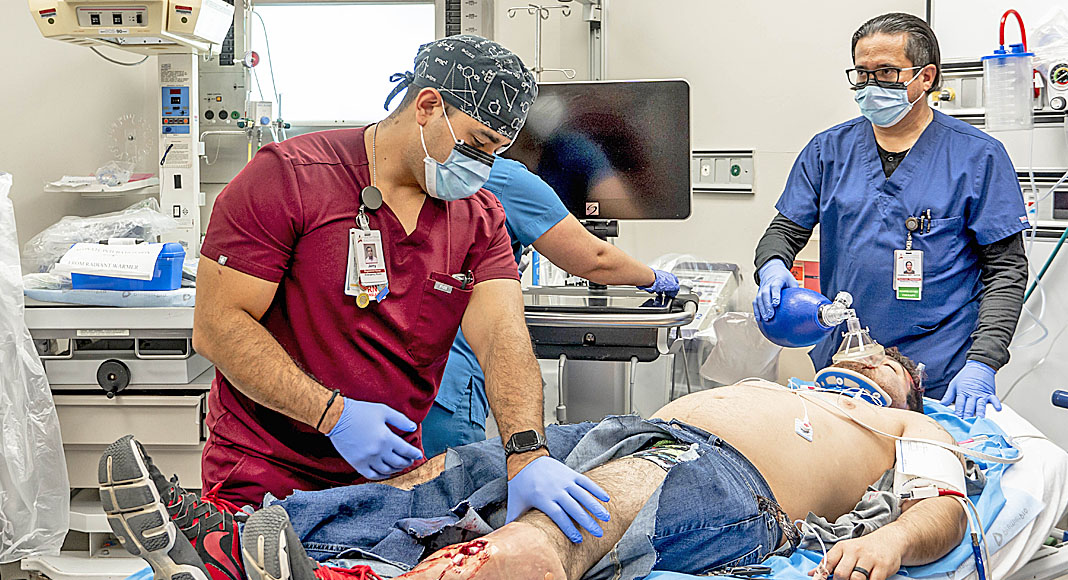
Featuring several of the college’s EMS students dressed in moulage makeup to simulate traumatic injuries, the drill was aimed at testing response and coordination capabilities
When a patient is rushed to the emergency room of South Texas Health System McAllen with life-threatening injuries, they receive immediate attention and advanced care from a team of nurses, general surgeons and specialists. Whether arriving with a gunshot wound, blunt force trauma, concussion or other form of physical trauma, the hospital’s Level II Trauma Center, as designated by the Texas Department of Health and Human Services and American College of Surgeons, is prepared to handle the most severe of injuries.
One way the team stays at the ready is through practice. On Friday, March 25, STHS McAllen executed an unannounced mock trauma drill aimed at testing the facility’s emergency preparedness while checking the on duty staff’s medical response coordination capabilities.

“In our program we have our lectures and labs, but through this drill we were able to add the component of realism, so participants could witness what actual patient care will look like when they begin their careers,” South Texas College Emergency Medical Technology program instructor Jose Luis Gutierrez, II said. “It was really exciting for our students to get to take part in this experience and see how everyone works together to provide the best level of care to a trauma patient.”
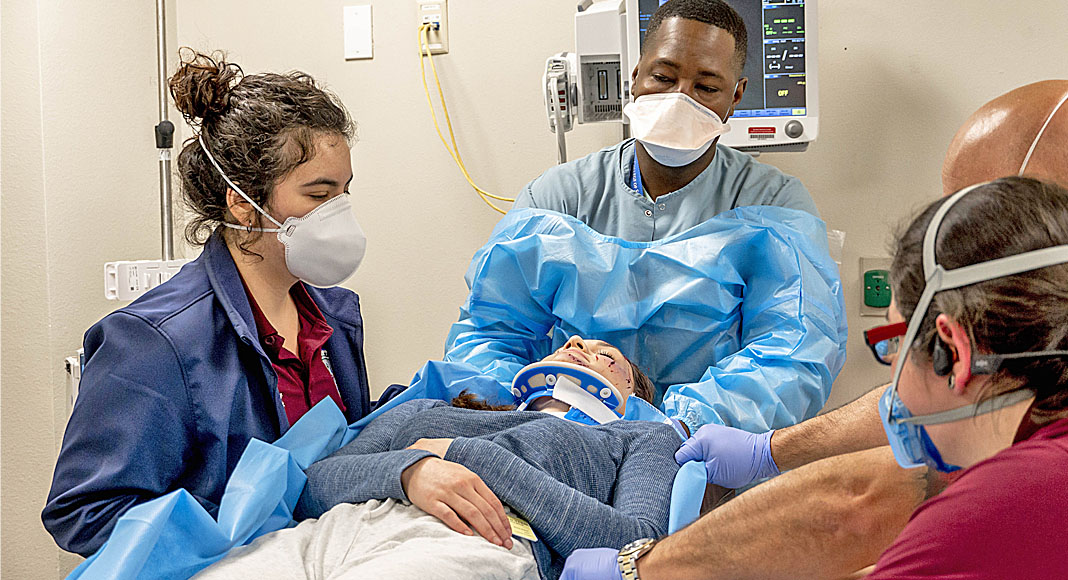
Upon the mock patients’ arrival into the emergency room, nurses, trauma physicians and healthcare staff rushed into action as if handling a real-life event, all while having their performance and the hospital’s systems and processes closely monitored and evaluated by STHS McAllen department directors.
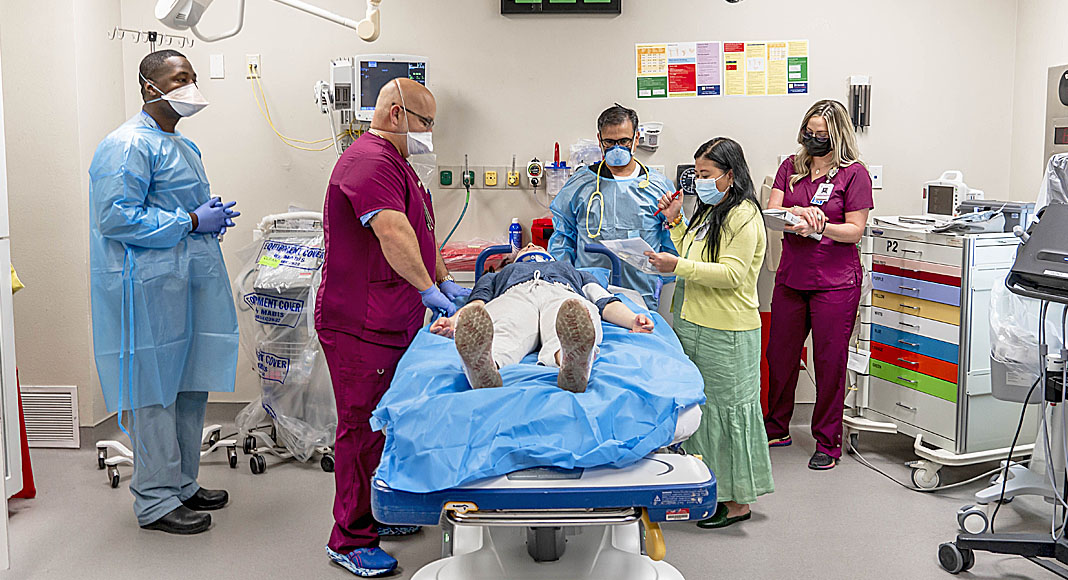
Following the mock trauma drill, the team of evaluators, participating students and the hospital’s emergency response leaders gathered to debrief, discussing the hospital’s overall strengths and identifying any areas for improvement.
“Trauma drills help solidify our practice in terms of all disciplines arriving on time and performing their trauma and critical care duties in a timely fashion, which ultimately results in improved outcomes and better patient care,” STHS McAllen Trauma Surgeon Dr. LeRone R. Simpson said. “By putting our staff and systems to the test through these mock drills, we can be better prepared to reach a diagnosis quicker and get a patient to surgery faster in a real-life situation.
“It’s also a great opportunity for the participating students to witness the action in the hospital setting, so that once they become working professionals they’ll be more comfortable in their roles and will be more familiar with how to handle real trauma. When a real patient is needing their help, they’ll know what to do.”
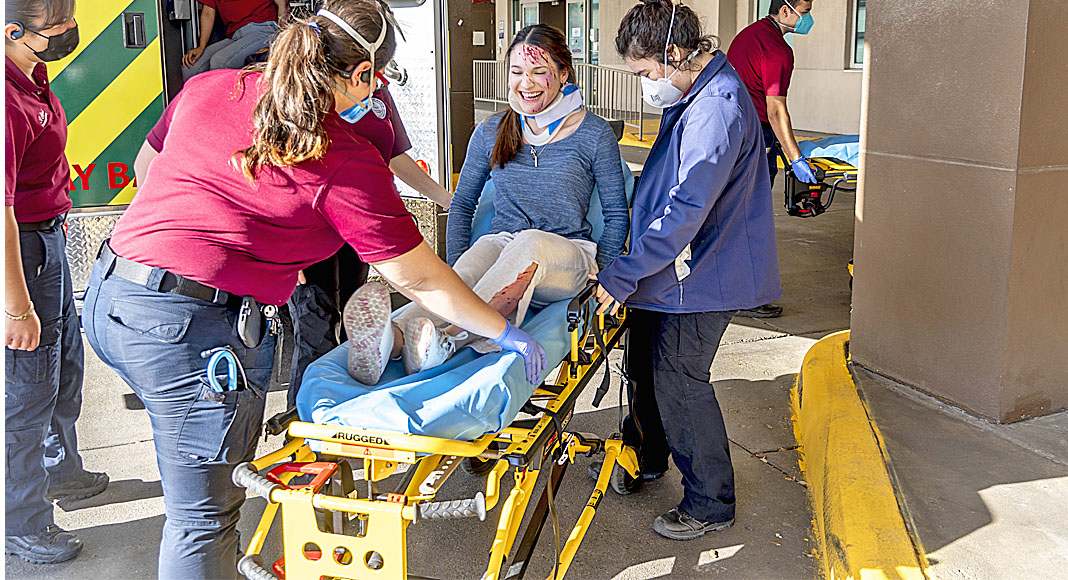
The exercise was held in collaboration with South Texas College’s Emergency Medical Technology program and featured four EMS students, who participated as mock patients in full moulage to simulate injuries sustained in traffic accidents and a shooting. Meanwhile, several other students worked with hospital staff and paramedics on transferring patients to and from the emergency room.
Throughout the year, South Texas Health System holds mock drills — most recently a multiple campus two-part trauma and missing child no-notice emergency drill — across its acute care facilities, The exercises serve as a standard requirement of The Joint Commission.
About South Texas Health System South Texas Health System is a multi-hospital health care system serving patients throughout the Rio Grande Valley. The system includes four hospital campuses with specialties in pediatrics, heart and vascular services, maternity and women’s health and trauma services. Treatment for behavioral health needs and addictive disorders is also provided through the system’s South Texas Health System Behavioral Health campus location. South Texas Health System is affiliated with the South Texas Clinical Partners ACO, Prominence Health Plan, and Cornerstone Regional Hospital. The system operates an advanced Level II Trauma Center at South Texas Health System McAllen, the first and only pediatric ER at South Texas Health System Children’s, a specialized cardiac ER at South Texas Health System Heart, and six freestanding emergency rooms located in and around Weslaco, Mission, Edinburg, McAllen and Alamo. For more information on the system, please visit www.southtexashealthsystem.com.
Physicians are independent practitioners who are not employees or agents of South Texas Health System. The hospital shall not be liable for actions or treat