







Mega Doctor News

Newswise — Offering covid-19 vaccinations on campus, delayed or phased autumn re-openings, and mandatory face mask wearing are among the steps universities and colleges could take to make them safer places for students returning to, or starting, their studies this autumn, say public health experts in an opinion piece in The BMJ.
Simon Williams from Swansea University, UK and Gavin Yamey from Duke Global Health Institute in North Carolina, USA set out five steps that universities could take to ensure their students are better protected.
There is a need for action, they argue, because when universities re-opened in the autumn of 2020, not enough preparatory steps were taken, and this led to outbreaks of the coronavirus that forced entire flats and halls of residence into lockdown.

In addition, this year, the potential dangers are just as present due to the Delta variant – dominant in both in the UK and USA – which is estimated to be twice as transmissible as the original coronavirus strain and which could make students ill and drive infection in communities around universities.
Therefore, the authors set out five steps they recommend that could minimize the risks.
Firstly, they recommend universities consider encouraging uptake of covid-19 vaccines by offering them vaccination on site. The authors note that the current government plans to offer incentive schemes and insist on “vaccine passports” to gain access to nightclubs may also boost uptake.
In the US, they say, many colleges and universities are insisting that all students and staff are vaccinated before starting the new academic year, but currently England’s students do not have to show proof of vaccination.
Secondly, universities could consider delaying or phasing in their autumn re-openings to avoid a mass migration of all students within a few weeks.
Thirdly, universities and governments could invest in ensuring there is adequate ventilation across campuses, including in classrooms and accommodation. This would help reduce the transmissibility of covid-19 and other respiratory diseases such as influenza. Holding outdoor classes – weather permitting – could also help.
Another useful step would be to have effective contact tracing in place combined with on-campus testing and isolation, backed by additional resources to ensure adequate support for self-isolation.
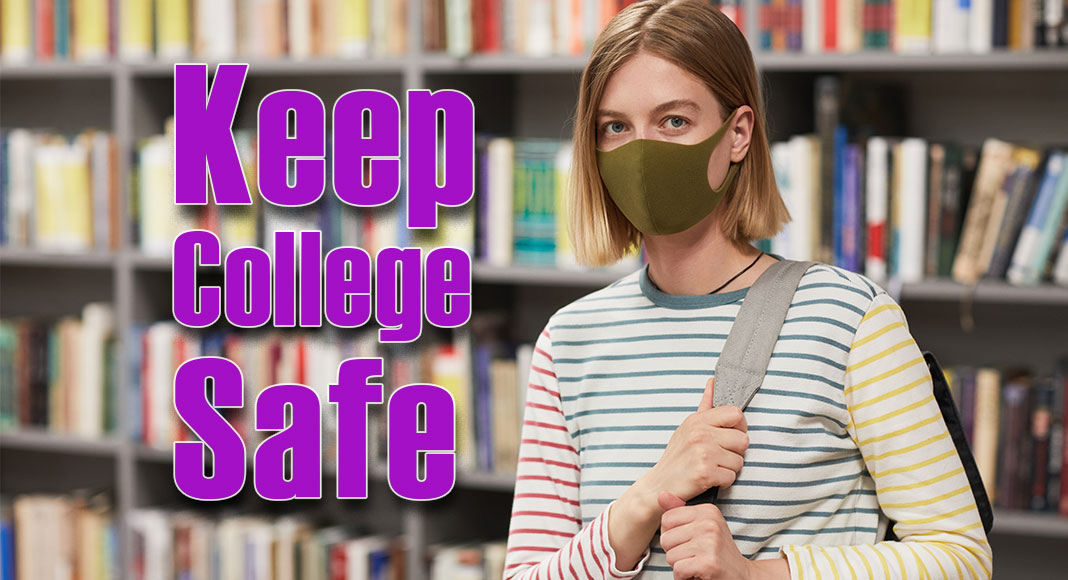
Finally, the authors recommend insisting on the use of facemasks in settings where social distancing is not possible, such as lectures within classrooms.
They conclude: “With universities on both sides of the Atlantic about to reopen, institutions of higher education are ‘once again confronting the challenges posed by SARS-CoV-2 in their planning for safe operations during the approaching academic year’.
“It remains critically important to protect students from covid-19. While it’s true that covid-19 rarely kills young adults, they certainly can become ill and can also develop long term symptoms.
“Infected students can infect older, vulnerable adults on campus, including teachers and university maintenance and service staff. There is also evidence that campus outbreaks can drive infection in the communities around the university.”


