








Mega Doctor News

Texas Medical Association
The heat is on in Texas with high temperatures predicted to near or eclipse 100 degrees this week in many areas. Physicians are cautioning everyone: Avoid the dangers of overheating.
Thousands of people recently died of heat exposure during an intense outbreak of high temperatures in France and other parts of Europe, according to French and Belgian government authorities.

“Heat is the leading weather-related killer worldwide, more so than floods, tornadoes, and hurricanes. It requires us to be aware and respectful of it,” said Daniel Walk, MD, an emergency physician in Marble Falls and member of the Texas Medical Association (TMA) Committee on Emergency Services and Trauma.
Texans die of heat exposure every year, according to the Texas Department of State Health Services. The highest number of deaths in recent years was in 2023 when 366 people perished from the heat.
Dr. Walk sees patients in the emergency department every year suffering from heat-related illnesses after being outdoors – working construction, doing yardwork, or playing outdoor sports.
“These folks may be younger and healthier, but they can still become quite injured by not recognizing when they need to take a break and cool off,” said Dr. Walk.
He said it is important to “choose behaviors that decrease the chances of developing heat exhaustion or heat stroke.” These include staying hydrated by not waiting to feel thirsty before drinking water, wearing light clothes that absorb less heat, and using a hat and sunscreen to prevent sunburn.
People who are elderly, young children, and those who are pregnant are especially prone to heat-related illnesses, Dr. Walk said. “We need to look out for those around us, those with us, and our neighbors, when it becomes very hot.”
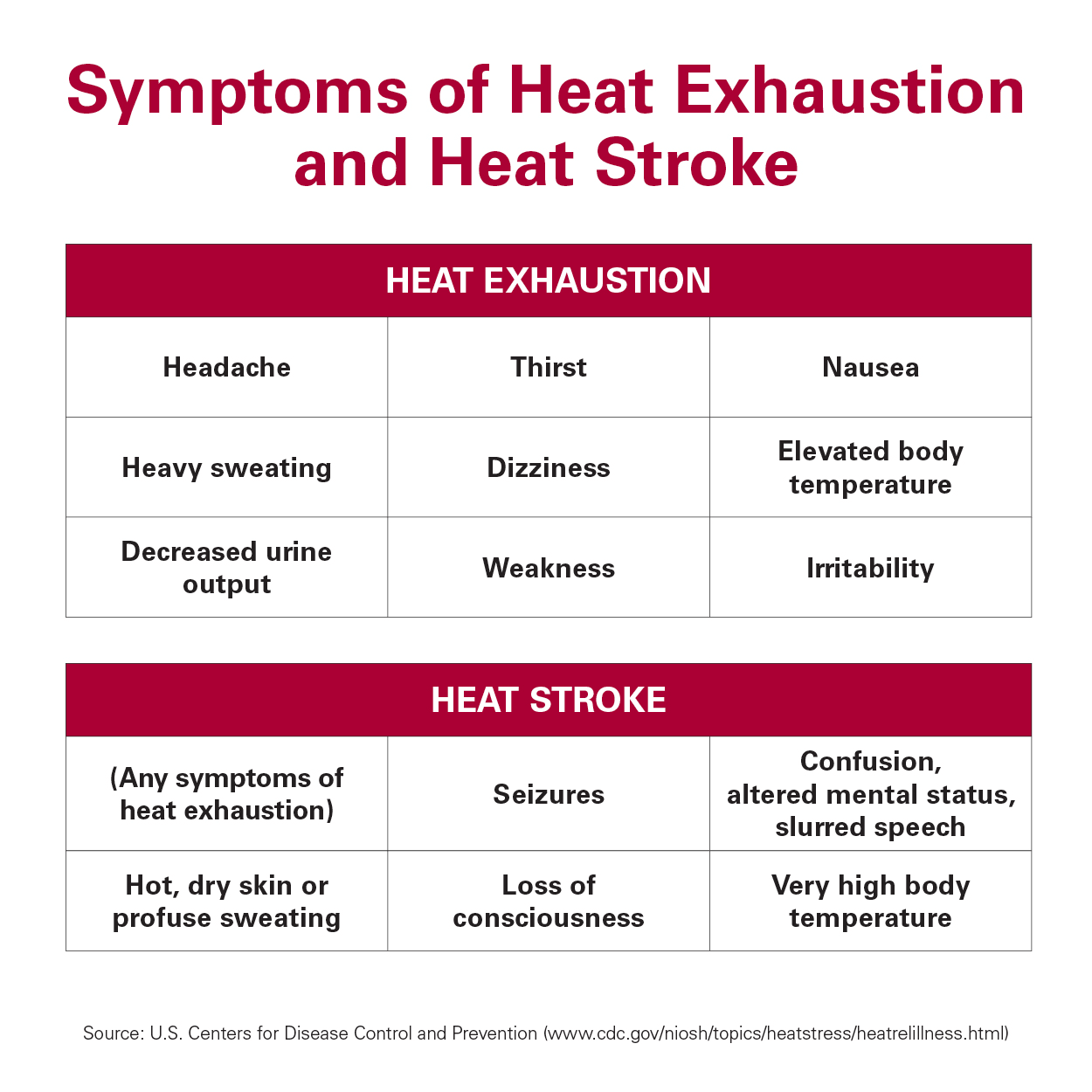
Dr. Walk also distinguished between heat exhaustion and heat stroke – which is a medical emergency.
Dizziness, nausea, vomiting, and cramps are all signs of heat exhaustion. These conditions may be resolved by resting in the shade and hydrating.
Heat stroke, however, is a more serious condition when the body is no longer able to fight the heat. People suffering from heat stroke can get confused, become unconscious, and experience seizures. Dr. Walk said it is important to call 911 if anyone is experiencing a heat stroke.
Dr. Walk also urges people to never leave children or pets in a car – even for a few minutes – since dangerous heat builds quickly in that environment.
TMA is the largest state medical society in the nation, representing more than 60,000 physician and medical student members. It is located in Austin and has 110 component county medical societies around the state. TMA’s key objective since 1853 is to improve the health of all Texans.
Information source: Texas Medical Association


