
Mega Doctor News


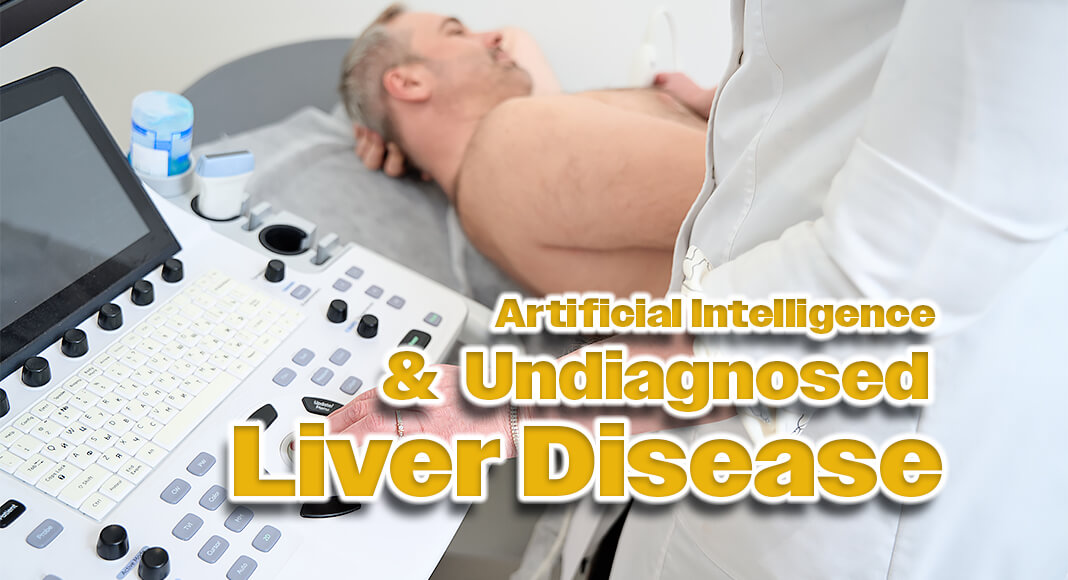
CEDARS SINAI – An artificial intelligence (AI) program can identify chronic liver disease from videos taken during a common heart test known as an echocardiogram, Cedars-Sinai investigators report.
“Incorporating AI into echocardiograms, which capture images of the heart and the liver, can lead to a diagnosis of liver disease without additional costs,” said Alan Kwan, MD, assistant professor in the Department of Cardiology in the Smidt Heart Institute at Cedars-Sinai, and senior and corresponding author of the study, published in NEJM AI.
Echocardiography is the use of ultrasound to visual the heart and its associated structures. The imaging test is a common early screening test doctors prescribe if they suspect a patient has cardiovascular disease. A standard echocardiogram study often contains more than 50 videos, of which a few typically include images of the liver.

“People with heart disease often develop chronic liver disease, distinguishing between primary liver disease and liver injury secondary to heart disease can be challenging,” said David Ouyang, MD, a cardiologist in the Department of Cardiology in the Smidt Heart
Institute, an investigator in the Division of Artificial Intelligence in Medicine, and a senior author of the study. “Our deep-learning model can help doctors spot liver disease that might have gone unnoticed and thus direct appropriate follow-up testing.”
An estimated 4.5 million people have been diagnosed with liver disease, according to the U.S. Centers for Disease Control and Prevention. But experts with the American Liver Foundation say many more people likely have undiagnosed steatotic liver disease, the condition formerly called fatty liver disease.
“These novel findings exemplify how AI models are helping us to augment clinical diagnostics at a body-systems level instead of just individual organs,” said Sumeet Chugh, MD, director of the Division of Artificial Intelligence in Medicine at Cedars-Sinai.
Investigators trained an AI program to study patterns in more than 1.5 million echocardiogram videos. The program, EchoNet-Liver,
was able to detect cirrhosis (scarring of the liver) or steatotic liver disease by studying images of the liver picked up during the echocardiograms. The technology builds upon EchoNet, technology developed by Ouyang and colleagues that can identify and analyze patterns in echocardiograms.
The investigators compared the deep-learning model’s predictions with diagnoses made using patients’ abdominal ultrasounds or MRI images. The AI program proved similar to detecting liver disease by these traditional imaging studies read by radiologists.
The study authors said their next step is to test EchoNet-Liver in studies that track patients’ health over time.
Other Cedars-Sinai authors include Yuki Sahashi, MD, MSc; Milos Vukadinovic, BS; Hirsh Trivedi, MD; Susan Cheng MD, MMSc, MPH. Other authors include Fatemeh Amrollahi PhD; Justin Rhee, BS; and Jonathan Chen, MD, PhD.
Disclosure of interest: YS reports support from the KAKENHI (Japan Society for the Promotion of Science: 24K10526), oversea research grant from SUNRISElab, Japan Heart Foundation and Ogawa Foundation and honoraria for lectures from m3.com inc. DO reports support from the National Institutes of Health (NIH; NHLBI R00HL157421 and R01HL173526) and Alexion, and consulting or honoraria for lectures from EchoIQ, Ultromics, Pfizer, InVision, the Korean Society of Echocardiography, and the Japanese Society of Echocardiography. ACK reports consulting fees from InVision and support from the American Heart Association (AHA; 23CDA1053659) and National Institutes of Health (NIH; UL1TR001881).
Information Source: Cedars Sinai