Mega Doctor News
By Laura Williamson, American Heart Association News
Protein. It’s what’s for dinner, but many consumers are realizing they don’t need a steak on the table for protein. Instead, they’re turning their tastes toward plant-based sources.
Dr. Andrea Glenn, an assistant professor of nutrition at New York University in New York City, said it’s as easy to get protein from sources that grow in the field as it is from the animals that graze there.

“All plants contain protein,” she said.
Why do we need it?
Protein is a macronutrient, meaning the body needs it in large amounts for different things, such as building muscle and bones, forming cartilage, skin and blood, and providing calories that give the body energy. Hormones, vitamins and enzymes that support the cells in the immune system are also made from protein.
“It’s essential for life, really,” Glenn said.
How much is enough?
The recommended daily allowance for protein consumption for adults is 0.8 grams per kilogram of body weight, or about 0.36 grams per pound. For a person who weighs 150 pounds, that’s about 54 grams of protein per day.
Children and pregnant or breastfeeding women need slightly more grams of protein per kilogram of body weight for tissue growth and development.
Eating enough protein is important as people age to prevent the loss of lean muscle mass, according to federal dietary guidelines. But 50% of women and 30% of men 71 and older don’t eat enough of it.
Overall, adult men do a better job of consuming protein than women, who often fall short of the recommended daily amounts, the guidelines say. The deficits seem to come from the types of protein people choose and how they eat them. Adults in the U.S. typically consume protein as part of a mixed dish, such as a casserole, or in a pasta dish or sandwich, which can contain higher amounts of saturated fat and sodium and other less nutrient-dense ingredients.
While most people – 3 out of 4 – meet or exceed the recommendation for protein from meats, poultry and eggs, nearly 90% don’t eat enough seafood and more than half don’t meet the recommendation for nuts, seeds and soy products, according to the federal dietary guidelines.
The American Heart Association encourages adults to get most of their protein from plants, such as legumes and nuts, as well as from seafood and low-fat dairy products. Animal-based proteins should come from lean cuts of meat and skinless poultry. Processed meat should be avoided.
How to get enough – what to eat and what to avoid
While recommended daily allowances are listed in grams, the federal dietary guidelines also use ounces to describe the amount of protein people should eat. These guidelines suggest most adults need 5 to 7 ounces of protein per day, depending on age, sex and calorie intake.
The U.S. Department of Agriculture offers practical guidance for finding 1-ounce equivalents for a variety of protein-containing foods on its MyPlate website. One egg, 1 tablespoon of almond or peanut butter, 6 tablespoons of hummus or a quarter cup of tofu, cooked beans, peas, lentils or frozen edamame are all equivalent to a 1-ounce serving of cooked lean beef or skinless chicken or turkey.
Federal dietary guidelines also suggest replacing processed or high-fat meats, such as hot dogs, sausage and bacon, with seafood or beans, peas and lentils. The switch could help lower intake of saturated fats and sodium.
The AHA recommends eating 6 to 8 ounces per week of seafood, preferably oily fish such as salmon, mackerel, cobia, striped bass, herring or sardines.
“Fish are a good source of protein, especially if you are thinking about reducing your risk for heart disease,” Glenn said. She suggests eating a variety of protein-rich foods throughout the day, rather than focusing on a single source.
Getting protein from plants
For people who prefer not to eat meat or fish, it’s possible to get all the protein you need from plants, Glenn said. “We don’t typically see vegans or vegetarians being protein deficient.”
Of course, some plants contain more protein than others. Soybeans contain some of the highest amounts of protein found in plants and some of the highest quality protein, comparable to protein from animal sources. Protein makes up nearly 40% of the calories from soybeans, compared to 20% to 30% from other legumes.
Soy-based foods such as tempeh and tofu are particularly high in protein, Glenn said. A 100-gram serving of tofu contains 9.4 grams of protein. The same portion of tempeh, a sliceable block made from soybeans, contains about 20 grams of protein.
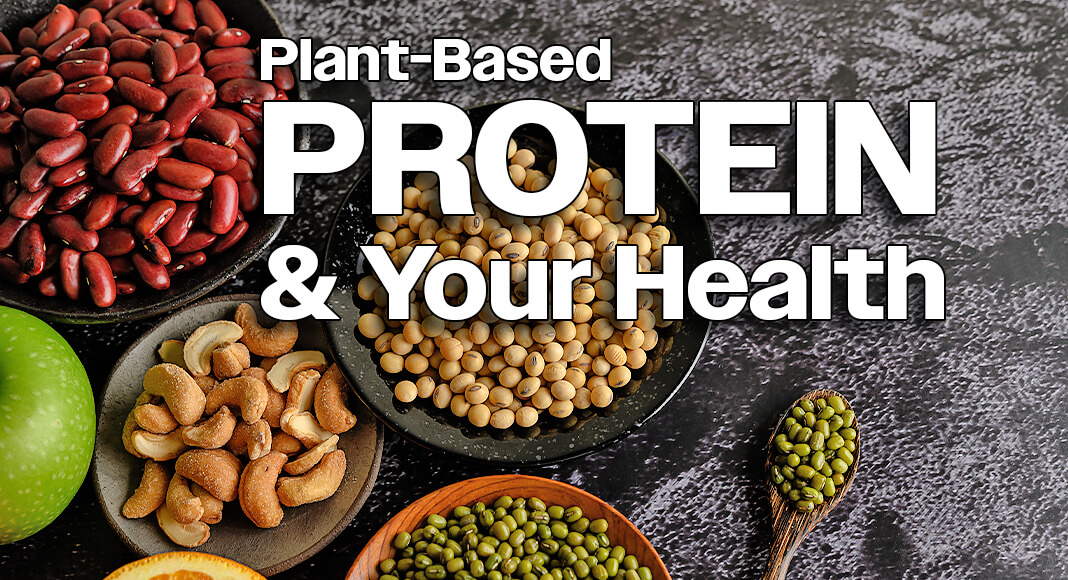
Glenn advises eating unprocessed, whole foods to get the most out of plant-based protein sources. Beans, peas, lentils, chickpeas, edamame, broccoli, spinach, oats, nut butter and quinoa are examples of good plant-based protein sources.
Plants are also high in fiber, vitamins, minerals and other nutrients. And eating a plant-based diet has heart health benefits.
Two 2021 studies in the Journal of the American Heart Association found eating a nutritious, plant-based diet could lower the risk for heart attacks and other cardiovascular diseases. One found eating such a diet in young adulthood lowered the later risk for heart attack, stroke and heart failure in middle age. The second found eating certain plant-based foods reduced heart disease risk in postmenopausal women.
What about meat substitute products?
Plant-based meatless burgers are often touted as a substitute for burgers made from ground beef and contain comparable amounts of protein. However, some are highly processed and contain high amounts of sodium and saturated fats, which can increase the risk for heart disease and premature death.
“Try to find products within that category that are low in sodium and saturated fat,” Glenn said. “And make sure you are still eating whole plant foods and not just eating meat substitutes at every meal.”
Moving away from meat? Don’t overcomplicate it
Transitioning from meat-based proteins to a diet higher in plant-based sources of protein doesn’t have to be difficult, Glenn said.
“Don’t make it too complicated,” she advised. “Just take what you are already eating and replace the meat products with plants. For example, if you have a recipe that uses ground beef, maybe add lentils instead. You can replace the meat in tacos, soups and casseroles with lentils.”
And don’t be afraid to try new foods, Glenn said. “Give them a chance. You might like them.”
Eat It or Leave It? is an American Heart Association News series that takes a closer look at the health benefits and drawbacks of specific foods, drinks and nutrients.