Mega Doctor News

By Noah Fromson Michigan Medicine – University of Michigan
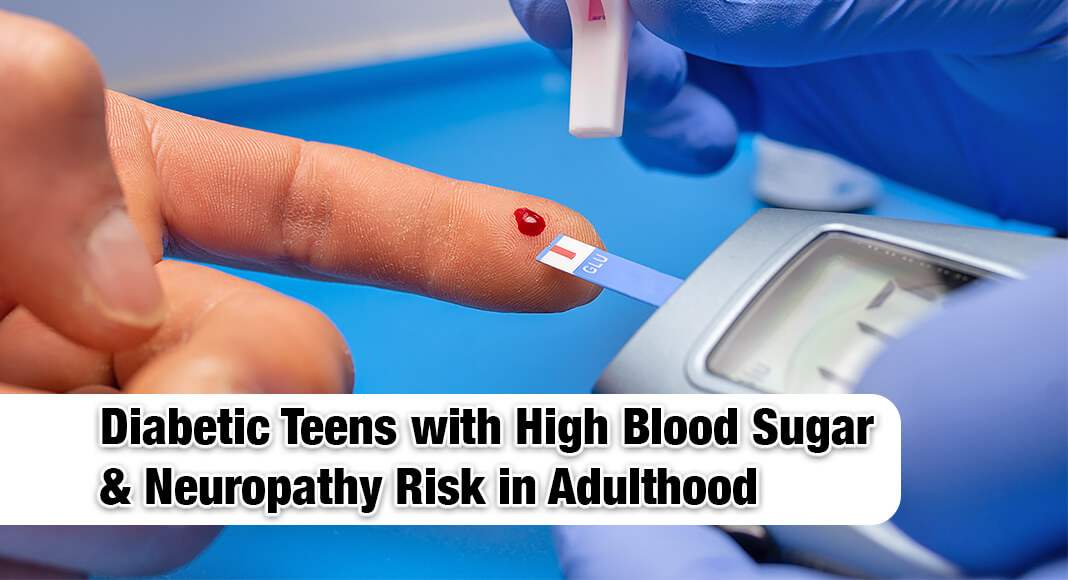
Newswise — Poor blood sugar control in adolescence increases the risk of painful future complications for people with type 1 diabetes, research co-led by University of Michigan suggests.
The study, which followed participants for over 30 years, highlights how children diagnosed with type 1 diabetes at a young age have trouble controlling their blood sugar as teens.

Investigators found that children who had poor glycemic control — meaning, higher-than-average blood sugar levels — during adolescence were more likely to develop neuropathy in adulthood.
Neuropathy is nerve damage that can cause pain, numbness and tingling in the extremities. Of nearly 40 million Americans with diabetes, up to 50% may receive a neuropathy diagnosis.
Results are published in Diabetes Research and Clinical Practice.
“This unique study emphasizes the importance of supporting teenagers with type 1 diabetes to manage their blood sugar well and ensure a smooth transition to adult care to prevent future complications,” said co-senior author Eva Feldman, M.D., Ph.D., director of the ALS Center of Excellence at U-M Health and James W. Albers Distinguished University Professor at U-M.
Children in the study received a diagnosis of type 1 diabetes before the age of six. Researchers accessed nearly 2,000 of the participants’ HbA1c (blood sugar) readings over the course of three decades.
During adolescence, participants had an average blood sugar reading of 8.9%, higher than averages during both childhood and adulthood.
Participants with the greatest increase in HbA1c levels from childhood to adolescence not only retained higher blood sugar levels in adulthood, but they also had a greater risk for neuropathy.
“Our findings suggest that difficulties maintaining blood sugar in adolescence may lead to greater difficulties in achieving future glycemic control,” Feldman said.
“Although the mechanisms behind that association are unclear, hyperglycemia leads to impairments in cell metabolism, insulin signaling and glucose regulation, all of which could cause long-term challenges in optimal glycemic control.”
Adolescent hyperglycemia is likely not the only contributor to risk of future complications, such as neuropathy, says Kara Mizokami-Stout, M.D., M.Sc., an assistant professor metabolism, endocrinology and diabetes at U-M Medical School, who was not involved in the study.
“While clear links between glycemia and neuropathy have been found in type 1 diabetes, we know there are also vascular risk factors that play a key role in the development of neuropathy,” Mizokami-Stout said.
“However, this study does underscore the need to maximize our support for younger individuals with diabetes.”
Additional authors: Stacey A. Sakowski, Ph.D., of University of Michigan, Chris Moran, MB, BCh, BAO, Ph.D., Taya A. Collyer, Ph.D., Velandai Srikanth, MBBS, Ph.D., all of Monash University, Amy Brown, Ph.D., Elisabeth A. Northam, Ph.D., Richard Beare, Ph.D., and Fergus J. Cameron, M.D., all of Murdoch Children’s Research Institute, Royal Children’s Hospital.
Funding/disclosures: This study was partially supported by the National Institute of Diabetes and Digestive and Kidney Diseases (DK129320) of the National Institutes of Health.
The content is solely the responsibility of the authors and does not necessarily represent the official views of the NIH.
Paper cited: “Associations between HbA1c and complications in children diagnosed with type 1 diabetes before age 6: A 30-year follow-up study,” Diabetes Research and Clinical Practice. DOI: 10.1016/j.diabres.2025.112447