








loader image
Sunday, February 8, 2026
57 F
McAllen
- Advertisement -

Why you Should Know How to do CPR

Translate to Spanish or other 102 languages!

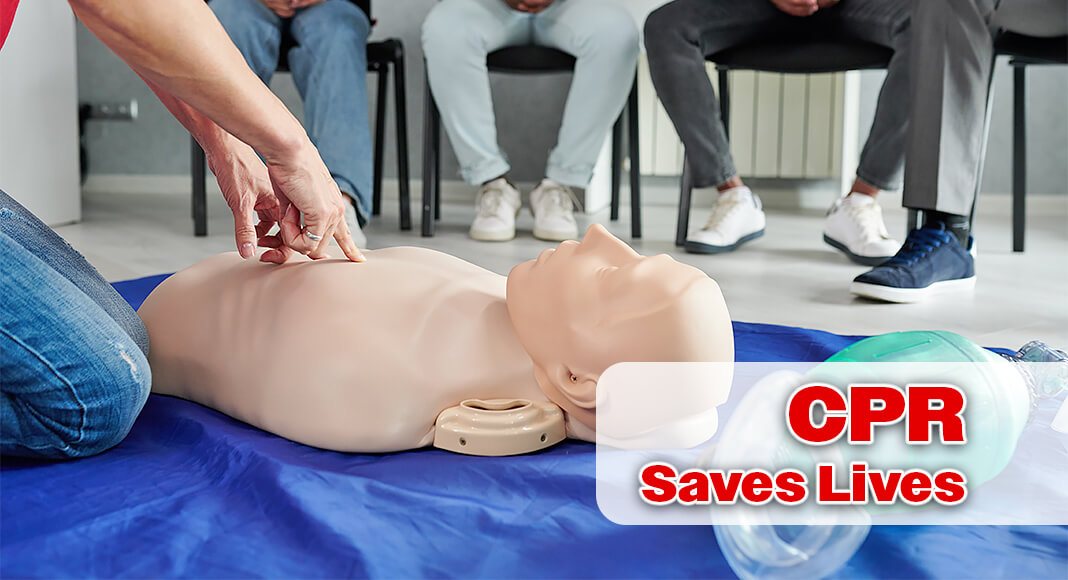
June is CPR and AED Awareness Month.If you don’t know how to do CPR, now is a good time to learn. You never know when an emergency could happen. Image for illustration purposes
- Advertisement -

CLEVELAND CLINIC – June is CPR and AED Awareness Month.If you don’t know how to do CPR, now is a good time to learn. You never know when an emergency could happen. 

“There’s incredible data that delays in CPR will actually change the outcome quite considerably for a patient. And conversely, if you can intervene within those first few minutes even, the chances of that patient actually having a survival skyrocket,” said Nicholas Ruthmann, MD, cardiologist at Cleveland Clinic. 

Dr. Ruthmann said he can understand why some people might be scared to step in during an emergency to perform CPR, but the consequence of not doing so is much worse. 

- Advertisement -

So, what are the steps for CPR? 

First, check the person’s pulse and see if they are breathing. 

If you don’t notice any activity, begin CPR right away. 

It’s recommended to do 100 to 120 chest compressions per minute. 

- Advertisement -

Make sure you are pushing fast and hard. 

Mouth-to-mouth resuscitation is not necessary. 

If there is an AED device available, you could consider using that too. 

“This is a device that can help re-shock the heart. And if the heart needs to be shocked back, shocking them with this AED is truly the biggest lifesaver that can happen,” said Dr. Ruthmann. “And just like CPR, the sooner that can happen, the better. A lot of people fear this new device that they’ve never seen, they’ve never opened up, they’ve never used. It will do the work for you. All you have to do is open it up, press ‘on’, listen and follow the instructions. “

Reports show most cardiac arrests happen at home, which is why Dr. Ruthmann emphasizes the importance of knowing CPR.


- Advertisement -
- Advertisement -

- Advertisement -

More Articles

Inside the Physiology and Neuroscience of Winter Olympians

What makes Olympians the very best at what they do — even in cold, slippery or icy conditions? 

Study Finds 60% of American Women Choose Clinic Visits Over At‑Home Cervical Screening

American women now have the option of screening for cervical cancer at home, using newly approved self-collection tools. While experts hope this will increase uptake in the under-screened population, a first-of-its kind study by researchers from The University of Texas MD Anderson Cancer Center found the majority (60.8%) still prefer to see a medical professional in-clinic.

Food Safety Tips for a Healthy Super Bowl Sunday

Super Bowl parties often feature takeout, delivery and foods that are served over several hours. To help prevent foodborne illness, the U.S. Department of Agriculture’s (USDA) Food Safety and Inspection Service (FSIS) is reminding fans to keep food safety in play on game day.

FDA Updates Guidance on “No Artificial Colors” Labels as Natural Options Expand

The U.S. Food and Drug Administration took additional steps to support the transition of our nation’s food supply from the use of artificial petroleum-based colors to alternatives derived from natural sources. Companies will now have flexibility to claim products contain ‘no artificial colors’ when the products do not contain petroleum-based colors. In the past, companies were generally only able to make such claims when their products had no added color whatsoever — whether derived from natural sources or otherwise
- Advertisement -
×
