Mega Doctor News

US Department of Agriculture (USDA)
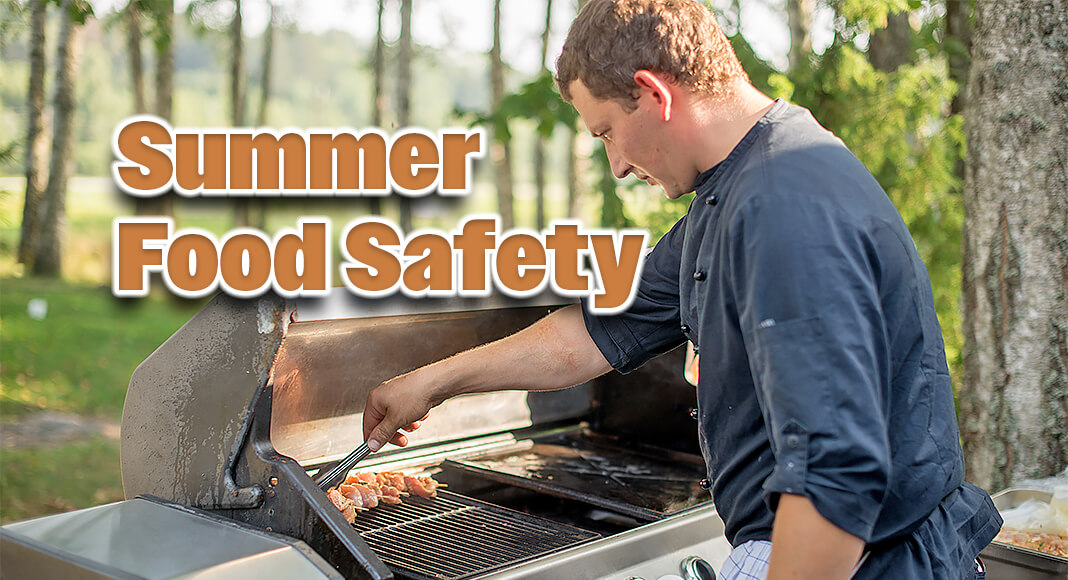
As friends and families get ready to kick off summer by firing up the grill and serving foods at a cookout, the U.S. Department of Agriculture’s (USDA) Food Safety and Inspection Service (FSIS) shares some tips to keep your celebrations safe.
“Food safety is a year-round priority, but it’s especially important during summer months when we’re cooking outdoors and handling food in warmer temperatures,” said FSIS Administrator Dr. Denise Eblen. “We have simple but effective steps that can keep you and your family safe while enjoying those outdoor meals.”

Here are some key recommendations.
| Clean Your Grill: |
| Grill surfaces should be washed with soap and water. Ensure old residue is scraped off. |
| If you don’t have access to a faucet, carry bottled water, soap and paper towels. |
| After washing, start your grill and allow the heat to kill any remaining bacteria before cooking. |
| Prevent Cross-Contamination: |
| Pack raw meats in sealed containers at the bottom of the cooler to prevent juices from contaminating other items. |
| When grilling, use separate plates, cutting boards, and utensils for raw and cooked foods. |
| Never place cooked food on plates that held raw meat, poultry or seafood. |
| Cook to Safe Temperatures: |
| Remember that color is not a reliable indicator of doneness. |
| Use a food thermometer to ensure foods reach a safe minimum internal temperature: |
| Beef, pork, lamb, and veal steaks, chops and roasts: 145 F |
| Seafood (fish and shellfish): 145 F |
| Ground beef, pork, lamb and veal: 160 F |
| Poultry (whole and ground): 165 F |
| Avoid the Danger Zone: |
| The bacteria that can cause foodborne illness grow between 40 F and 140 F — also known as the Danger Zone. |
| If you plan to keep perishable foods on the table for more than two hours (or one hour in temperatures above 90 F), keep hot foods hot and cold foods cold to avoid the Danger Zone. |
| Keep hot foods heated at or above 140 F with chafing dishes or preheated grill. |
| Keep cold foods chilled at or below 40 F by placing them on bowls of ice or keeping them inside a cooler near the picnic table. |
For more information about food safety, call the USDA Meat and Poultry Hotline at 1-888-MPHotline (1-888-674-6854) or email MPHotline@usda.gov.