loader image
Friday, December 12, 2025
72.6 F
McAllen
- Advertisement -

New Technology Helping with Early Diagnosis of Autism

Translate to Spanish or other 102 languages!

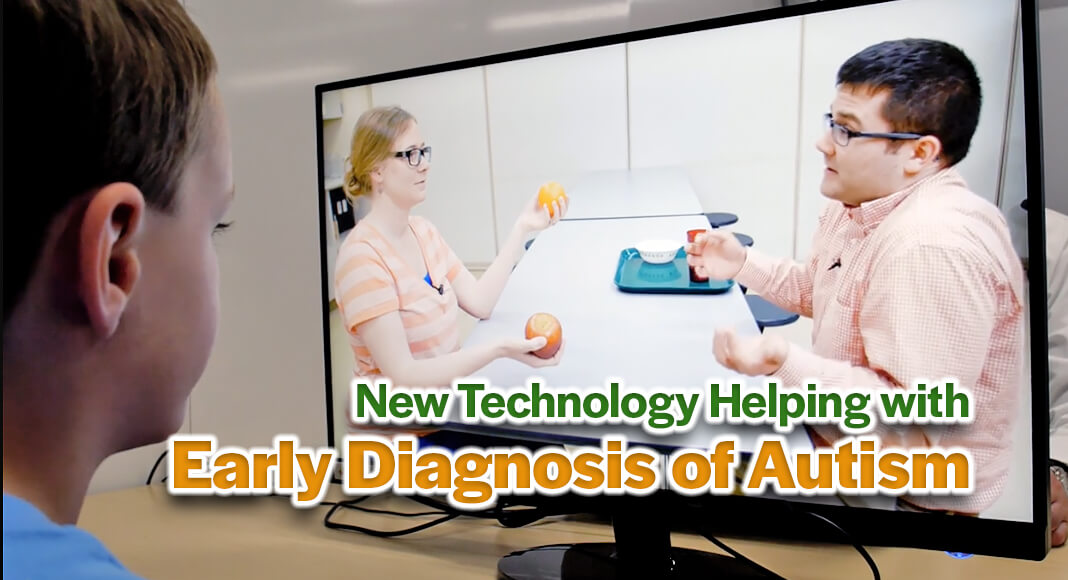
Despite its prevalence, many families still have to wait months before they can get their child into a specialist to be diagnosed, but a new diagnostic tool developed by Cleveland Clinic hopes to change that. Image courtesy of Cleveland Clinic

- Advertisement -

CLEVELAND CLINIC – April is Autism Acceptance Month. 

According to the CDC, one in 36 children in the United States have autism. 

Despite its prevalence, many families still have to wait months before they can get their child into a specialist to be diagnosed, but a new diagnostic tool developed by Cleveland Clinic hopes to change that. 

- Advertisement -

“On average, parents suspect something is wrong with their child’s development at about a year of age. However, the diagnosis is made about two to three years later on average,” said Mohammed Aldosari, MD, pediatric neurologist at Cleveland Clinic Children’s. “So, there is a huge lag, and the lag is because of the long waiting list for autism diagnostic clinics.”

Dr. Aldosari was involved with the creation and testing of Autism Eyes, which aims to help with early diagnosis. 

It works by measuring a child’s gaze and eye movement while they watch different videos and images. 

Based on the child’s reactions, a diagnosis is made. 

- Advertisement -

Dr. Aldosari said the diagnostic tool offers many benefits, like being able to provide immediate results. 

It also requires little training, so primary care physicians, for example, could administer the test. 

He notes that the end goal is not only to reduce wait times for diagnosis, but to get children in sooner for treatment. 

“With children, there is a principle called, ‘brain plasticity,’ which is a very important principle in terms of responding to treatment. The earlier intervention, the better the outcome,” he explained. “And this has been proven by multiple studies. So, when we diagnose autism about a year to two, or potentially three years earlier, there is a huge impact in terms of their outcomes.”

Autism Eyes is still in development and not yet available for clinical use. 

- Advertisement -
- Advertisement -

- Advertisement -

More Articles

STHS Children’s Receives Visit From Trooper Santa

For the second year in a row, the Texas DPS Troopers Foundation helped spread holiday cheer to hospitalized patients at STHS Children’s during meet & greet with Trooper Santa.

FDA Approves Zenflow Spring® System for BPH Treatment

 Zenflow, Inc. announced today the U.S. Food and Drug Administration (FDA) approval of the Zenflow Spring® Implant and Delivery System for the treatment of symptoms associated with benign prostatic hyperplasia (BPH), also known as enlarged prostate.

Paxton Sues Medical Records Giant for Blocking Data and Parental Access

Attorney General Ken Paxton filed a lawsuit against Epic Systems Corporation (“Epic”) for their unlawful monopolization of the electronic health records industry and for engaging in deceptive practices that restrict parental access to their minor children’s medical records.

CDC’s Rapid Response Helps Solve First Infant Botulism Outbreak Linked to Formula

The Centers for Disease Control and Prevention (CDC) released an update on the ongoing investigation of infant botulism cases linked to ByHeart infant formula.
- Advertisement -
×