
Mega Doctor News

Mental health disorders are common in the United States, affecting millions of Americans each year. In fact, about one in 25 adults in the United States live with a serious mental illness, according to the Centers for Disease Control and Prevention.
Unfortunately, only a fraction of people with mental health issues receive treatment, per the American Psychological Association.
Without treatment, support or help, mental health disorders can reach a crisis point, which could result in a person in mental health crisis getting in trouble with the law or injuring themself on purpose or by accident. It’s alsoconsidered a crisis if someone develops a plan to take their own life or considers hurting others.

Like a physical health crisis, a mental health emergency can be devastating for individuals, families and communities.
While an individual crisis cannot be fully predicted, it’s possible to plan how to navigate through an emergency mental health situation, including structuring services and organizing approaches to best meet the needs of individuals experiencing a mental health crisis, especially those living with a mental health condition, which can make it harder to traverse through a crisis.
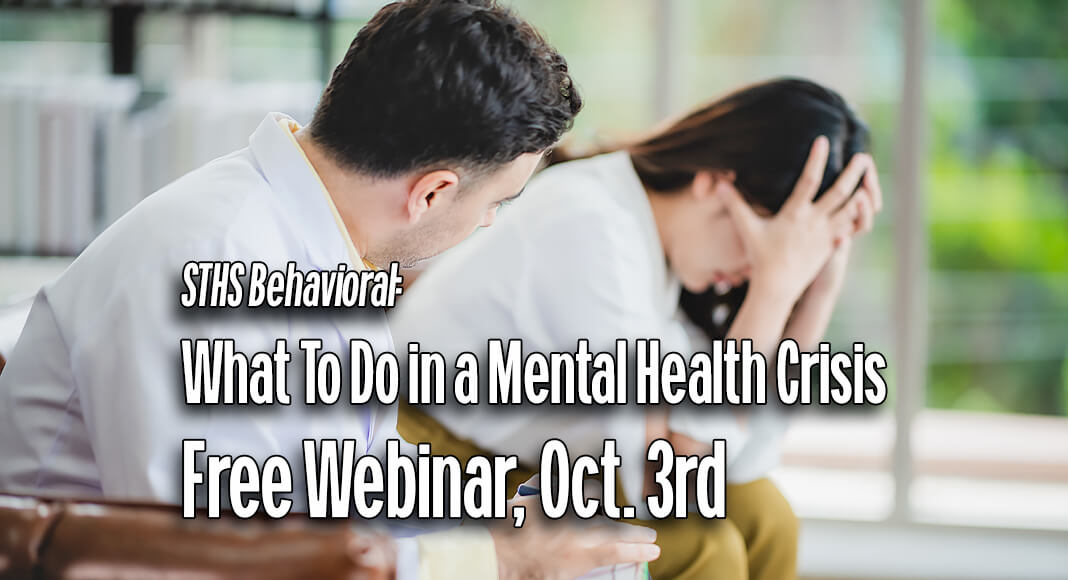
So, to help those struggling with mental health in the Rio Grande Valley while breaking the stigma surrounding mental health, South Texas Health System Behavioral will dedicate its latest Let’s Talk Mental Health webinar to educating the community on how to manage a mental health crisis.
Streaming live via the STHS Facebook page on Thursday, October 3, from 5:30 p.m. to 6:30 p.m., the online seminar will be led by Leticia Sosa, MSSW, LCSW, LCDC-I, CLYL, the Director of Outpatient Services at STHS Behavioral. During her presentation, she will discuss how to develop a mental health crisis plan and support someone experiencing a crisis.
If you or a loved one is struggling with mental health challenges, help is available 24/7 at STHS Behavioral. For a confidential assessment, call 956-388-1300.
| What: | Let’s Talk Mental Health Webinar – Managing a Crisis |
| When: | Thursday, October 3, 2024 5:30 p.m. – 6:30 p.m. |
| Where: | Online via STHS’ Facebook page |