

Mega Doctor News

By Saira Cabrera
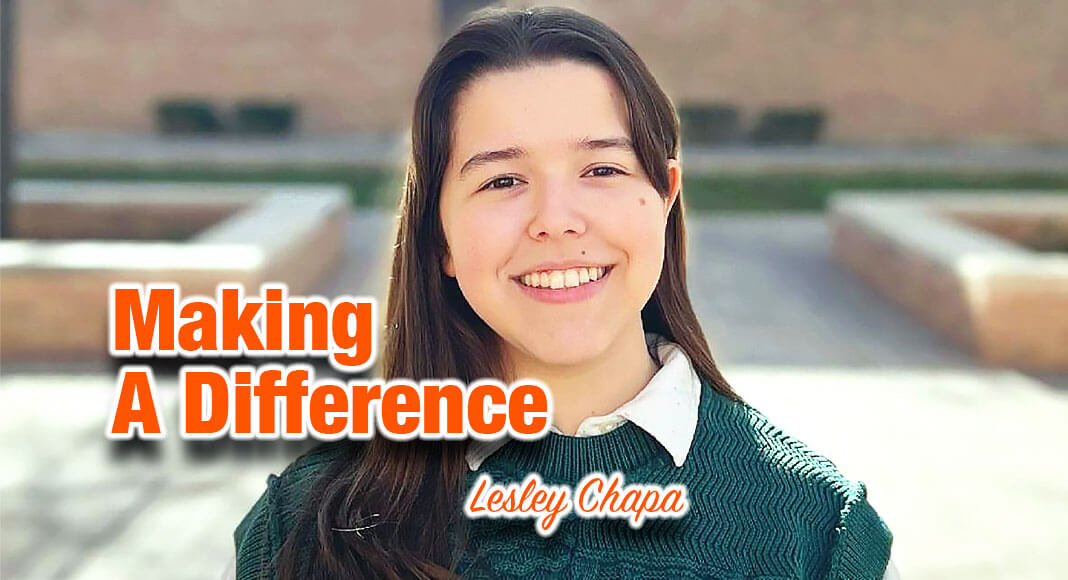
RIO GRANDE VALLEY, Texas – Valley native Lesley Chapa didn’t always want to be a doctor – until she had a chance to shadow an internal medicine physician from McAllen during her undergrad studies.
“He had a strong sense of commitment to his patient population,” she said. And that commitment motivated her to think about a career in healthcare, especially one focused on diversity access for underserved populations.

Now a medical student with the UTRGV School of Medicine, Chapa also serves as president of the UTRGV Psychiatry Student Interest Group, where she collaborates with peers to spread awareness about mental health to the Valley community.
“I was very impressed by Dr. (Wilfredo A.) Muñoz, and I wanted to model that in the future,” she said. “Watching him interact with his patients was like sitting in at a family gathering. Their interactions were fluid, and he explained things in a digestible manner. He wasn’t only a doctor but also an advocate, a confidant and a friend.”
She hopes to one day be able to use her cultural and linguistic background to advocate for underrepresented patients, just as he did.
She chose the UTRGV School of Medicine for its unique cultural lens and the lessons that it could provide.
“We are one of the most diverse medical schools in the nation, and it is exciting to collaborate and learn from distinct perspectives,” Chapa said.
She is still undecided about what path she wants to take in her medical career, but she said psychiatry is an interesting area.
“I want to stay open-minded to different specialties since I haven’t had that much exposure yet,” Chapa said. “However, I am leaning toward psychiatry because I am very interested in mental health and mental health awareness.”
When she was growing up, she said, the Mexican American experience revealed an existing stigma toward mental health conversations that seems to be a common trend in many Hispanic cultures.
“My family is from a very traditional Mexican background,” she said. “Their go-to phrases are ‘No tienes nada, no pasa nada, todo va a estar bién.’ (There’s nothing wrong, nothing is going to happen, everything is going to be OK.)”
She recalls hearing that over and over but began to question what would happen if something truly were wrong.
“When ‘nada’ or ‘nothing’ starts giving you heart palpitations, shortness of breath and starts manifesting itself physiologically – what do you do?” she said. “I find it interesting to see how these dynamics shift as newer generations become more vocal about mental health and its treatments.”
For Chapa, it’s important to be at the forefront of those conversations.
“I think it’s essential to offer a level of cultural awareness for underrepresented patients,” she said.
The UTRGV School of Medicine continues to challenge her in ways she had never been challenged before, she said, and she finds herself being pushed to new limits every day.
“Being challenged intellectually, professionally, mentally, you name it – it’s a great opportunity for growth,” she said. “I am excited to see who I’ve become three years from now. I feel like I’ll look back and see a completely different person.”