By BMJ

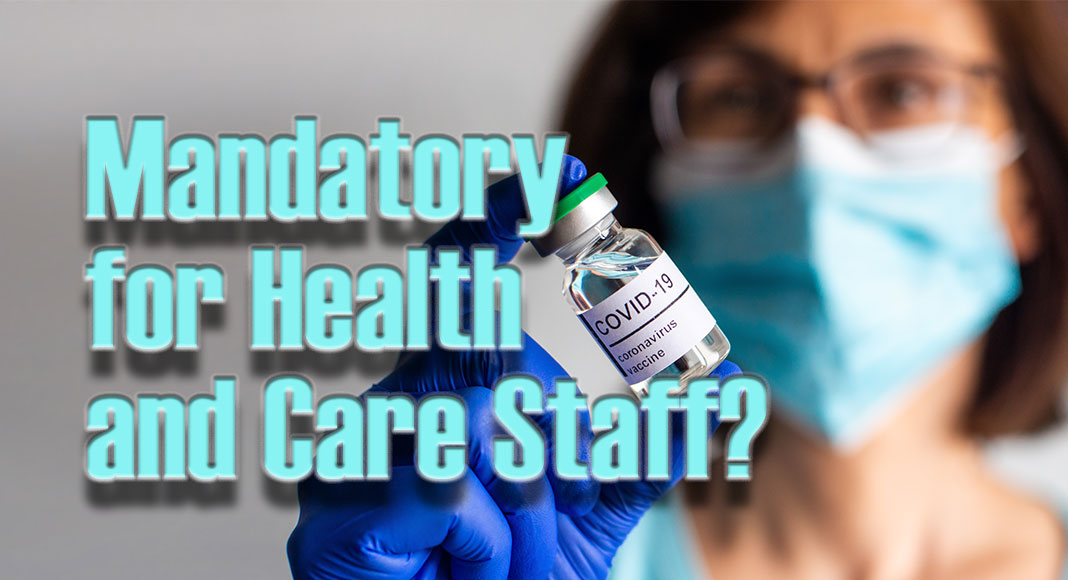
Newswise — Italy, France, and Greece have made COVID-19 vaccination mandatory for healthcare workers, and England is making it compulsory for care home workers and consulting on whether to extend this to healthcare workers and other social care staff. Experts debate in The BMJ whether frontline health and social care workers should be compelled to take up the vaccine, if efforts to encourage them fail.
Patient safety is ultimately the responsibility of health and social care institutions and they have a duty to employ only workers whose presence would not place patients at unnecessary risk of serious harm, argues Michael Parker at the University of Oxford.
Staff also have responsibilities and should be willing to take up the vaccine in the light of evidence that it will help protect patients and poses only a low risk to themselves, he points out. “Healthcare workers whose unvaccinated status poses a risk to patients have an obligation to accept vaccination,” he emphasises.

While staff should be encouraged to get vaccinated, those who do not, because of a medical contraindication or they are reluctant, should be moved away from frontline roles, ideally immediately, Parker says.
The worry that moving staff may put patients at greater risk, because of recruitment problems, is “not a justification for doing nothing,” he says. If it is not possible to swiftly ensure that patients are cared for by vaccinated staff, to meet their obligations to protect patients, employers should make it mandatory for all remaining frontline staff without a serious medical contraindication to be vaccinated.
Helen Bedford at Great Ormond Street Institute of Child Health, London, and colleagues argue that mandatory vaccination is “a blunt instrument to tackle a complex issue.”
“It is not necessary, acceptable, or the most effective way to achieve high uptake, and it raises serious ethical issues about freedom of choice,” they say.
In England, covid-19 vaccination uptake among staff in the NHS and older adult care homes is generally high, they argue: 90% and 87%, respectively, have received at least one dose.
They accept that uptake is known to be lower among some minority ethnic groups, many of whom work in health and social care sectors, and in patient-facing roles.
“Mandatory vaccination can seem a straightforward solution, requiring less resource than other interventions, but it has downsides. Notably, it may risk increasing resistance to vaccination by damaging trust in the government and other organisations,” they warn.
Exploring the reasons for vaccine hesitancy among these workers is fundamental to informing interventions to improve uptake, and an “active listening” approach to providing information along with vaccine advocates and ambassadors from minority ethnic and senior clinician colleagues helps build trust, they say. Such strategies may also help to improve vaccine confidence among the wider population, since healthcare workers, together with the NHS, are the public’s most trusted source of information about covid vaccine.
Two commentaries accompany the debate.
In one Michael Mittelman describes the risks unvaccinated staff pose to immunocompromised patients like himself. He has undergone three kidney transplants for a rare kidney disease.
Mandatory vaccination should include all staff who have contact with patients, including people who deliver meals, staff helping elder care residents, emergency technicians, janitorial staff, and so on as well as doctors and nurses, he says. “Not being able to trust the healthcare worker treating me, or the person bringing me a meal, breeds anxiety as covid variants spread.”
In the other Nadra Ahmed, chair of the National Care Association, warns that the UK care home sector is already in a “fragile” state due to recruitment problems and the “most dangerous assumption is that staff who walk out will be easily replaced.” If staff who have not yet had a vaccine were to leave potentially an additional 13% of care services would be unsustainable, she says.
Community transmission remains high, and vaccinated staff can carry the virus as well as unvaccinated visitors including relatives, friends and healthcare workers, she adds.