Mega Doctor News

By Janette Neuwahl Tannen / University of Miami
Newswise – It’s the most common form of cancer. Impacting nearly one in every five Americans, skin cancer is a danger that can impact one’s health and appearance in very real ways.
Tessa Zangardi, a University of Miami senior studying biochemistry and nutrition in the College of Arts and Sciences, learned that lesson firsthand while watching her mother undergo surgery to remove a basal cell carcinoma from her face, one of the most common types of skin cancer. It led Zangardi to realize she wanted to become a dermatologist but also underscored the importance of protecting her skin.

Yet she and some other students have noticed that many of her peers are less cautious. In recent years, many young women have started ignoring longstanding health warnings about sun exposure and instead, are posting videos on social media about their tanning success. As a result, about half of Zangardi’s college friends do not use sunscreen, she said.
On social media, young women who are tanning influencers rave about their brown-hued skin, show off their tan lines, and encourage others to stay in the sunshine, or in the water, during the hottest time of the day, often without sunscreen.
Yet, physicians say following the advice of these influencers and not applying sunscreen, or visiting a tanning bed, are all ways to increase the risk of developing skin cancer and go against evidence-based recommendations that dermatologists have followed for years.
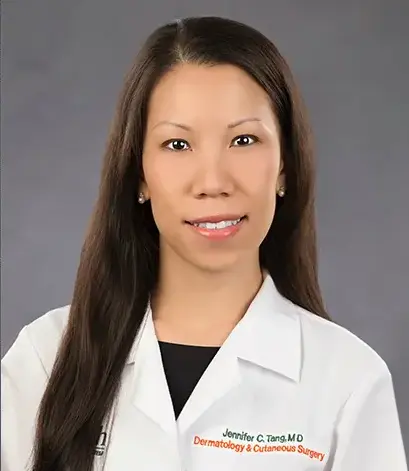
“There is no such thing as a safe tan. The UV exposure needed for tanning leads to DNA damage in the skin and increases the risk of skin cancer,” said Dr. Jennifer Tang, a dermatologist and Mohs surgeon at Sylvester Comprehensive Cancer Center and UHealth – University of Miami Health System. “As a dermatologist, it’s highly concerning that our education has not reached this sector of the public.”
While most of her patients who need surgery to remove skin cancers are adults or elderly individuals, Tang said people of any age can develop skin cancer.
“Young patients are not immune, and people who receive intense doses of sun or a higher lifetime of sun exposure have higher risk for skin cancer,” she added.
To protect oneself against sun damage and the potential for skin cancer, Tang suggests everyone should:
- Practice sun avoidance, or stay indoors during the hottest part of the day—usually from 10 a.m. to 2 p.m., and until 4 p.m. during summer months—to shield skin from the strongest sun exposure.
- Apply sunscreen anytime you are in the sun, especially a broad-spectrum sunscreen with UVA and UVB protection that is SPF 30 or above. Those with zinc oxide or titanium oxide are Tang’s preferred choices. If you are in the water, reapply every two hours, as sunscreen washes off easily. Also, another type of sunscreen just approved by the U.S. Food and Drug Administration includes bemotrizinol, or BEMT, a chemical filter that has been used in Europe for many years and can now be sold in the United States. This filter offers better UVA protection among the chemical sunscreens, she added.
- Wear sun-protective clothing, such as shirts and hats with UPF, or ultraviolet protection.
Individuals who are most at risk for skin cancer are people with fair skin that freckles or burns easily, blue or green eyes, and blonde or red hair, as well as a family history of skin cancer, according to the U.S. Centers for Disease Control and Prevention.
“People who have difficulty tanning are usually those who are most at risk because they lack melanin that protects our skin from sun damage,” Tang said. “While melanin is protective, people with darker skin tones can still develop melanomas, such as acral melanomas on the hands and feet.”
Besides increasing the risk of skin cancer, there are other drawbacks to repeatedly tanning or burning your skin in the sun, Tang said. These include photoaging, which causes brown spots and freckles to appear on the skin. Tanning also causes a thinning or decrease in collagen in the skin, which causes fine lines and wrinkles, as well as a susceptibility to bruising.
And while some social media influencers boast about their use of tanning beds, Tang and other health professionals said that is one of the most hazardous things a person can do to their skin due to its concentrated UV exposure.
“Tanning beds are definitely not safe,” she said. “Using a tanning bed just once before the age of 35 increases your risk by 75 percent for developing melanoma, the most dangerous type of skin cancer.”
For those still set on that sun-kissed look, spray tans can be a safer alternative, Tang said. But she cautioned consumers to read the ingredients of self-tanners, so they don’t develop dermatitis or other skin irritation from the formula. Ideally, consumers should look for products that are fragrance- and dye-free, she added.
Curiously, tanning stands in opposition to many other beauty trends Zangardi sees on social media, which promote methods and products to preserve your skin. But she noted that the popularity of tanning is growing in America, especially in South Florida.
“There’s a specific aesthetic and lifestyle being sold online right now, and unfortunately, a deep tan is a massive part of it,” she added.
Because of her interest in the field, Zangardi has listened to the many local dermatologists who come speak to her club and tout the benefits of skin protection through daily sunscreen use. So, she builds it into her morning skin-care routine.
“The only time I’ll tan is with sunscreen and after 3:30 p.m., and I typically do 10 to 15 minutes in the sun and then rest under an umbrella,” said Zangardi, who is also the president of Skin to Skin, a student organization that educates students about healthy skin care. “While I can’t control what people do, I can spread awareness through Skin to Skin, and hopefully people will listen to medical professionals.”
If students are unsure about skin care, she said the best source of information is your doctor. But since sunscreen is a proven source of protection from sun damage, Skin to Skin offers it next to the volleyball courts at Lakeside Village and hopes to add it next to the University Pool.
Jesminder Pongnon, a junior studying health science, is also interested in the medical field and is one of the University’s seven peer health educators. They often educate students about sun safety by handing out sunscreen, hats, and fans before students board the shuttles to attend football games, as well as at tables during new student orientation each fall.
Pongnon also finds the new tanning trend troubling, but said she often tries to tell other students craving that glow that “you don’t have to put yourself in harm’s way to look good.”
Both young women hope that through their volunteer work and club meetings, they will help University of Miami students learn to separate health facts from misinformation spreading on social media.
“For anyone considering not wearing sunscreen, they should go read the facts about it, because sun exposure can get really dangerous really fast,” Pongnon said.
Sylvester Comprehensive Cancer Center and its physicians do community outreach, providing education to health care providers across South Florida and offering sunscreen and skin cancer screenings to local residents across the greater Miami area. As the region’s only National Cancer Institute-designated facility, Sylvester has several ongoing research trials to treat melanoma. To learn more, visit the website.