







Mega Doctor News
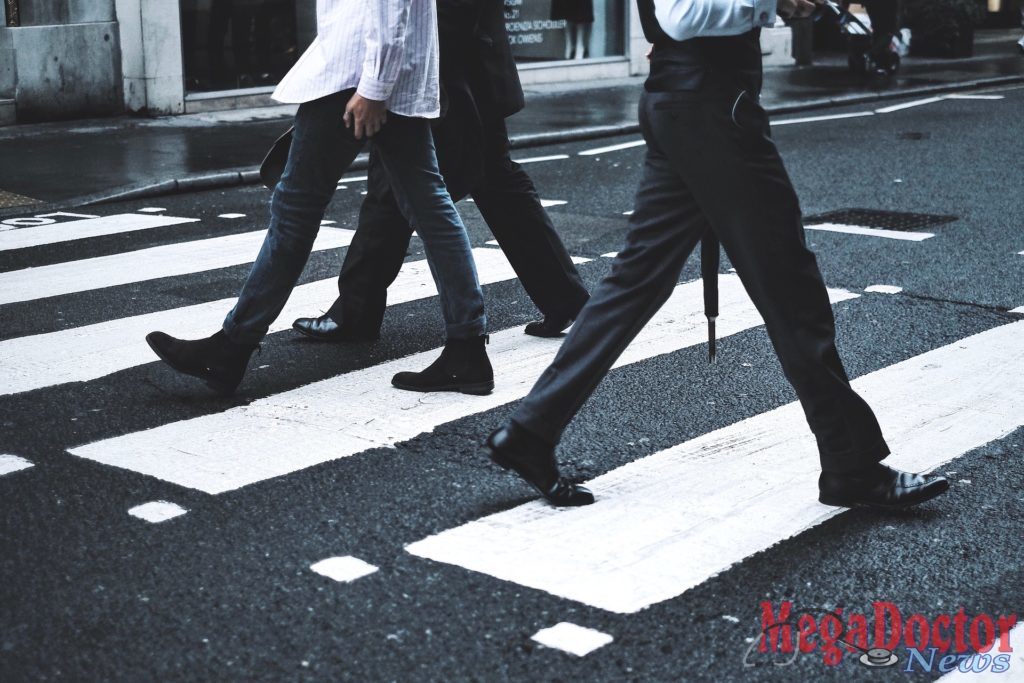
Newswise — COLUMBUS, Ohio — Walking with a purpose – especially walking to get to work – makes people walk faster and consider themselves to be healthier, a new study has found.
The study, published online earlier this month in the Journal of Transport and Health, found that walking for different reasons yielded different levels of self-rated health. People who walked primarily to places like work and the grocery store from their homes, for example, reported better health than people who walked mostly for leisure.

“We found that walking for utilitarian purposes significantly improves your health, and that those types of walking trips are easier to bring into your daily routine,” said Gulsah Akar, an associate professor of city and regional planning in The Ohio State University Knowlton School of Architecture.

“So, basically, both as city planners and as people, we should try to take the advantage of this as much as possible.”
The study used data from the 2017 National Household Travel Survey, a U.S. dataset collected from April 2016 to May 2017.
The researchers analyzed self-reported health assessments from 125,885 adults between the ages of 18 and 64. Those adults reported the number of minutes they spent walking for different purposes – from home to work, from home to shopping, from home to recreation activities and walking trips that did not start at their homes.
And, the survey respondents ranked how healthy they were on a scale of 1 to 5. The dataset the researchers analyzed included more than 500,000 trips.
The researchers – Akar and Ohio State doctoral student Gilsu Pae – found that walking for any duration, for any purpose, increased how healthy a person felt.
But they also found that an additional 10 minutes of walking per trip from home for work-based trips – say, from a person’s house to the bus stop 10 minutes away – increased that person’s odds of having a higher health score by 6 percent compared with people who walk for other reasons. People who walked from home for reasons not connected to work, shopping or recreation were 3 percent more likely to have a higher health score.
And, the researchers found, people who walked for work walked faster – on average, about 2.7 miles per hour – than people who walked for other reasons. People who walked for recreational purposes – say, an after-dinner stroll – walked, on average, about 2.55 miles per hour.
The researchers also found that walking trips that begin at home are generally longer than walking trips that begin somewhere else. The team found that 64 percent of home-based walking trips last at least 10 minutes, while 50 percent of trips that begin elsewhere are at least that long.
Akar has studied the ways people travel for years, and said she was surprised to see that walking for different purposes led to a difference in how healthy people believed they were.
“I was thinking the differences would not be that significant, that walking is walking, and all forms of walking are helpful,” she said. “And that is true, but walking for some purposes has significantly greater effect on our health than others.”
Akar said the findings suggest that building activity into parts of a day that are otherwise sedentary – commuting by foot instead of by car, for example – can make a person feel healthier.
“That means going to a gym or a recreation center aren’t the only ways to exercise,” Akar said. “It’s an opportunity to put active minutes into our daily schedules in an easy way.”

