








What You Need to Know about Psoriasis

August is Psoriasis Awareness Month. A dermatologist explains what causes the skin disease and the types of treatments available.

Translate to Spanish or other 102 languages!

Image for Illustration purposes

Mega Doctor News

- Advertisement -

Cleveland Clinic – August is Psoriasis Awareness Month. If you’re unfamiliar, the skin disease affects more than 3% of the adult population here in the United States.

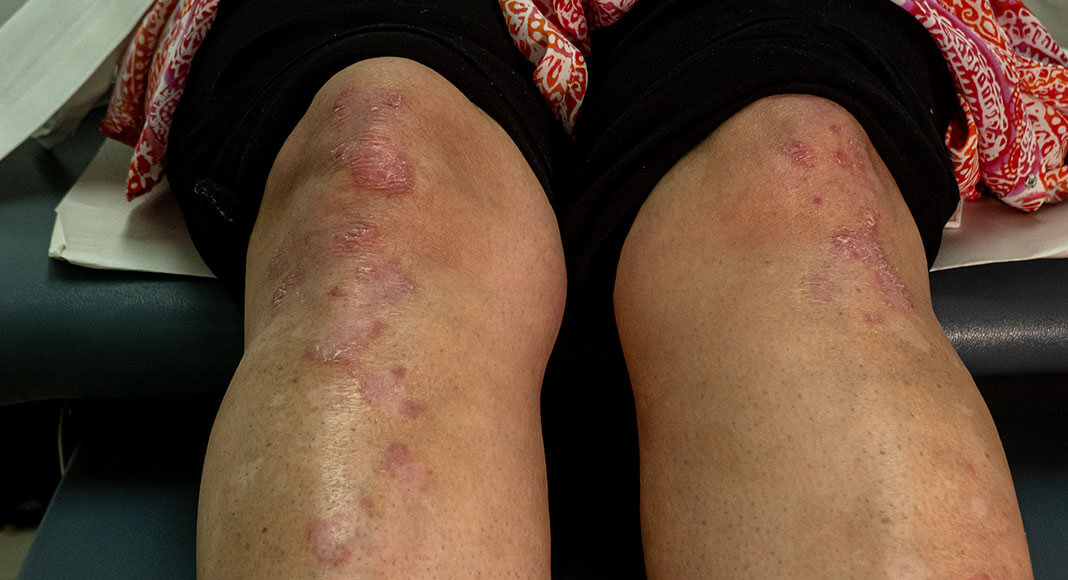
“Psoriasis is an inflammatory skin disease that leads to a rash on the skin. It most commonly affects the elbows and the knees but can really occur anywhere, like the scalp or the hands, or even the genitals. And the rash is usually pink with thick scale, it may be that you feel like you trail scale when you walk around your house,” said Melissa Piliang, MD, dermatologist for Cleveland Clinic.

She said psoriasis is caused by an overproduction of skin cells in the body. Cases can range from mild to severe.

- Advertisement -

There is currently no cure available. However, there are different medications and treatments that can help. For example, some patients go in for ultraviolet light therapy. The light booth is set up kind of like a tanning bed but is much safer and more controlled.

Dr. Piliang said if you think you have psoriasis, you really should go see a dermatologist.

Especially since it could affect your health in other ways.

“It’s also associated with other problems — increased risk for heart disease, diabetes, hypertension and high cholesterol. So we like to treat patients because we know that if we treat their psoriasis, we know that their risk of those diseases goes down,” said explained. Dr. Piliang said while there is no cure for psoriasis, researchers are continuing to look into different treatments. They are also studying how diet and lifestyle can play a role.


- Advertisement -
- Advertisement -

- Advertisement -

More Articles

DHR Health Transplant Institute Earns Top State and National Rankings

The DHR Health Transplant Institute announced today that it has been recognized among the state’s and nation’s top performing kidney transplant centers, earning the no. 2 ranking in the State and no. 16 ranking in the Nation, according to the Scientific Registry of Transplant Recipients (SRTR).  

New Noninvasive Tech Tracks Infant Vital Signs Without Wires

In the neonatal intensive care unit, the most fragile patients in medicine are often the most heavily wired. Premature babies, some weighing less than a pound, can be tethered to a tangle of cables, monitors, and sensors. Each blood draw to check sugar levels or electrolytes means another needle, another bandage, another moment of stress for an infant whose skin is still forming.

STHS McAllen Receives National Award for Advancing Cardiac Arrest Care & Improving Patient Survival

In the moments following cardiac arrest, every second counts. Rapid intervention, seamless teamwork and evidence-based care can make the difference between life and death.

STHS GME Consortium Welcomes Incoming Class of 65 Medical Residents

The future of healthcare in the Rio Grande Valley is brighter than ever as 65 new medical residents begin their training through the South Texas Health System (STHS) GME Consortium.
- Advertisement -
