








Mega Doctor News

By Claire Kowalick / Eileen Teves / UT Health San Antonio
SAN ANTONIO – Scientists at UT Health San Antonio, the academic health center of The University of Texas at San Antonio (UT San Antonio), have found a potential path to maintaining the cancer-fighting benefits of one type of immunotherapy while limiting harmful organ damage, providing new hope for this promising treatment.
Immunotherapy is a powerful tool in cancer treatment, but its power can come at the cost of severe side effects like liver toxicity.

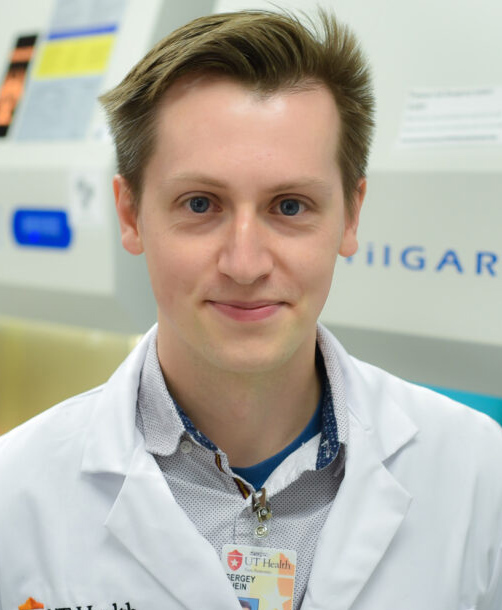
The study, funded through a Cancer Prevention and Research Institute of Texas award, was published on April 22 in Science Advances. Leading the investigation was Sergey A. Shein, PhD, research instructor, and Alexei V. Tumanov, MD, PhD, associate professor. Both are from the Department of Microbiology, Immunology and Molecular Genetics of the Joe R. and Teresa Lozano Long School of Medicine.
Immunotherapy has transformed cancer care by harnessing the body’s immune system to recognize and destroy cancer cells. However, the same immune activation that helps eliminate tumors can also trigger widespread inflammation, often affecting the liver and forcing some patients to stop treatment or require immunosuppressive medications.
The researchers investigated why these toxic side effects occur and discovered that the problem stems from the expansion of a specific population of non-tumor-specific, or “bystander,” T cells that migrate to the liver and drive inflammatory damage.
“Immunotherapies strongly activate T cells, which are good for attacking tumors. But they also trigger widespread immune activation in places we do not want it,” said Shein.
For example, certain receptors on T cells, such as CD137, are often targeted in immunotherapy to activate tumor-killing T cells, but they can also stimulate bystander T cells, which can lead to liver damage.
The team found that these harmful T cells rely on a signaling receptor called the lymphotoxin beta receptor in lymphoid organs, such as the spleen, to survive. By blocking this pathway, researchers were able to selectively reduce the troublesome T cells before they reached the liver, while preserving the tumor-specific T cells responsible for attacking cancer.
“One of the biggest problems in cancer immunotherapy is that the same cells that protect us can also harm us. Learning how to distinguish between those effects is crucial,” said Tumanov.
That discovery led researchers to explore a more precise strategy for reducing harmful inflammation.
“This approach acts more like a precision filter than a shutdown switch. The goal is not to silence the immune system, but to tune the threshold for non-tumor-specific T cell persistence,” said Shein.
Current treatments for immune-related side effects often rely on corticosteroids or other broad immunosuppressive drugs. This can weaken protective immune responses and increase the risk of infections. A more targeted strategy could allow patients to benefit from these powerful cancer treatments while experiencing fewer severe complications.
Although additional studies and clinical trials are needed, the findings could lead to safer immunotherapies and new treatment strategies for cancer and other immune-related diseases.
To read the full story, click here.
Information source: UT Health San Antonio


