





loader image
Sunday, February 8, 2026
57 F
McAllen
- Advertisement -

Updating Your Skincare Routine for Summer

Translate to Spanish or other 102 languages!

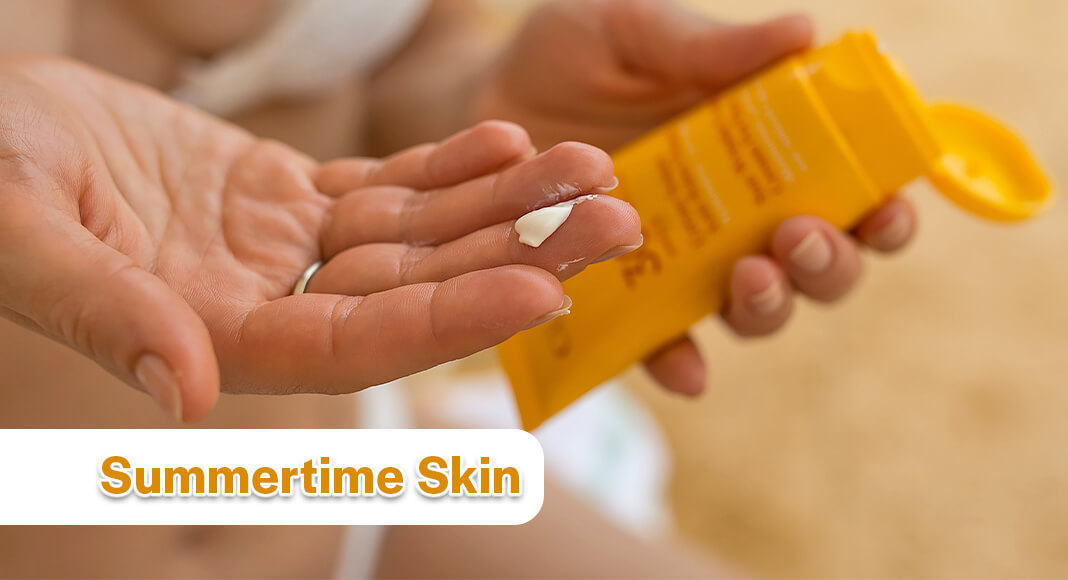
Between the heat and humidity, this weather can be rough on our skin. Image for illustration purposes
- Advertisement -

CLEVELAND CLINIC – Between the heat and humidity, this weather can be rough on our skin.

But there are ways to help prevent that.

For starters, do an inventory on your current skincare products.

- Advertisement -

Not everything may be suitable for summer.

“We know in the summertime a lot of things happen to our skin. We’re exposed to the sun. Some medications can make our skin a little bit more sensitive to the sun. So it’s important for certain things like if you’re using a retinoid, or whether it’s over-the-counter prescription, those can actually thin the top layer of our skin and make us more sensitive to the sun,” explained Shilpi Khetarpal, MD, dermatologist at Cleveland Clinic.

So, what products are best to use in the summer?

Dr. Khetarpal said sunscreen is crucial.

- Advertisement -

It should be broad spectrum and have an SPF of 30 or higher.

And don’t forget to reapply every two hours, especially if you’re outdoors.

Since you are using sunscreen, she said you typically don’t need moisturizer.

But if you did want to include that in your routine, make sure it’s on the lighter side and only applied once a day.

Aside from that, Dr. Khetarpal recommends washing your face with a gentle cleanser.

When you’re done, you could also apply an antioxidant serum.

“There are a lot of other things in the environment that can affect our skin. Pollution can cause dullness and pigmentation, so that’s where antioxidants can play a role. Those are topically applied vitamin C, vitamin E, ferulic acid. So, if someone wanted to incorporate an antioxidant, they would wash their face in the morning, pat dry, apply the antioxidant serum. There’s many that are over the counter that work,” Dr. Khetarpal said.

She said if you notice your skin isn’t improving with time or starting to get worse, you should consult with a dermatologist.


- Advertisement -
- Advertisement -

- Advertisement -

More Articles

Inside the Physiology and Neuroscience of Winter Olympians

What makes Olympians the very best at what they do — even in cold, slippery or icy conditions? 

Study Finds 60% of American Women Choose Clinic Visits Over At‑Home Cervical Screening

American women now have the option of screening for cervical cancer at home, using newly approved self-collection tools. While experts hope this will increase uptake in the under-screened population, a first-of-its kind study by researchers from The University of Texas MD Anderson Cancer Center found the majority (60.8%) still prefer to see a medical professional in-clinic.

Food Safety Tips for a Healthy Super Bowl Sunday

Super Bowl parties often feature takeout, delivery and foods that are served over several hours. To help prevent foodborne illness, the U.S. Department of Agriculture’s (USDA) Food Safety and Inspection Service (FSIS) is reminding fans to keep food safety in play on game day.

FDA Updates Guidance on “No Artificial Colors” Labels as Natural Options Expand

The U.S. Food and Drug Administration took additional steps to support the transition of our nation’s food supply from the use of artificial petroleum-based colors to alternatives derived from natural sources. Companies will now have flexibility to claim products contain ‘no artificial colors’ when the products do not contain petroleum-based colors. In the past, companies were generally only able to make such claims when their products had no added color whatsoever — whether derived from natural sources or otherwise
- Advertisement -
×