








Mega Doctor News
The Texas Department of State Health Services is announcing three confirmed cases of measles in non-Texas residents who spent time in Reeves and Ward counties. Below are some possible exposure locations and times for the community’s awareness.
POSSIBLE EXPOSURE LOCATIONS
- Wednesday, Jan. 13 from 9 a.m. to 2 p.m. at Lowe’s Market in Monahans
- Friday, Jan. 16 from 8 p.m. to midnight at Ward Memorial Hospital Emergency Department in Monahans
- Saturday, Jan. 17 from 9 a.m. to noon at Aurivida Coffee Co. in Monahans
- Sunday, Jan. 18 from 5 to 9 p.m. at Walmart in Pecos
ABOUT MEASLES

Measles is a highly contagious viral disease that spreads through coughing, sneezing or simply being near someone infected. The virus can linger in the air for up to two hours after an infected person has left an area, making it easy to contract in shared spaces.
SYMPTOMS
- High fever
- Cough
- Runny nose
- Red, watery eyes
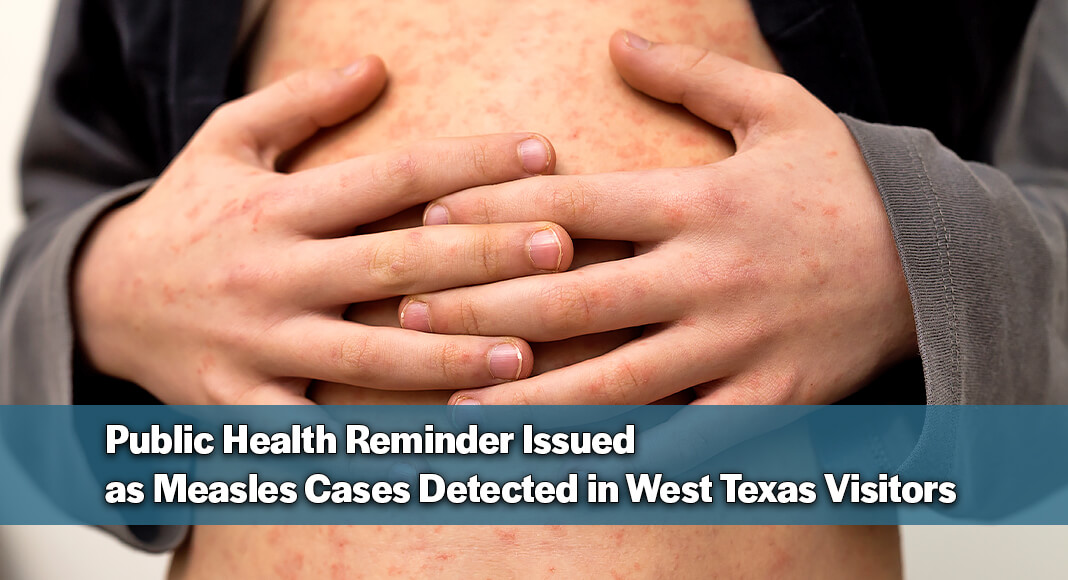
- Rash, typically starting on the face and spreading downward two to five days after initial symptoms
INFECTIOUS PERIOD
People with measles can spread the virus from four days before the rash appears to four days after.
WHAT TO DO IF EXPOSED OR SYMPTOMATIC
If you believe you have been exposed to measles or are experiencing symptoms:
- Isolate yourself immediately to prevent spreading the virus to others.
- Contact your healthcare provider by phone before going to their office to arrange testing in a way that minimizes exposure to others.
- Watch for symptoms, which typically develop seven to 21 days after exposure.
POTENTIAL COMPLICATIONS AND HIGH-RISK GROUPS
While measles can infect anyone, complications can be severe and include ear infections, diarrhea, pneumonia, or, in rare cases, brain inflammation (encephalitis) and even death. Those at the highest risk for complications include:
- Infants and children under 5 years old
- Pregnant women
- People with weakened immune systems
PREVENTION
Vaccination with the measles, mumps, and rubella (MMR) vaccine is the most effective way to prevent measles.
- Two doses of the MMR vaccine provide a 97 percent protection and long-lasting immunity.
- The MMR vaccine can be administered by your health care provider or at a pharmacy (if over the age of 14)
- The Texas Department of State Health Services recommends administering the first dose at 12 to 15 months of age and the second dose at 4 to 6 years of age.
For more information on measles, visit Measles | Texas DSHS.
Information source: Texas Health and Human Services


