







Mega Doctor News

By Laura Williamson, American Heart Association News
Sudden, painless loss of vision. Burning back pain. Achy legs. Incontinence.
People might not recognize these as signs of a stroke, because some are not the symptoms of a stroke in the brain, where most strokes occur. But strokes can happen in other parts of the body, too, said Dr. Matthew Schrag, an assistant professor of neurology and vascular neurologist at Vanderbilt University Medical Center in Nashville, Tennessee.

Sudden, total vision loss in one eye may signal a stroke in the eye. Back pain, aching legs and incontinence, along with paralysis, weakness and loss of pain or the ability to feel temperature, signal a stroke in the spine. Though rare, these strokes, just like those in the brain, are serious and require immediate medical attention, Schrag said.
“They present special challenges and can be harder to recognize, but are theoretically treatable,” he said.
The American Heart Association and American Stroke Association define stroke as an obstruction of blood supply to the brain, spinal cord or retina that causes cell death. When strokes occur in the brain, symptoms may include numbness in the face, weakness in arms or legs, especially on one side of the body, trouble speaking or understanding speech, vision problems, lack of coordination or a sudden, severe headache.
But blood supply can be obstructed almost anywhere in the body, said Dr. Lucia Sobrin, a professor of ophthalmology at Harvard Medical School in Boston.
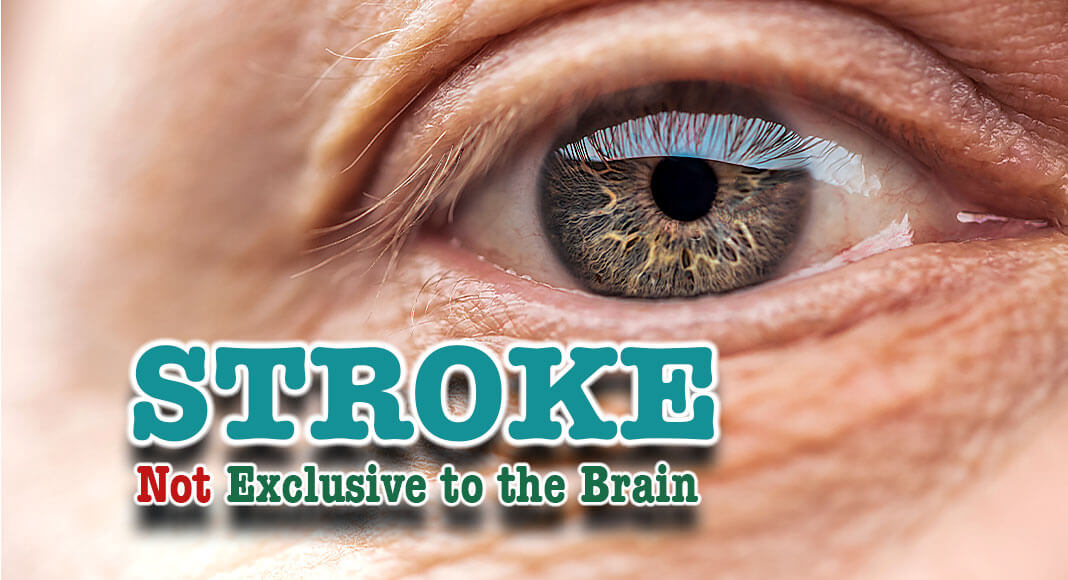
A stroke in the eye – known as central retinal artery occlusion, or CRAO – typically happens when plaque that has built up in a carotid artery, the main arteries on each side of the neck that send blood to the brain and eyes, breaks loose and travels to the retina. That same plaque also could travel to the brain and cause an ischemic stroke. “It could go either way,” Sobrin said.
Total vision loss in one eye typically occurs, but in some cases, a person may only lose partial vision, she said. “They may still be able to perceive light or motion.”
A CRAO isn’t fatal, Schrag said. But vision loss can be permanent if not treated within the first few hours.
“If you suddenly lose vision and it’s painless, think ‘stroke’ and go to the emergency room,” he said. “It’s pretty urgent.”
Sobrin and Schrag were co-authors on a 2021 AHA scientific statement advocating for the immediate screening and treatment of CRAO using alteplase, the drug used to dissolve clots causing strokes in the brain. Studies show people with CRAO who are treated with alteplase within 4 1/2 hours of vision loss may have as much as a 50% rate of recovery.
Another reason to be seen immediately following a CRAO is that “it’s a sign of serious underlying disease,” Schrag said. The AHA statement urges immediate screening for other cardiovascular risk factors that require treatment, such as high blood pressure, high cholesterol, diabetes, sleep apnea and obesity.
“CRAO is a strong predictor of future heart attacks, strokes or death,” he said. “So, while this stroke might not kill, the underlying problems might – and require urgent attention.”
Less is known about how to treat strokes that occur in the spine, a rare but dangerous condition, Schrag said.
These can occur because of a blood clot in the arteries leading to the spine. Treatment depends on an individual’s symptoms and may include blood-thinning medication to reduce clotting.
Spinal strokes also may occur during medical procedures if blood pressure drops dramatically or the heart stops and there isn’t enough blood flow, Schrag said. “Then the solution is to get blood pressure back up before permanent damage can occur.”
In general, the same steps people take to prevent strokes in the brain are those recommended to prevent strokes in the eye or spine. These include eating a healthy diet, staying physically active, maintaining a healthy weight, not smoking, keeping blood pressure, blood glucose and cholesterol within target range, getting seven to nine hours of sleep each night and taking needed medications as prescribed.


