




Mega Doctor News
Mega Doctor News
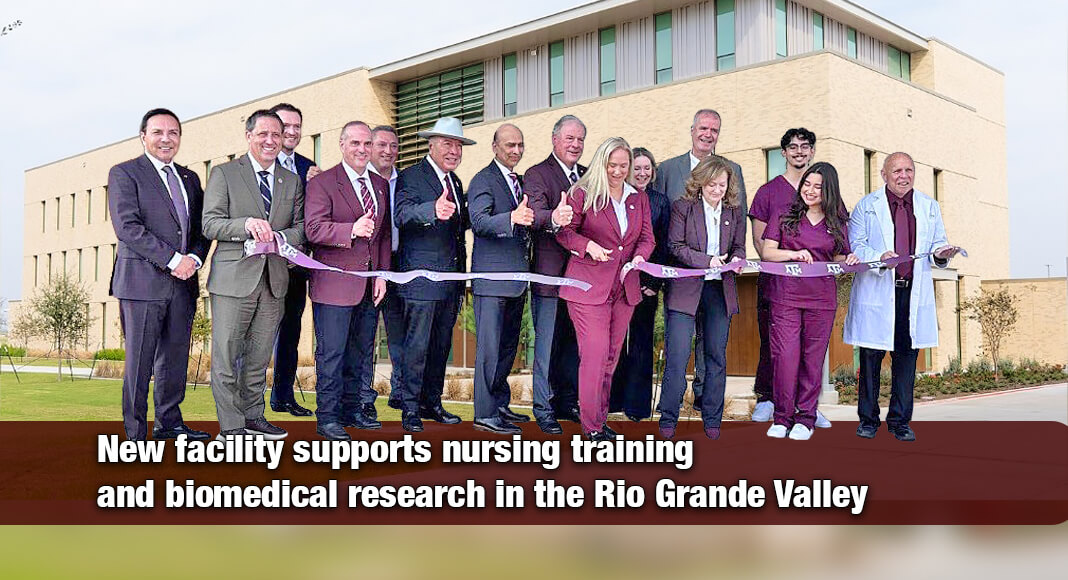
Texas A&M University marked the opening of its new Nursing Education and Research Building in McAllen with a ribbon-cutting ceremony celebrating expanded education and health care opportunities in the Rio Grande Valley. The 61,000-square-foot facility, located at the Texas A&M Higher Education Center at McAllen, brings together the Texas A&M College of Nursing and the College of Veterinary Medicine and Biomedical Sciences under one roof.
The building houses classrooms, study areas, and a clinical simulation center and serves as home to the university’s One Health Hub. It opened as the first cohort of 24 nursing students began classes, marking the start of the Bachelor of Science in Nursing program offered entirely in the Valley.


“Today celebrates years’ worth of collaborative efforts to amplify the best of Texas A&M education, research, and resources across Texas,” said Texas A&M University System Chancellor Glenn Hegar. “As we recognize the need for enhanced educational opportunities and maximized health care access in the Valley, it only makes sense that the Texas A&M Colleges of Nursing and of Veterinary Medicine and Biomedical Sciences would step up to the plate.”

State Senator Juan “Chuy” Hinojosa, who represents District 20, attended the ceremony and recognized the expansion as an important step in strengthening higher education and workforce development in the Rio Grande Valley. He has long supported efforts to increase access to educational and health care resources in South Texas.
The nearly $50 million facility was approved by the Texas A&M System Board of Regents in 2023, though planning for expanded nursing education in South Texas began nearly a decade earlier. The College of Nursing expects the program to add about 100 nurses to the workforce each year through its four-semester curriculum.

Indra K. Reddy, interim chief operating officer and senior vice president of Texas A&M Health, said the facility strengthens the university’s long-term commitment to the region. “The Nursing Education and Research Building will help prepare the next generation of nurses to serve with clinical excellence, cultural understanding, and a deep commitment to Texas communities,” Reddy said.
The expansion comes as Texas faces a growing shortage of nurses. The Texas Center for Nursing Workforce Studies projects a statewide shortfall of more than 56,000 registered nurses by 2036. In the Rio Grande Valley, the shortage is expected to reach nearly 6,000 nurses.

“Preparing the next generation of nurses locally in the Valley develops a workforce that is uniquely qualified to take care of these communities,” said Leann Horsley, dean of the College of Nursing. She added that the program is designed to address evolving health care needs while expanding research and service opportunities in South Texas.
The facility also supports veterinary medicine and biomedical research. The College of Veterinary Medicine and Biomedical Sciences occupies a 5,000-square-foot space dedicated to One Health programming, which connects human, animal, and environmental health. Research will focus on transboundary and zoonotic diseases, veterinary public health, and biosecurity.

“Our research scientists, students, and community partners play an important role in identifying solutions to recognize, prevent, and treat diseases that affect both animals and humans,” said Bonnie Rush, dean of the College of Veterinary Medicine. She noted that the facility will support screening for diseases such as African Swine Fever and New World Screwworm, which pose potential threats to livestock and public health.
The veterinary program will also serve as a base for the Texas A&M Veterinary Emergency Team during regional deployments and its annual participation in Operation Border Health, which provides free care to residents and pets in the Valley.
Texas A&M has maintained a presence in McAllen since 2004, with the Higher Education Center launching academic programs in 2017. Today, the center offers 10 degree programs and continues to expand. Future plans include a research facility led by Texas A&M AgriLife Research.

Ernest Aliseda, chief operating officer of the Higher Education Center at McAllen, said the expansion reflects a long-term investment in the region. “Our students earn the same Texas A&M degree and become part of the Aggie Network,” he said. “With the support of our community partners, we will continue to prepare the next generation of leaders for South Texas.”

