








Mega Doctor News
The Texas Department of State Health Services added a new enzyme deficiency test on June 1, 2026, to its newborn screening panel, meaning that all Texas newborns are now tested for 60 rare, genetic conditions. Tests for hearing loss and critical congenital heart disease are additional point-of-service tests typically conducted by the birthing center.
Guanidinoacetate methyltransferase, or GAMT, deficiency is an extremely rare condition that can lead to severe neurological problems. Public health experts believe that screening all newborns in the U.S. will find about 7 babies a year with GAMT deficiency, which is fewer than 1 in 100,000 babies born.
GAMT was added to the U.S. Health and Human Services Recommended Uniform Screening Panel in January of 2023. Texas is the 20th state to screen for it. The Texas Health and Safety Code requires screening for conditions on the RUSP, as funding allows.

“Early diagnosis and treatment for this rare condition can lead to improved health and development for the children affected by it,” said Imelda Garcia, MPH, DSHS chief deputy commissioner. “This new test and the many others on the newborn screening panel are critical tools DSHS uses to quickly identify and treat diseases affecting our most vulnerable new Texans.”
GAMT is an enzyme that helps make creatine from the compound guanidinoacetate, or GUAC. Without an adequate supply of creatine, the body is unable to use and store energy properly. The inability to produce creatine, and the accumulation of GUAC, can cause severe neurological problems that can show up from infancy to age three years. Symptoms include:
| Intellectual disability |
| Limited speech development |
| Recurrent seizures |
| Behavioral problems |
| Poor muscle tone |
| Involuntary movements |
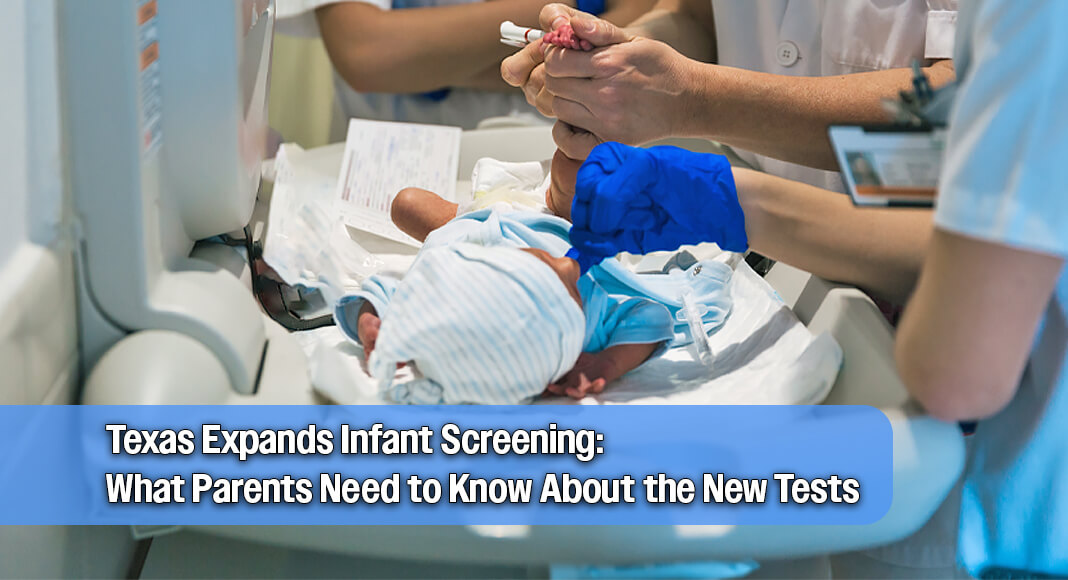
This new test will use the blood sample from the routine heel stick newborns receive shortly after birth.
The DSHS Laboratory and follow-up screening teams have completed necessary training to support the new screening for this disorder.
Texas identifies around 1,000 newborns each year through screening that are diagnosed with life-threatening disorders. The DSHS screening program was launched more than 60 years ago with a test for phenylketonuria, a common cause at that time of intellectual disability that could be treated if caught early enough.
Visit the DSHS website for more about the state’s newborn screening program.
Information source: Texas DSHS


