








Mega Doctor News
As robotic surgery continues to reshape modern healthcare, it provides surgeons with unparalleled precision, control and visibility across numerous specialties, including general surgery, gynecology, urology, cardiology and orthopedics.
Underscoring its commitment to delivering highquality, compassionate care, South Texas Health System (STHS) McAllen launched its robotic surgery program in March 2025 with the acquisition of the da Vinci 5 (DV5) Robotic Surgical System, Intuitive Surgical’s most advanced innovation in minimally invasive technology.
Routinely used for numerous laparoscopic softtissue procedures like gall bladder removals and hernia repairs, the DV5 features more than 150 design enhancements and 10,000 times the computing power of previous models, giving surgeons increased autonomy while reducing trauma, minimizing blood loss and helping patients experience less postoperative pain.

As one of the first hospitals in the Rio Grande Valley to implement the DV5, STHS McAllen has reinforced its commitment to integrating cuttingedge technologies that enhance patient outcomes and expand access to toptier surgical care across the fourcounty region.
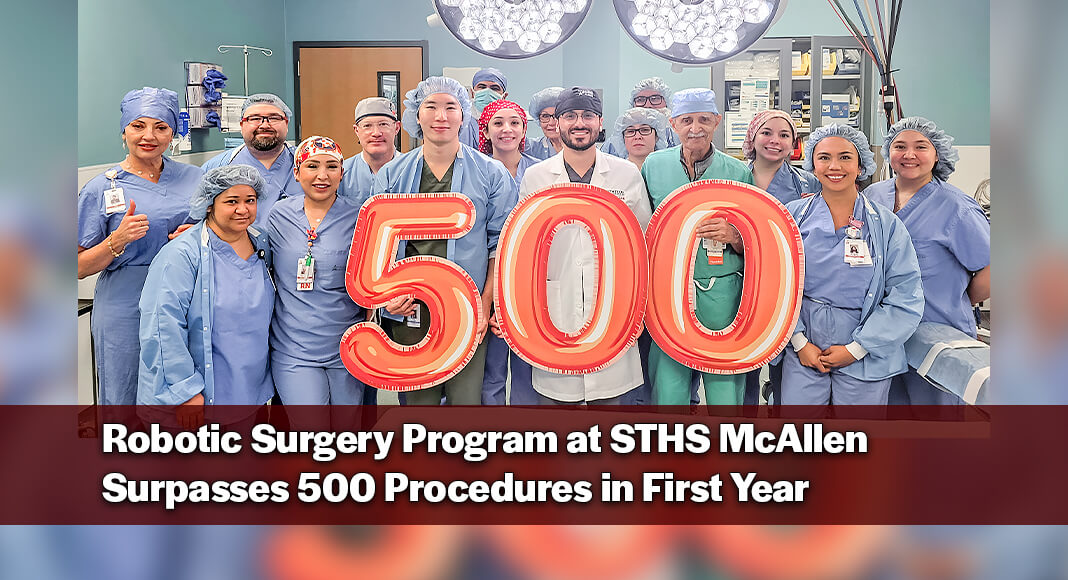
On February 27, 2026, STHS McAllen marked a significant milestone with the completion of its 500th robotassisted surgery. The procedure, a simple prostatectomy, was performed using the new DV5 system by Phillip Kim, MD, of Rhize Urology, a local urologist affiliated with STHS.
“This milestone reflects a bright and promising future in patient care; it’s a true a testament to hope, healing and the remarkable impact innovation can have on our community,” says Emma MontesEwing, Chief Executive Officer, STHS McAllen. “Each of the 500 surgeries completed at our facility represents renewed strength, restored possibility and the chance for our patients and their families to look toward tomorrow with confidence. We’re deeply grateful for the trust our community places in us and honored to help bring healing and hope to so many lives.”
Three surgeons have been instrumental in driving the success of STHS McAllen’s robotic surgery program over the past 11 months.
Miguel Angel Rodriguez, DO, a general and bariatric surgeon with STHS Clinics and the program’s medical director, has performed more than half of the facility’s 500 robotic procedures, completing 256 cases. STHS Clinics general surgeon Krystha Cantu, MD, has completed 88 cases, while Dr. Kim has performed 59 procedures.
“We’re proud to mark 500 robotic cases in under a year at STHS McAllen,” says Dr. Rodriguez. “This milestone reflects the dedication of the entire surgical team, the collaboration of skilled surgeons, the support of our administrative and corporate partners, and the transformative impact of advancing technology. Together, we are elevating patient care in South Texas, one case at a time.”
“The DV5 is an incredible tool for me as a general surgeon,” adds Dr. Cantu. “I truly believe it enhances the care I provide to my patients by enabling highly precise, minimally invasive procedures that result in smaller incisions, reduced blood loss, decreased pain and faster recovery times compared to traditional surgery.”
The rapid success of the robotic surgery program at STHS McAllen has been remarkable, made possible through the dedicated efforts of an entire multidisciplinary team, including surgeons, schedulers, preop and operating room staff, recovery teams and sterile processing professionals.
Today, the program supports a broad spectrum of procedures such as gallbladder removal; abdominal wall and hiatal hernia repairs; antireflux surgery; emergency general surgery; and complex oncologic operations involving gastric, colon, prostate and kidney cancers.
“Happy 500th robotic surgery,” says Dr. Kim. “I ‘m incredibly proud to celebrate this milestone with the exceptional surgical services team at STHS McAllen. Your professionalism, precision and unwavering teamwork are essential to delivering excellent outcomes for our patients. Thank you for your continued dedication to advancing surgical excellence in our community.”
As the program continues to grow, STHS McAllen looks forward to expanding the variety of procedures offered, further advancing patient outcomes through innovation, precision and a continued commitment to excellence.
To learn more about the surgical services at STHS McAllen, including its robotic surgery program, visit STHSMcAllen.com.


