







Mega Doctor News

Patients who suffer a cardiac arrest must receive the highest quality CPR possible, which is known to be the cornerstone of survival. More than 209,000 in-hospital cardiac arrests occur annually in the U.S. with survival rates at about 26% from adult in-hospital cardiac arrest. For decades, the CPR training standard for healthcare providers has been Basic Life Support with a requirement for participants to renew their course completion card every two years. However, studies show CPR skills can decay within three to six months following this training.
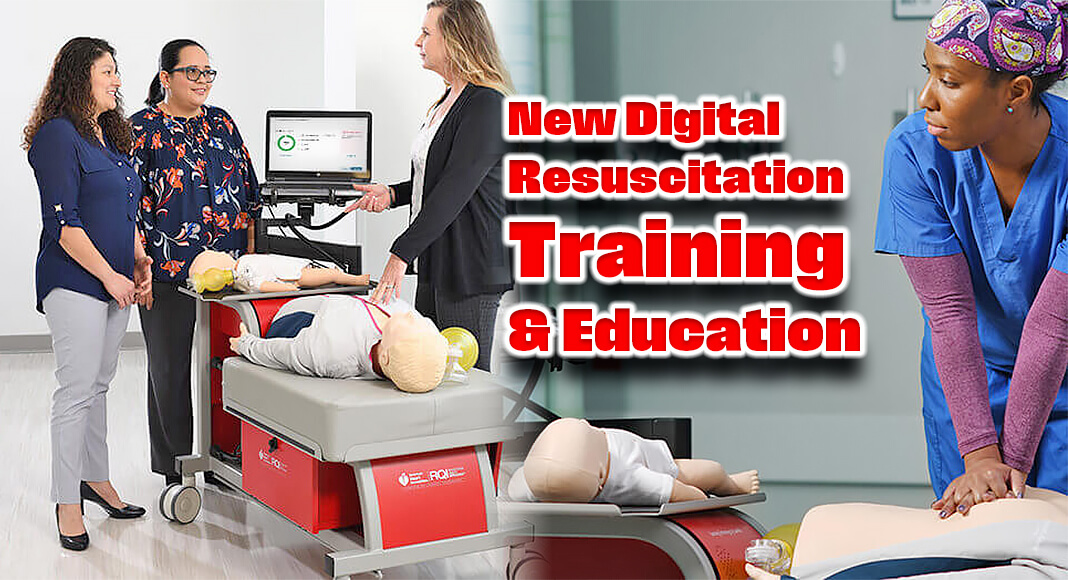
South Texas Health System, the largest integrated network of healthcare in the Rio Grande Valley, recognizes the importance of high-quality CPR competence and performance to save more lives. This summer, South Texas Health System introduced Resuscitation Quality Improvement® (RQI®), a program co-developed by the American Heart Association® and Laerdal Medical, across its four acute care facilities and seven freestanding emergency departments to help clinicians achieve, master and sustain high-quality CPR skills and competence, resulting in improved patient outcomes.
The healthcare system’s RQI program adoption demonstrates its continued, longstanding commitment to providing a positive, proactive and patient-centered experience and leveraging innovative solutions to advance patient care and prepare clinicians to deliver that care. More than 2300 clinicians are enrolled in Basic Life Support, Advanced Life Support and Pediatric Advanced Life Support course instruction, which is delivered through 12 RQI Simulation Stations. The stations are positioned in a centralized location at STHS McAllen, STHS Heart and the STHS Edinburg/STHS Children’s campus, STHS Behavioral, the system’s freestanding emergency departments and the STHS Regional Operations Center, affording learners with greater flexibility and 24/7 access to resuscitation training and education.

“Our hospitals are committed to providing the highest quality of care and adopting the Resuscitation Quality Improvement program reflects this dedication,” said Kennetha Foster, MSN, RN, System Chief Nursing Officer, South Texas Health System. “By implementing RQI, we’re ensuring that our healthcare professionals have the opportunity to regularly refresh and hone their life-saving skills using a program shown to improve the quality of resuscitation efforts, which positively impacts patient outcomes. Ultimately, our goal is to empower our teams with the best tools and training possible — fostering a culture of excellence in patent care across our hospital system.”
RQI is self-directed, simulation-based learning and performance provided through cognitive and hands-on CPR quality improvement sessions that measure and verify competence. The program employs a “low-dose, high-frequency” model requiring healthcare providers to complete course assignments in short sessions every quarter.
In 2018, the American Heart Association, the world’s leading voluntary organization dedicated to a world of longer, healthier lives for all, and Laerdal Medical, one of the world leaders in medical simulation and resuscitation training, called for a new standard of care by shifting resuscitation practice from training once every two years to quarterly instruction to verify CPR competence for healthcare professionals. The RQI program is delivered by RQI Partners, a partnership between and service provider for the Association and Laerdal.
“We are excited South Texas Health System answered the call and are fully embracing the RQI program and working with the American Heart Association, Laerdal Medical and RQI Partners to shift to a new standard of resuscitation care – competence,” said Russell Griffin, RQI Partners’ senior vice president of programs and marketing. “South Texas Health System has made high-quality CPR delivery a priority and joins our commitment to ensuring all healthcare providers in every community are competent and confident in their resuscitation skills to help save more lives from cardiac arrest.”
To learn more about the RQI program and the value it brings to hospitals, patient care and local communities, visit heart.org, www.laerdal.com and www.rqipartners.com.


