

Mega Doctor News

By By Jim Kendall, LCSWVanderbilt Work/Life Connections-EAP
Vanderbilt University Medical Center
Newswise – We are days away from election day, and it’s no secret that the political climate can be polarizing.

Some people find election time exciting — a time of invigoration as they support their candidates and positions.
Others are riding an emotional roller coaster that is accelerating as they feel overwhelming anxiety.
Being informed doesn’t necessarily help with anxiety. It’s easy to become obsessed with political pundits, online or on television, who sensationalize polls and projections to hook you into each story.
There is a name for this anxiety.
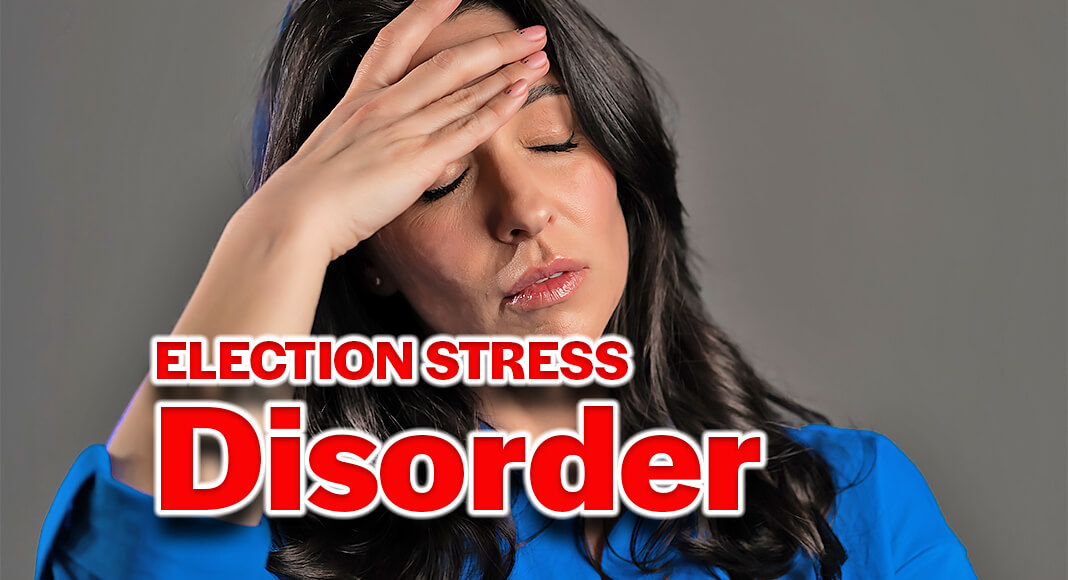
Psychologist Steven Stosny, PhD, coined the term “election stress disorder” to describe the level of anxiety and obsession that many of us feel surrounded by in the tense and polarizing political climate.
Stosny noted that it is hard enough to consistently use our “adult brain” (logic and reason) during non-election years, but the chaos and emotional rhetoric in an election year makes it even harder.
He says, “Our ‘toddler brain’ (emotional, all-or-nothing, “Mine! No!”) hijacks the ‘adult brain’, impairing its ability to take other perspectives, weigh evidence, see nuance, plan for the future, and create value and meaning. The ‘toddler brain’ is highly susceptible to emotional contagion; toddlers take on whatever negative emotions are around them, as any parent who has been tense or irritable near one can attest.”
These stressors impact our daily lives, but we generally have little control over the course of these “dramas and traumas.” Here are some techniques to use when we face the unknown in uncertain times:
- Focus on what you have control over. Politically, we can be informed, campaign and vote.
- Limit media consumption if it causes you distress: Reduce social media, news “doom-scrolling” and headline obsessions. Keep informed without being overly absorbed.
- Connect with those who give you support. Ask them to avoid stressful topics when you need a break.
- Engage in calming techniques: Use meditation, strategic breathing, visualization, progressive relaxation, mindfulness, exercise, prayer, music, pleasure reading, or apps like Calm, Headspace, Insight Timer, or countless others.
- Remain hopeful. We can overcome obstacles and challenges with planning, persistence, effort, and choosing the right strategies. We are more resilient than we think.
- Be a realistic optimist. Don’t resort to apocalyptic or end-of-the-world thinking.
- Embrace gratitude. Appreciate moments of joy and kindness.
If you find yourself becoming overly anxious, clinically depressed, or struggling with how to cope, contact Work/Life Connections-EAP to set up a confidential appointment with one of our counselors by calling 615-936-1327.