Mega Doctor News
After completing medical school, shifting into a residency program is an important phase in a doctor’s journey where they receive specialized, in-depth training to practice a certain specialty. Typically lasting from three to seven years, physicians-in-training can provide direct care to patients, diagnosing, managing and treating health conditions under the supervision of experienced doctors.
It’s during the residency period that doctors gain tailored and immersive learning experience by applying the knowledge they acquired during medical school to offer specialized patient care. However, there are several competitive specialties that require advanced training, such as first building a strong clinical base before applying to them.
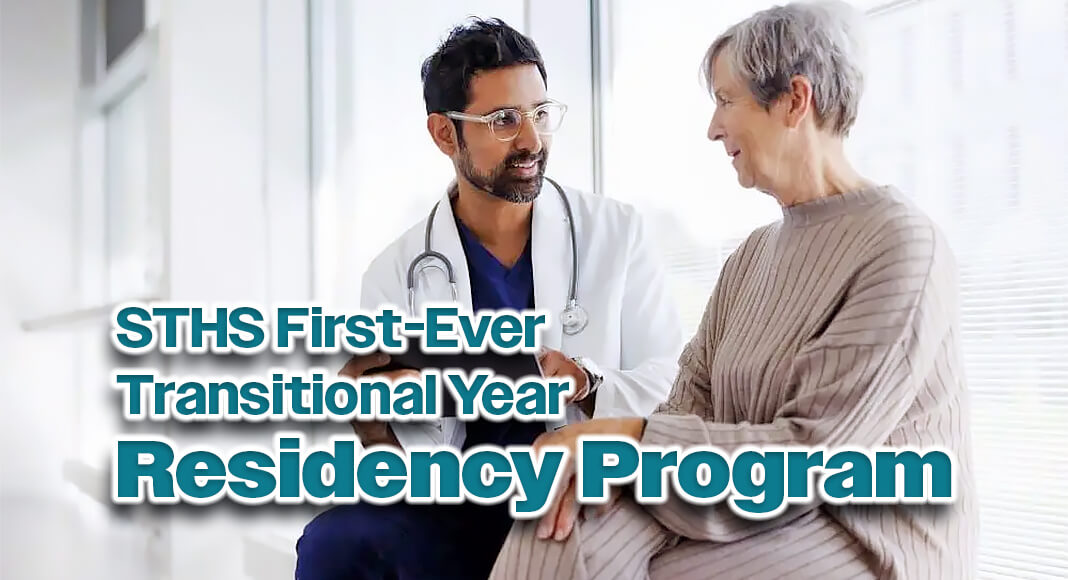
Through a Transitional Year Residency (TYR) Program, medical graduates can gain experience through broad-based clinical training for one year before entering a specialized residency program. A TYR program offers expertise indifferent specialties by providing rotations in various medical disciplines, including internal medicine, surgery, emergency medicine and ambulatory care.

Committed to addressing local doctor shortages while improving public health and wellbeing across the Rio Grande Valley, the South Texas Health System Graduate Medical Education (GME) Consortium has been providing dozens of physicians-in-training with a supportive environment that promotes professional growth and success since July 2024 through its family medicine and Internal medicine residency programs.
This summer, in addition to welcoming a first-ever cohort of 10 emergency medicine residents, the STHS GME Consortium will also admit a pioneer group of transitional year residents after receiving word of the program’s approval this week from the Accreditation Council for Graduate Medical Education (ACGME).
In all, the inaugural class will be comprised of 13 transitional year residents.
“This accreditation marks a major milestone in our continued mission to expand medical education opportunities in South Texas,” says Youssef Majed, MD, Designated Institutional Official & Chief Academic Officer, STHS GME Consortium. “The Transitional Year program will serve as a foundation for future specialists and offer a comprehensive educational experience rooted in excellence, compassion and service.”
The TYR program will offer knowledge and training in multiple specialties while exploring various areas of medicine. Beyond that, these physicians-in-training will also gain enhanced skills and knowledge provided by the STHS GME Consortium’s comprehensive foundation in clinical medicine, preparing these individuals for advanced training.
Additionally, the TYR Program will provide rotating residents with a well-rounded clinical foundation before entering advanced specialty training in fields like radiology, dermatology, anesthesiology and more.
“The STHS GME Consortium is growing and committed to transforming healthcare for the people of the Rio Grande Valley,” says Lance Ames, Chief Executive Officer, STHS Edinburg & STHS Children’s. “The introduction of this transitional year program represents a step forward in strengthening the local medical workforce and improving healthcare outcomes for the region. We’re thrilled to be instrumental in helping train the next generation of physicians, who we hope will choose to stay and serve the people of this medically underserved region after completing of their residency programs.”
With the ACGME accreditation, the STHS GME Consortium is officially ready to accept applications for its first-ever cohort of transitional year residents via email at sths.gme@uhsrgv.edu. For those interested in applying, the following criteria are required:
• Must be a graduate of medical school in the United States and Canada accredited by the Liaison Committee on Medical Education (LCME) or the American Osteopathic Association (AOA)
• Must be a graduate of an international medical school and have a currently valid Educational Commission for Foreign Medical Graduates (ECFMG) certificate
• Must be eligible for the Physician-in-Training (PIT) Permit in Texas, more information available at the Texas Medical Board (TMB)
• Must have a passing score of each of the USMLE or COMLEX within three attempts
• Must pass all licensing examination steps within 7 years
• Must be eligible for employment in the United States
With the brand-new transitional year and emergency medicine cohorts, the STHS GME Consortium will be actively providing the clinical training, research knowledge, professionalism and critical skills necessary for 83 residents to become well-rounded, compassionate physicians who will positively impact the health and well-being of Valleycommunities.
To learn more about the STHS GME Consortium, visit southtexashealthsystem.com/gme-consortium.